 Adam Gray/Getty Images
A solar eclipse occurs when the Sun, Moon, and Earth, that trio of close (relatively) neighbors in our universe, briefly align with each other. What's happening when we see an eclipse is simply that the Moon's orbit around the Earth blocks part of our view of the Sun, making everything briefly go dark. We know when an eclipse is coming quite some time in advance, because astronomers are able to calculate the positions of the Sun, Moon, and Earth, how they move, and where they'll be as time goes on. NASA explains, "Scientists then feed the current positions and speeds of Earth and the Moon into these complex equations, and then program a computer to 'integrate' these equations forward or backward in time to calculate the relative positions of the Moon and Sun as seen from the vantage point of Earth."
Armed with all this information, it has already been predicted that there will be a solar eclipse in 2027, on August 2nd. At the time of writing, it's late 2025, and you might think that it'll be neat, but it's probably not something for the non-scientist to get too excited about so far in advance. As it happens, though, this event is going to be something a little special, because it's going to last longer than any total solar eclipse you've seen before. The point where it will be most visible, too, is a particularly significant location on Earth. Let's take a look at where you can see this eclipse (but, obviously, not look at the eclipse itself) and the specific type of eclipse it is (because there are more than you might think).
The 'eclipse of the century'
 Sabelskaya/Getty Images
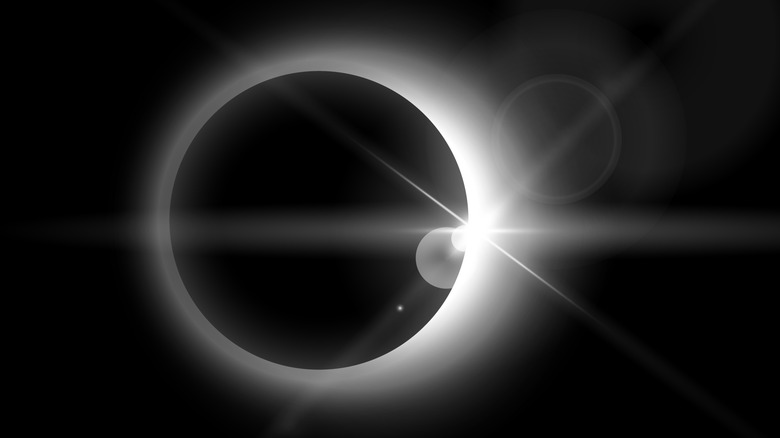
As this has already been deemed the 'eclipse of the century,' there's understandably a lot of excitement about it in astronomical circles. After all, NASA notes that there will be a total of 224 solar eclipses in the 21st century, so this one's going to have to really stand out. In order to do that, it seems, it's going to be the longest and most dramatic eclipse this century. Firstly, the 2027 event will be a total solar eclipse. These are considerably rarer, with slightly less than one-third of this century's solar eclipses (68 altogether) being a totality. These are the most visually stunning eclipses of all, because the effect is far more pronounced. The area of Earth that is covered by the Moon's shadow becomes dark and is treated to the sight of the Sun's corona.
What's unfortunate about these events is that even though there are ways to safely photograph them, we can't all see their full glory. It depends on where the Moon is positioned at the time it coincides with the Sun as to which part of the planet is obscured. There will always be those lucky regions of the world that are perfectly placed to get the best view, and in this case, that area is the Egyptian city of Luxor. The eclipse will be centered on North Africa, and the so-called "greatest eclipse point," Space explains, will be around this city.
The longest-lasting total solar eclipse for some considerable time
 Scott Eisen/Getty Images
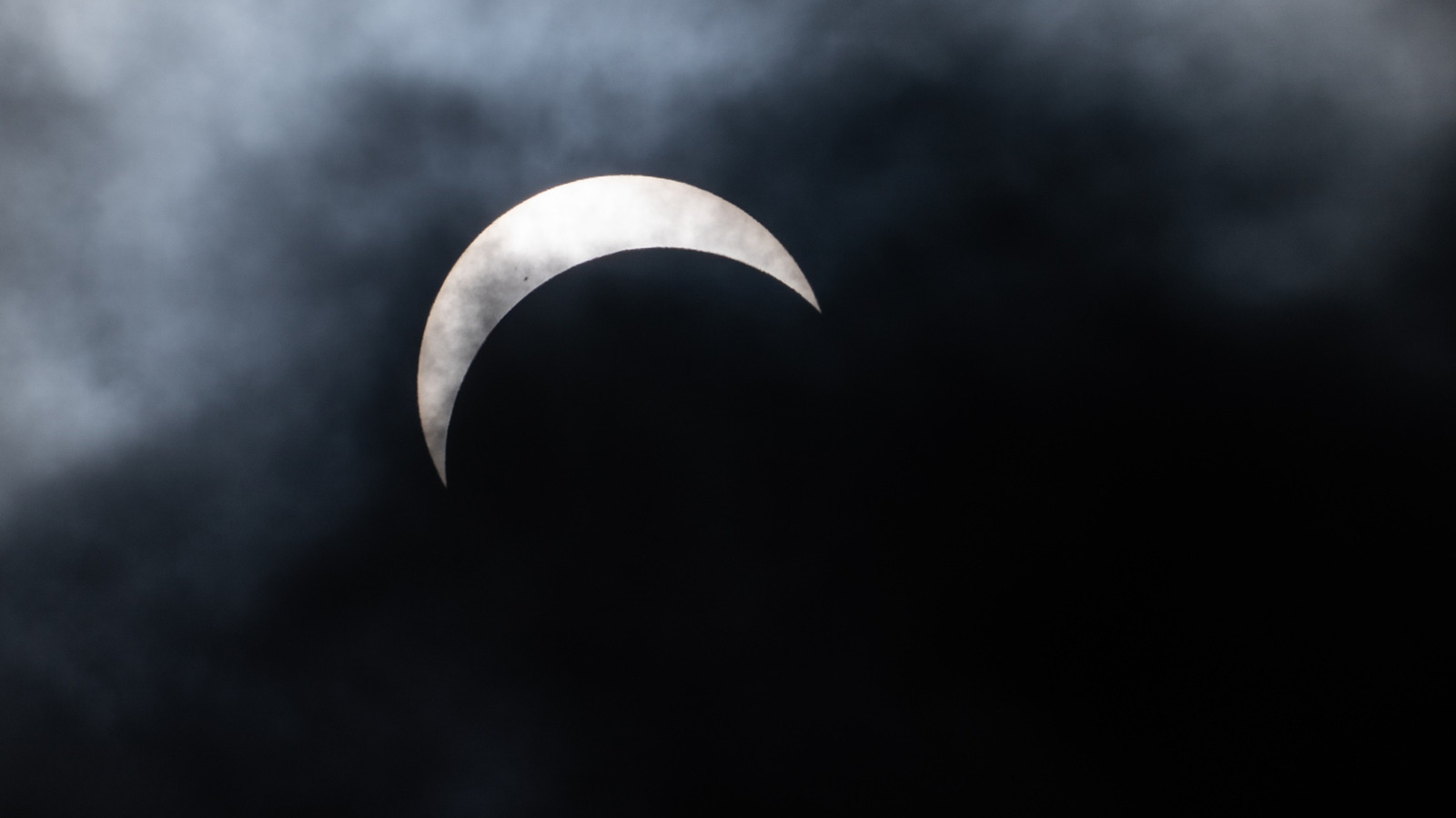
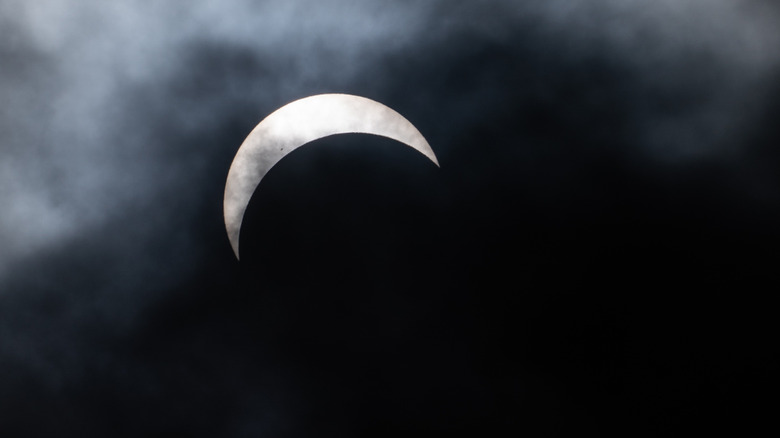
August 2027's event is perhaps the most stunning type of solar eclipse of all, a total solar eclipse. Compare this to a partial solar eclipse, where only a small sliver of the Sun is obscured, or a hybrid eclipse, which occurs when the Moon's movement makes it appear to be more than one different type, depending on where it's viewed from and at what point during its progress. There's also the annular eclipse, when a distinctive portion of the Sun is visible, appearing as a halo of light.
A lot of the drama surrounding the Eclipse of the Century stems from the fact that it's going to have one of the longest total solar eclipse paths in a very long time. The number to note is the totality, which is how long the Moon actually obscures the Sun for. In some cases, this can be just a few seconds, but there's a lot of variation: The longest that a totality can take, according to the Natural History Museum, is a leisurely 7 minutes, 32 seconds. In July 1991, a total solar eclipse lasted 6 minutes, 52 seconds, and there hasn't been one that has lasted as long since. The upcoming August 2027 eclipse won't be quite that long, but it is projected to be 6 minutes, 23 seconds, the longest total eclipse since the turn of the millennium. As a result, it's going to be a sight to behold.