 Vzwer/Getty Images
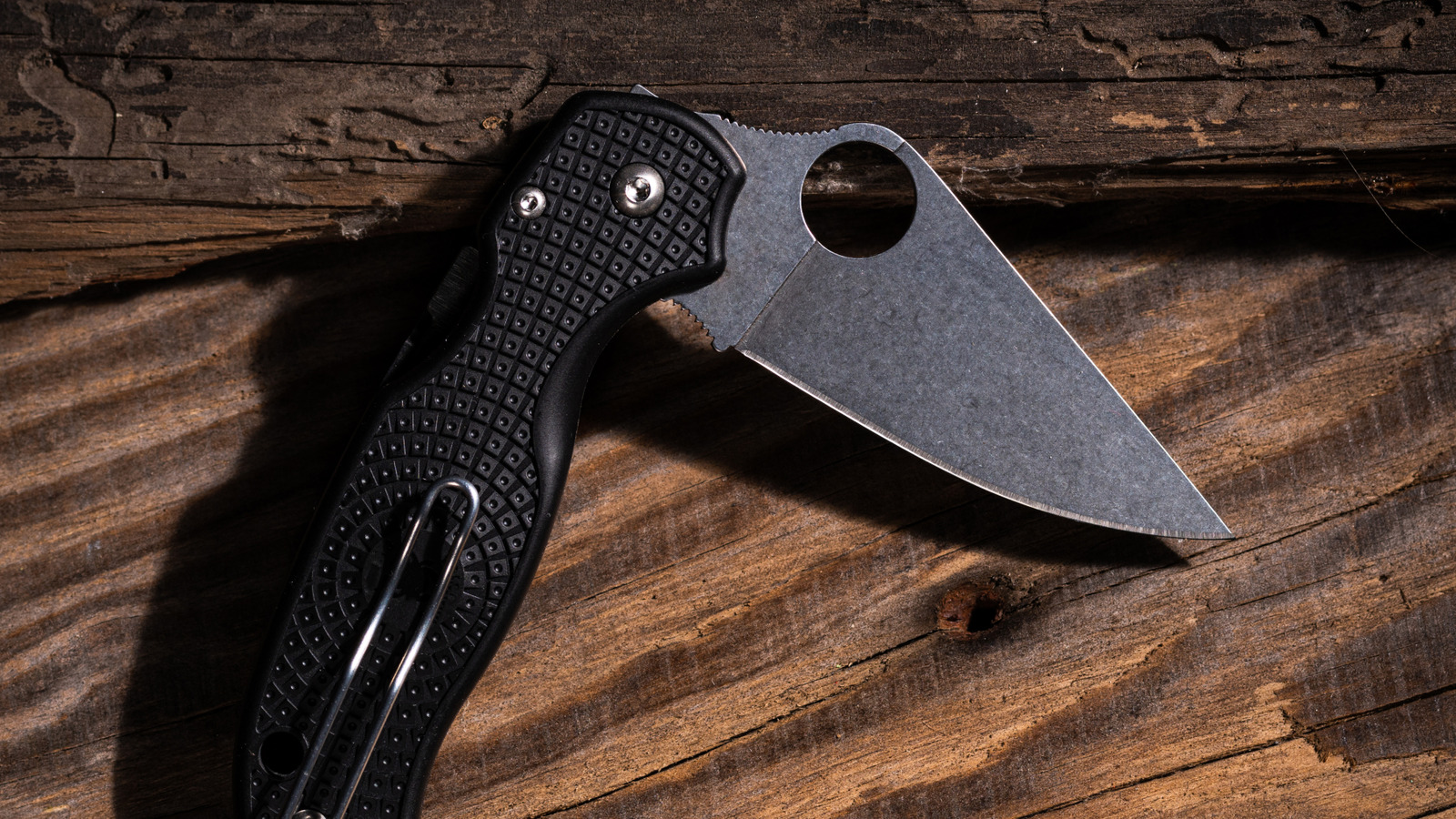
There are quite a few very specific details that go into the forging of a knife, but have you ever thought about the hole in the blade and the purpose that it serves?
A knife blade is a very precise instrument, designed to hold an edge, cut through any number of materials reliably, and last the test of time for generations. That may make it surprising when you discover there is, for some reason, a massive hole right in the blade of your knife.
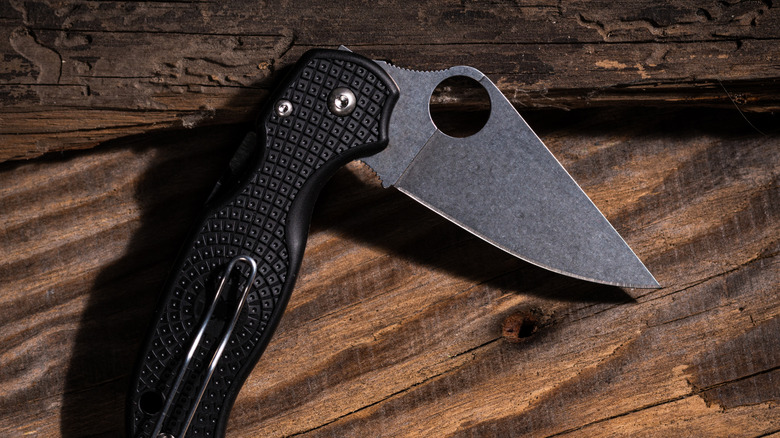
Yours may not have one depending on when and who made it, but you'll see holes punched into knife blades pretty commonly. These serve a number of purposes, including some particularly mundane ones, like just being a place for your thumb to catch to open a lockback or as a place to hang a large cleaver. However, the most common reason is to help reduce the weight of the blade.
Holes in your knives reduce blade weight
 Itsme23/Getty Images
You've probably heard the myth that medieval swords have a groove down the middle to serve as a "blood groove" for when someone is stabbed. That's not true, though; the etched groove serves to reduce the weight of the sword, not to prevent the blade from being stuck in a body via suction.
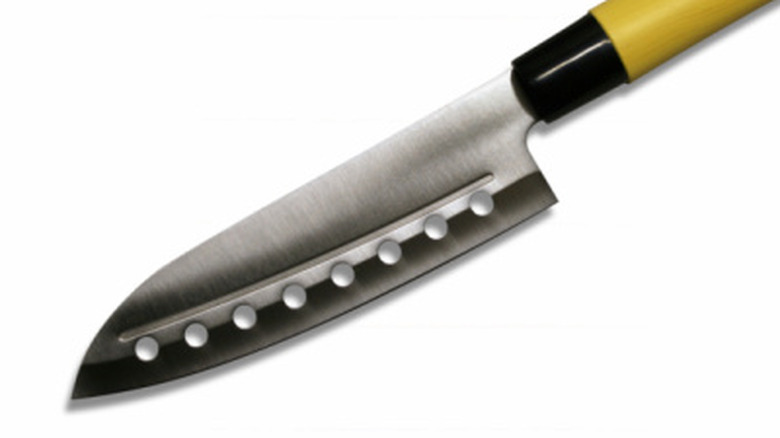
It's the same principle for punching holes in a knife blade, whether it's a utility knife, a pocket knife, or something you're using around the kitchen. Blades are precision instruments, and they need to be able to be sharpened and balanced while still feeling good in hand. Placing holes in the blade allows for the knife to maintain its balance and strength while also making for a lighter, and therefore more maneuverable, cutting instrument.
There are other claims, such as that the holes help to reduce friction when cutting. However, there's not a lot of evidence that this is actually significantly helpful. Regardless, the hole in your knife blade is an important and overlooked part of the construction that contributes to just how effective it is.