
- Pro
InPhase Technologies aimed to blaze a trail in holographic storage, but production delays and tight deadlines scuppered success
Comments (0) ()When you purchase through links on our site, we may earn an affiliate commission. Here’s how it works.
 (Image credit: Shutterstock)
In the early 2000s, a Bell Labs spin-out aimed to shake up the storage industry with the development of powerful new holographic devices.
Holographic storage, which has since drawn the attention of a host of big tech companies, including Microsoft, could’ve potentially offered huge data storage gains compared to traditional methods.
You may like-
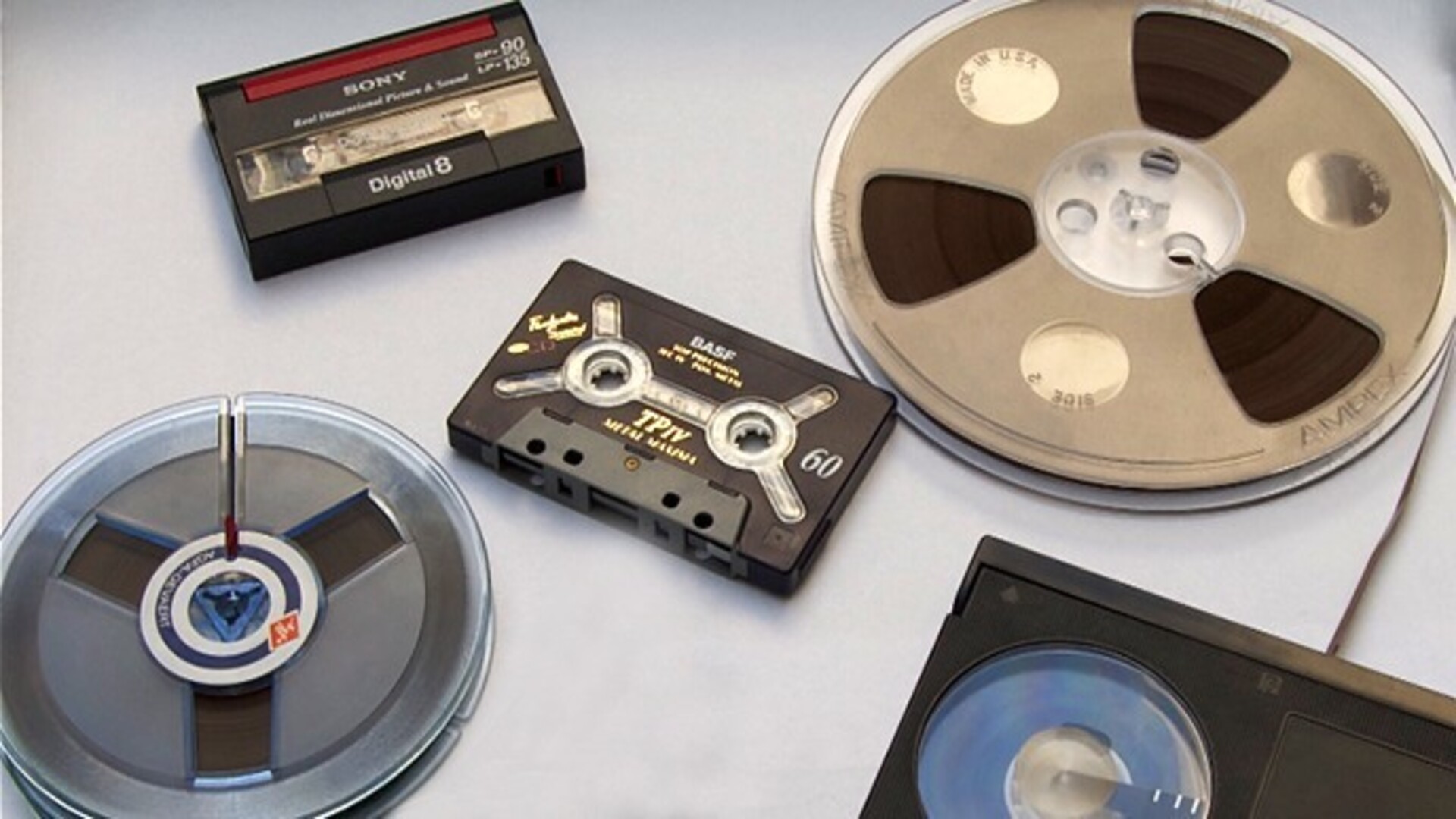 LTO tape storage is still going strong despite Elon Musk's efforts to wipe it out - and there's now even 40TB cartridges for the AI age
-
 Own a piece of storage history - Cerabyte gives away framed ceramic on glass media samples containing copies of the US Constitution
-
 The staying power of tape storage in the AI era
Having spun out from Bell Labs in 2000, Colorado-based InPhase Technologies looked to blaze a trail in this emerging domain, promising multi-terabyte storage devices that, if marketing materials were taken at face value, would’ve blown competition out the water.
Backed by a sizable investment, InPhase was working on a tight schedule. Years’ worth of development eventually culminated in the launch of Tapestry 300r, which offered users a whopping 300GB of storage capacity and boasting read/write transfer rates of 20 MB/s.
Ultimately, development of holographic storage devices proved costly and laborious. Reports from The Register in 2010, citing sources at the company, detailed an array of production challenges as well as “unrealistic product development timescales”.
Are you a pro? Subscribe to our newsletterContact me with news and offers from other Future brandsReceive email from us on behalf of our trusted partners or sponsorsBy submitting your information you agree to the Terms & Conditions and Privacy Policy and are aged 16 or over.“Our correspondent from the trenches said: ‘Over the two years I was there, we mostly had problems with sensitivity of materials. By that I mean that motors weren't as precise as they needed to be or we didn't have fine enough control over the laser’.”
You may like-
LTO tape storage is still going strong despite Elon Musk's efforts to wipe it out - and there's now even 40TB cartridges for the AI age
-
Own a piece of storage history - Cerabyte gives away framed ceramic on glass media samples containing copies of the US Constitution
-
The staying power of tape storage in the AI era
Holographic storage renaissance
While InPhase’s story ended abruptly in late 2011, holographic storage is still a point of focus for a range of big tech companies and researchers. In 2020, for example, Microsoft unveiled the launch of a research group specifically focused on driving advances in holographic storage.
The initiative, dubbed Project HSD (Holographic Storage Device), aimed to explore how the technology could be used to address key challenges associated with traditional cloud storage mediums, including low data density and poor access rates.
As we reported in July 2025, the holographic storage space is also giving rise to a booming startup ecosystem, with UK-based HoloMem developing a holographic system to replace LTO tape.
Founded by Charlie Gale, a former Dyson engineer, HoloMem;s technology uses polymer ribbon cartridges with cheap, $5 laser diodes. The company claims each cartridge could offer users up to 200TB capacity.
The aim here, of course, is to supplant LTO tape. However, the firm is developing its solution to match LTO dimensions, meaning it can be easily integrated within existing tape libraries and removing the need for a costly overhaul.
- Looking for cloud storage for your business? Check out our top picks
Ross Kelly is News & Analysis Editor at ITPro, responsible for leading the brand's news output and in-depth reporting on the latest stories from across the business technology landscape.
You must confirm your public display name before commenting
Please logout and then login again, you will then be prompted to enter your display name.
Logout Read more
LTO tape storage is still going strong despite Elon Musk's efforts to wipe it out - and there's now even 40TB cartridges for the AI age
Own a piece of storage history - Cerabyte gives away framed ceramic on glass media samples containing copies of the US Constitution
The staying power of tape storage in the AI era
 Unhackable backup storage could have helped in the M&S hack case by keeping data physically offline - but it comes at a cost
 Toshiba plans 40TB HDD in 2027 with 12 platters - but I fear it is way too little, way too late
 Two years ago, Toshiba used 78 hard drives to reach PCIe 5.0 speeds in massive 1.5PB JBOD setup - but barely anyone noticed
Latest in Pro
Two years ago, Toshiba used 78 hard drives to reach PCIe 5.0 speeds in massive 1.5PB JBOD setup - but barely anyone noticed
Latest in Pro
 Why a minimal UX philosophy outperforms during peak season
 Shopify is down – here's what we know about its Cyber Monday outage
 I broke up with Wix for this website builder - and right now you can get up to 88% off it
 Holafly debuts its one-of-a-kind eSIM Global Data plan that comes with a phone number
 South Korean ecommerce giant Coupang suffers huge data breach - over 33 million accounts affected, here's what we know
 Why the most impactful AI strategies still start and end with people
Latest in Features
Why the most impactful AI strategies still start and end with people
Latest in Features
 How to get Norton VPN on your iPhone or Android mobile
 This is exactly what I would do if I wanted a website this Cyber Monday: checkout and page building advice
 I asked ChatGPT and Gemini to improve my mom's Apple Pie recipe, and the results were unforgettably bad
 ChatGPT turns 3 – after coming so far, here's what's next
 Apple, Google required to provide digital ID tools under Missouri age verification law – but are they ready?
 Black Friday VPN deals: our survey says you want huge savings – these three deliver
LATEST ARTICLES
Black Friday VPN deals: our survey says you want huge savings – these three deliver
LATEST ARTICLES- 1This obscure company could’ve taken the storage market by storm – but building commercially viable holographic storage was simply a bridge too far
- 2James Cameron declares war on ‘horrifying’ AI actors
- 3Google's AI-powered Antigravity IDE already has some worrying security issues - here's what was found
- 4How to get Norton VPN on your iPhone or Android mobile
- 5“I promise you, you will have work to do” - Nvidia CEO Jensen Huang urges everyone to use AI as much as possible, says it's "insane" for people to want to use it less