- News
- Science
Researchers urge public not to handle stranded sea snakes as they are highly venomous
Vishwam SankaranTuesday 02 December 2025 06:45 GMTComments
 CloseSouth Asia floods: Over 500 killed in Indonesia, 340 in Sri Lanka, 170 in Thailand
Sign up for our free Health Check email to receive exclusive analysis on the week in health
Get our free Health Check email
Get our free Health Check email
Email*SIGN UPI would like to be emailed about offers, events and updates from The Independent. Read our Privacy notice
Scientists are sounding the alarm after an unusually high number of sightings of sea snakes washed up on beaches in Australia.
Over a dozen highly venomous sea snakes have washed up dead or become stranded in Australia’s Nanga Bay since October, raising concerns about their marine ecosystem.
Northern Australia’s waters are home to over 20 species of sea snakes, all of which are classified as protected marine species, and two are critically endangered.
Scientists are unsure exactly what is causing the high number of sea snakes to wash up on the shore, and urged the public to help record any sightings on the Australian Sea Snakes Facebook page.
“Sea snake numbers are declining, but we are unsure why. What we do know is that they are often caught as ‘bycatch’,” the Australian Department of Climate Change, Energy, the Environment and Water (DCCEEW) said.
“If you come across any sea snake strandings in Shark Bay/Gathaagudu, either in real life, or on other groups, could you please encourage people to report strandings here,” sea snake researcher Blanche d'Anastasi posted in a Facebook group, which has since gathered over a dozen posts of strandings.
However, researchers urged the public not to handle the stranded sea snakes as they are highly venomous and have a delicate spine.
“Sea snakes are aquatic and have very fragile tissue, bones and joints, fit for life underwater,” Ms d’Anastasi said in a post.
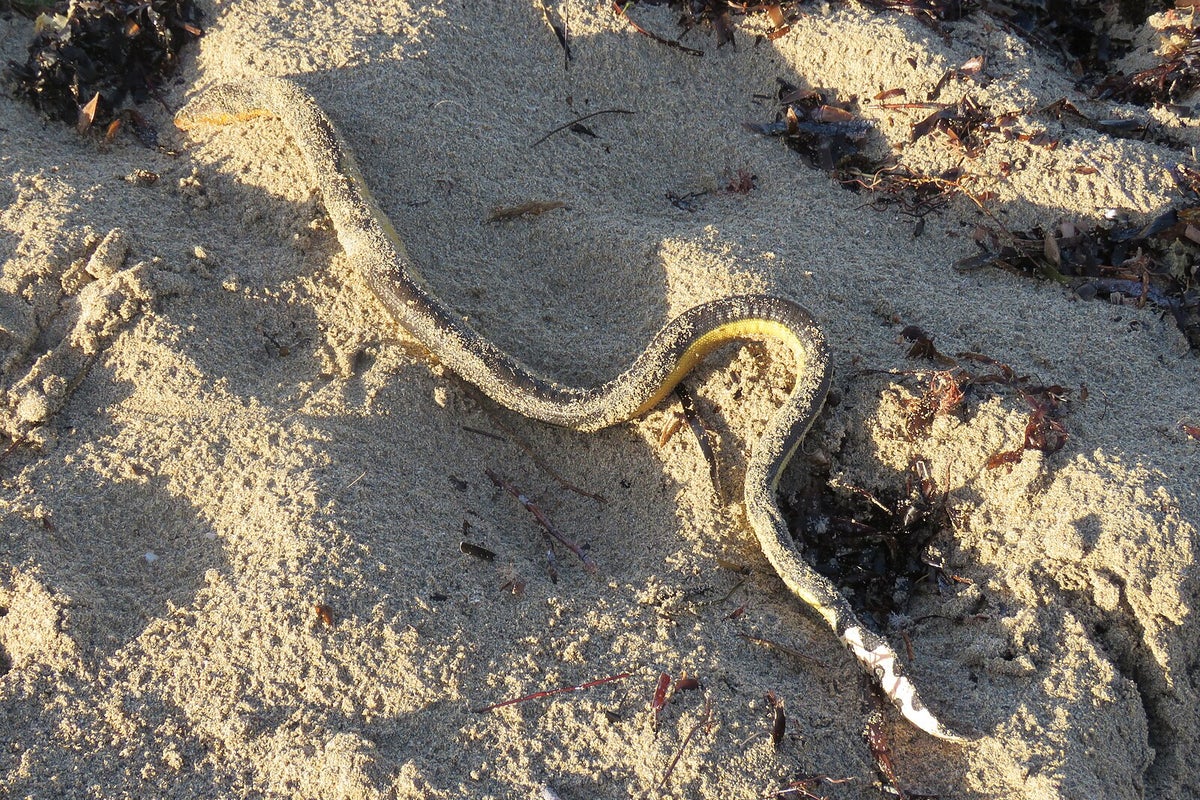
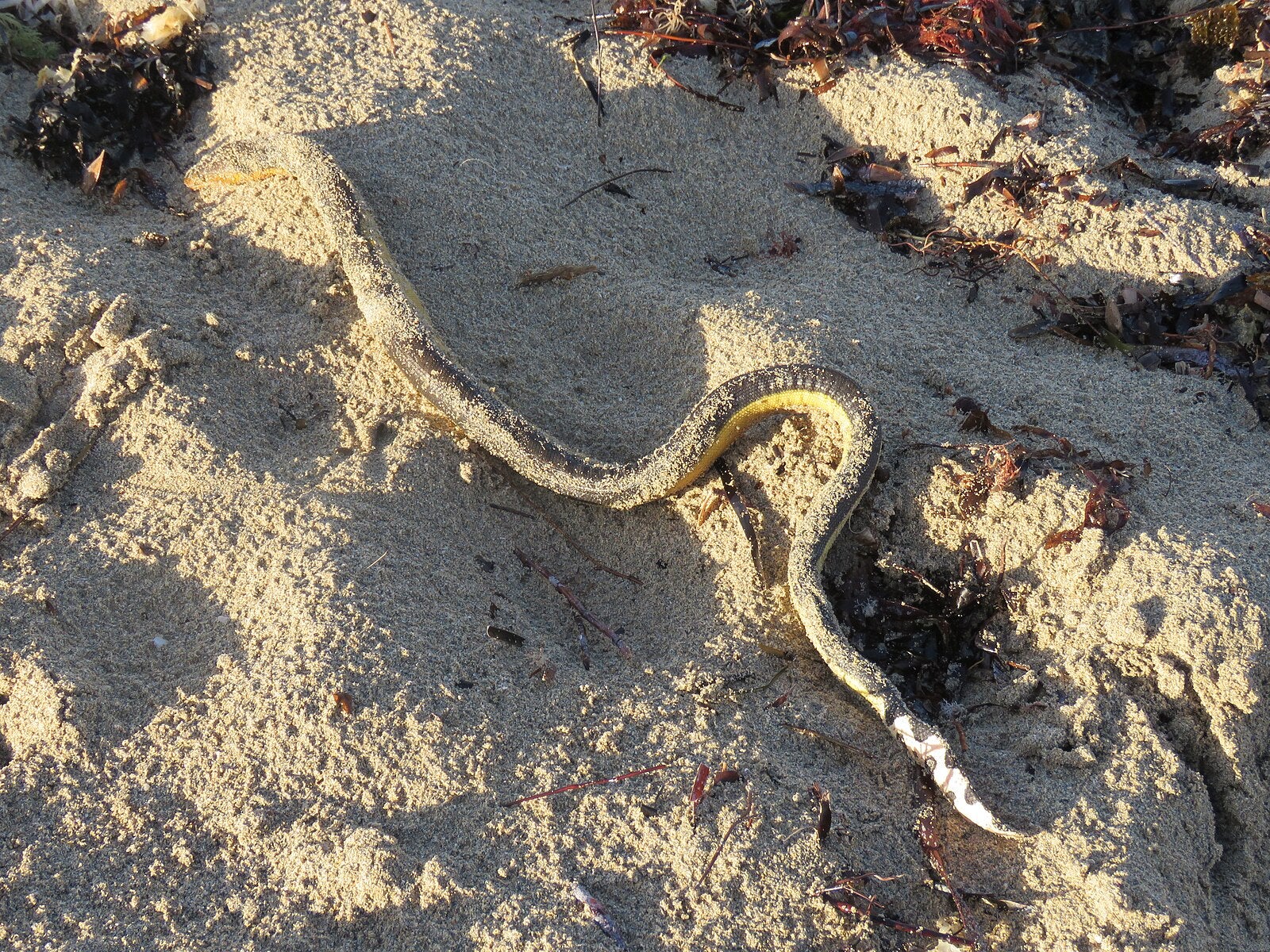 Dead yellow-bellied sea snake washed up at Shoalwater Bay, Western Australia (Wikimedia Commons)
Experts are still trying to understand what is causing the stranding events.
"We know sea snakes really don't cope well with really big weather events, they get caught up in all of the amphibolis sea grass that washes up after cyclones," Ms d'Anastasi told ABC News.
“True sea snakes have no need to come ashore, so when one becomes stranded, there is most likely an underlying illness or injury,” she posted on Facebook.
For instance, following a deadly heatwave that hit Shark Bay in 2010, there was reportedly a 76 per cent decline in the local population of sea snakes.
"Sea snakes are something that used to be really quite abundant, and then following that heatwave they've really declined savagely," the researcher said.
Experts also urged the public not to push stranded snakes back into the water as beached Sea Snakes tend to wash ashore again.
“Stay at a safe distance from the animal and do not touch it. Sea snakes have long fixed front fangs and are capable of envenoming people,” Ms d'Anastasi shared in a post.
“Report your sighting to the Australian Sea Snakes Facebook group if possible, with a time, date, location and any details about behaviour or the outcome for the snake,” she said.
More about
SnakesspeciesJoin our commenting forum
Join thought-provoking conversations, follow other Independent readers and see their replies
Comments