- Lifestyle
- Health & Families
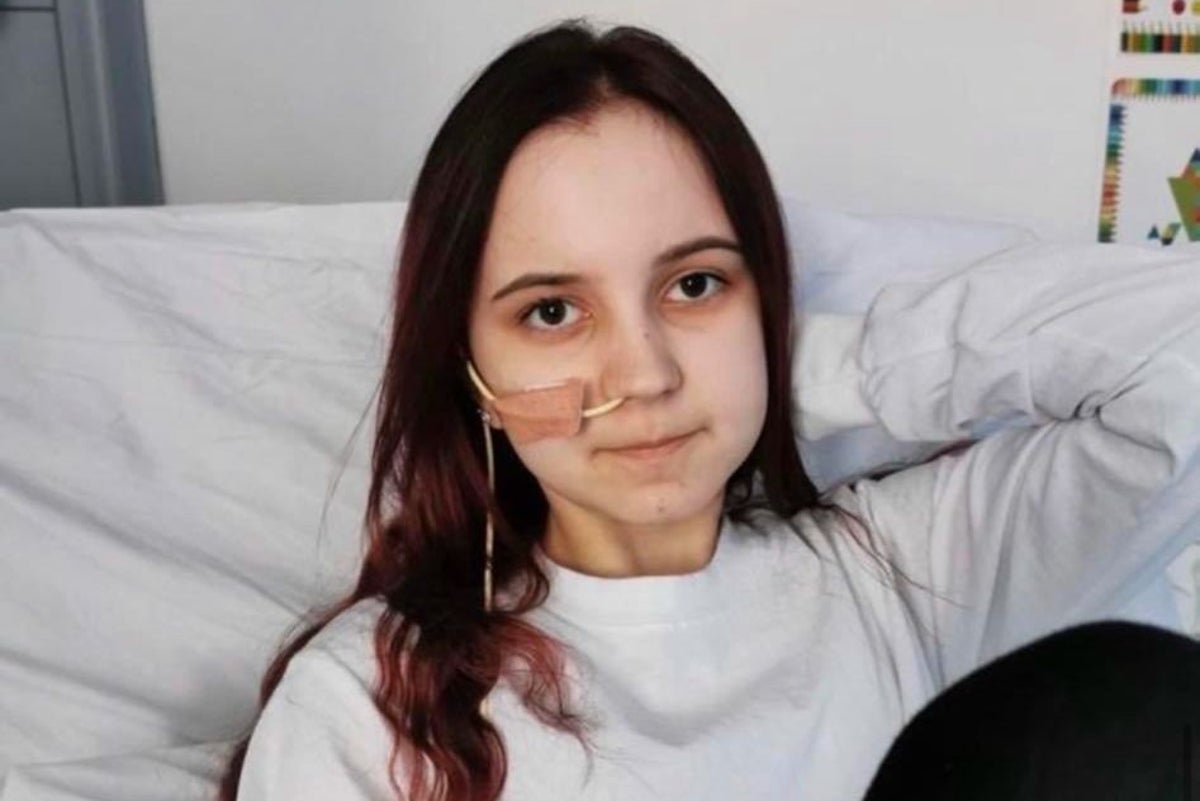
Lucy Dare, 21, has been battling symptoms of Crohn’s disease since she was 12
Rachael DavisTuesday 02 December 2025 09:09 GMT
 CloseCrohn's sufferer calls on public to get checked as she shares diagnosis story
Sign up to our free Living Well email for advice on living a happier, healthier and longer life
Live your life healthier and happier with our free weekly Living Well newsletter
Live your life healthier and happier with our free weekly Living Well newsletter
Email*SIGN UPI would like to be emailed about offers, events and updates from The Independent. Read our Privacy notice
A woman has told of her long, painful journey to being diagnosed with Crohn’s and how she still struggles to this day with the disease.
Lucy Dare’s symptoms, which started at 12, included rectal bleeding, severe abdominal pain, weight loss, fatigue, and using the toilet up to 15 times daily, alongside difficulty eating. But for years, neither she nor her doctors understood the cause.
Crohn’s disease, a long-term inflammatory bowel disease that currently cannot be cured, causes repeated flare-ups of symptoms including diarrhoea, stomach pain, anal pain, weight loss and blood or mucus in stools.
Doctors initially thought Ms Dare was experiencing an eating disorder as at 13 years old she weighed just 38kg.
This, compounded by symptoms like needing to use the toilet urgently after mealtimes, led medical professionals to assume she had anorexia or bulimia.
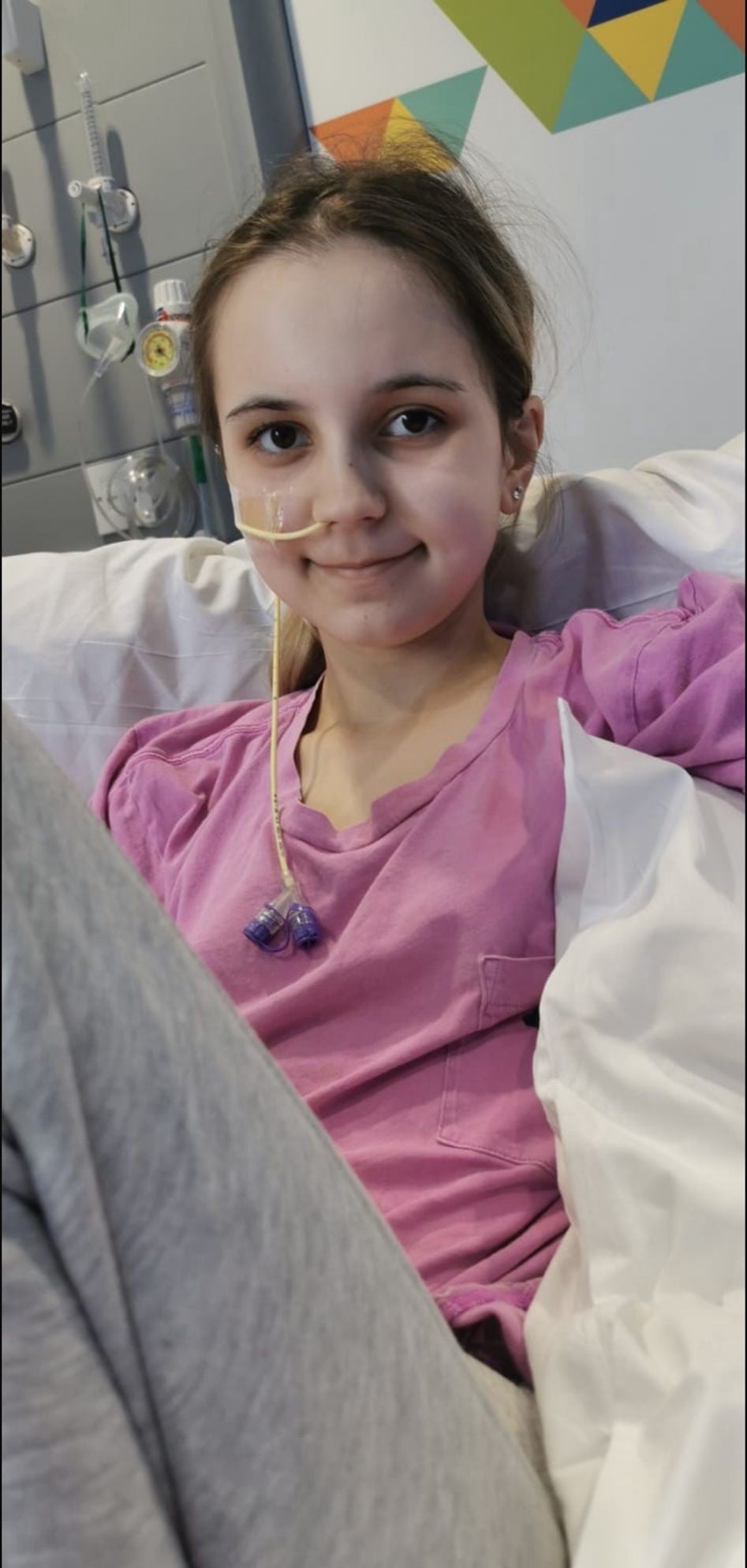 open image in galleryLucy Dare suffered with Crohn’s for years without receiving a medical diagnosis (PA)
She spent six months as an inpatient at an eating disorder unit near her home in North London, and when her symptoms hadn’t improved by the end of her stay, she was finally referred for an endoscopy and colonoscopy to explore the possibility of a physical illness.
She said: “Because I was such a low weight, and a young girl, they just assumed it was an eating disorder. They admitted me into an eating disorder unit, for six months to stay away from home.”
“It was really horrible.
“There were girls in there self harming, ripping tubes out, getting restrained, and I was just there in pain. I was confused about what was going on, why I was there, because I didn’t feel how they felt.”
In 2019, Ms Dare had a colonoscopy which diagnosed her with Crohn’s disease.
She was prescribed infliximab and azathioprine, and put on the Modulen liquid diet to give her bowel a rest, so she couldn’t eat for six weeks – including her Christmas dinner.
After spending nearly a year in the hospital and the eating disorder unit, Ms Dare was able to get a weekend job in a hairdressers. After her first shift, she finally felt up to going out to see her friends, and she went for dinner at a local restaurant before going to her friend’s house for the evening.
Shortly after arriving at her friend’s house, however, Ms Dare started experiencing excruciating abdominal pain.
“Suddenly, it just came on,” she said.
“I rushed to the toilet. I was just going to the toilet and vomiting non-stop, just really coming out. I couldn’t walk or anything.
“My mum had to come over to my friend’s house, pick me up and bring me down the stairs to go to A&E. Then they admitted me.”
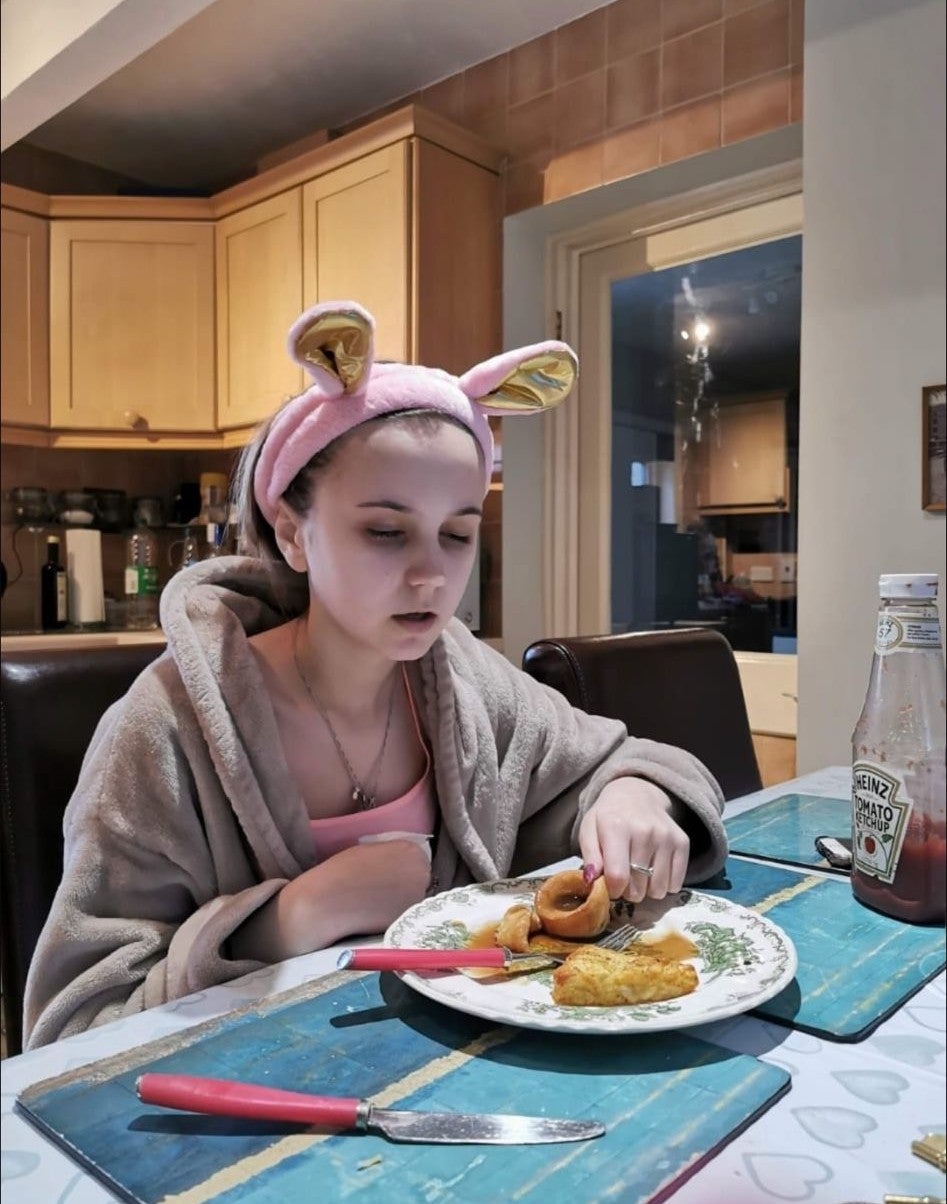 open image in galleryMs Dare has long struggled to eat and keep her food down due to the disease (PA)
For the first two days of her hospital stay, Ms Dare was told that since doctors couldn’t hear any unusual sounds from her stomach, it was likely “all in your head”, and perhaps it was food poisoning causing her sickness.
“My mum was like: ‘No, there’s something wrong. You need to do a scan, she’s not OK’,” she said.
Ms Dare’s vomit was brown, which turned out to be faecal matter from her bowel, and her diarrhoea was a “luminous green” colour. Her mum, Leza, was concerned that her bowel had perforated and that she was experiencing peritonitis, a severe infection, and urged doctors to conduct a CT scan.
Indeed, the CT scan confirmed that Ms Dare’s bowel had perforated, a life-threatening condition where a hole forms in the intestine, allowing intestinal contents to leak into the abdomen, and she was immediately rushed into emergency surgery.
Ms Dare was told that following the surgery, she’d wake up covered in tubes and potentially even have a stoma, a surgical opening in the abdomen that allows bodily waste to be diverted into a stoma bag, and it was at this point that fear truly took hold.
“I was staying strong, but once they started saying all of that, that’s when I was scared, like, really scared,” Ms Dare said.
“And then I just burst out crying.”
Ms Dare wasn’t able to have a stoma, due to the location of the surgery, but during the five-hour operation 60cm of her small intestine was removed.
 open image in galleryMs Dare now uses fitness to try and manage her symptoms (PA)
“I remember waking up in the ICU with tubes everywhere. I was so uncomfortable. I was really swollen,” she said.
“I was left to the point when I was actually dying to get any sort of help. If they sent me home the weekend my bowel perforated like they tried to, I would have died.”
Ms Dare was, thankfully, discharged just before the Covid pandemic took hold, so she was able to be with her mum and not be isolated in hospital. But recovery was far from easy.
“The recovery was hard and it was long, just a long time of being uncomfortable and in pain,” she said.
Five years later, Ms Dare still has a long road ahead of her.
It has “been a lot of ups and downs”, she said.
Ms Dare hasn’t been able to work and is currently deemed ineligible to claim personal independence payment (Pip), struggles to leave the house due to her pain and anxiety, and is trying a variety of medications in the hopes that one of them will give her some relief.
She missed the last two years of school due to her illness, which cost her precious social time and education, and she faces severe anxiety around going out, the availability of toilet facilities, and the prospect of being suddenly struck with unbearable pain.
“Since starting treatment, things have actually got worse,” she confessed – though fitness, which she documents through her Instagram @liftwithlucyyy, “gives me clarity, control, and a sense of strength that the illness often challenges”.
“When I was diagnosed, I had Crohn’s in my small bowel and upper GI tract. The last flare I had was pancolitis which was last year.
“The whole of my large intestines was inflamed.
“On Sunday, November 28, I had a duodenoscopy and they diagnosed gastritis, so we are now waiting for the next steps.”
The mother and daughter feel it is essential to raise awareness of Crohn’s disease, and help stop other people from facing the battle Ms Dare fought to get a diagnosis.
Pearl Avery, IBD Nursing Lead at Crohn’s & Colitis UK, said: “Unfortunately, Lucy’s not alone in having had to wait a long time for a diagnosis – for a quarter of those with Crohn’s or Colitis it takes over a year to figure out what’s really going on. Lucy knew there was something wrong and pushed for answers.
“But at Crohn’s & Colitis UK we’ve just done a poll which told us that over half of young adults either don’t know much about Crohn’s and Colitis or have never heard of the conditions at all.
“So, if you’re reading this and you’ve had blood in your poo, agonising stomach pain, unexplained weight loss and frequent, urgent diarrhoea, for example – visit the symptom checker on the Crohn’s & Colitis UK website and go to a doctor.
“Don’t let embarrassment stop you from seeking help. The sooner you find out what’s going on, the better.”