- News
- UK
- Home News
IOPC investigation upholds or finds cases to answer in 92 complaints about police actions over disaster
Dan HaygarthTuesday 02 December 2025 13:01 GMTComments
 CloseTheresa May on Hillsborough
Get the free Morning Headlines email for news from our reporters across the world
Sign up to our free Morning Headlines email
Sign up to our free Morning Headlines email
Email*SIGN UPI would like to be emailed about offers, events and updates from The Independent. Read our Privacy notice
Twelve police officers would have faced gross misconduct proceedings for “fundamental failures” on the day of the Hillsborough disaster and “concerted efforts” to blame fans afterwards, an investigation has found.
The Independent Office for Police Conduct (IOPC) published its report into the role of police in the disaster and its aftermath on Tuesday. 97 Liverpool fans were unlawfully killed at the 1989 FA Cup semi-final, when police opened an exit gate to the ground to alleviate crowding outside and failed to direct supporters away from the tunnel leading to the central pens.
The IOPC report upheld or found cases to answer for misconduct in 92 complaints about police actions. However, the law at the time means no officers will face disciplinary proceedings because they had all retired before investigations began.
12 police officers would have had a case to answer for gross misconduct in relation to the disaster and its aftermath, if they were still serving.
That means that if a disciplinary panel found the allegations proven, they could have been dismissed. Legislation has now been changed so that retired officers can be subject to disciplinary proceedings
Nicola Brook, a solicitor at Broudie Jackson Canter, acting for several bereaved families, said this report does not provide justice for those affected by the disaster as “no one will be held to account”.
She said: “This outcome may vindicate the bereaved families and survivors who have fought for decades to expose the truth – but it delivers no justice.
“Instead, it exposes a system that has allowed officers to simply walk away, retiring without scrutiny, sanction or consequence for failing to meet the standards the public has every right to expect.
“Yes, the law has now changed so this loophole cannot be used in future. But for those affected by this case, that is no consolation. They are left with yet another bitter injustice: the truth finally acknowledged, but accountability denied.”
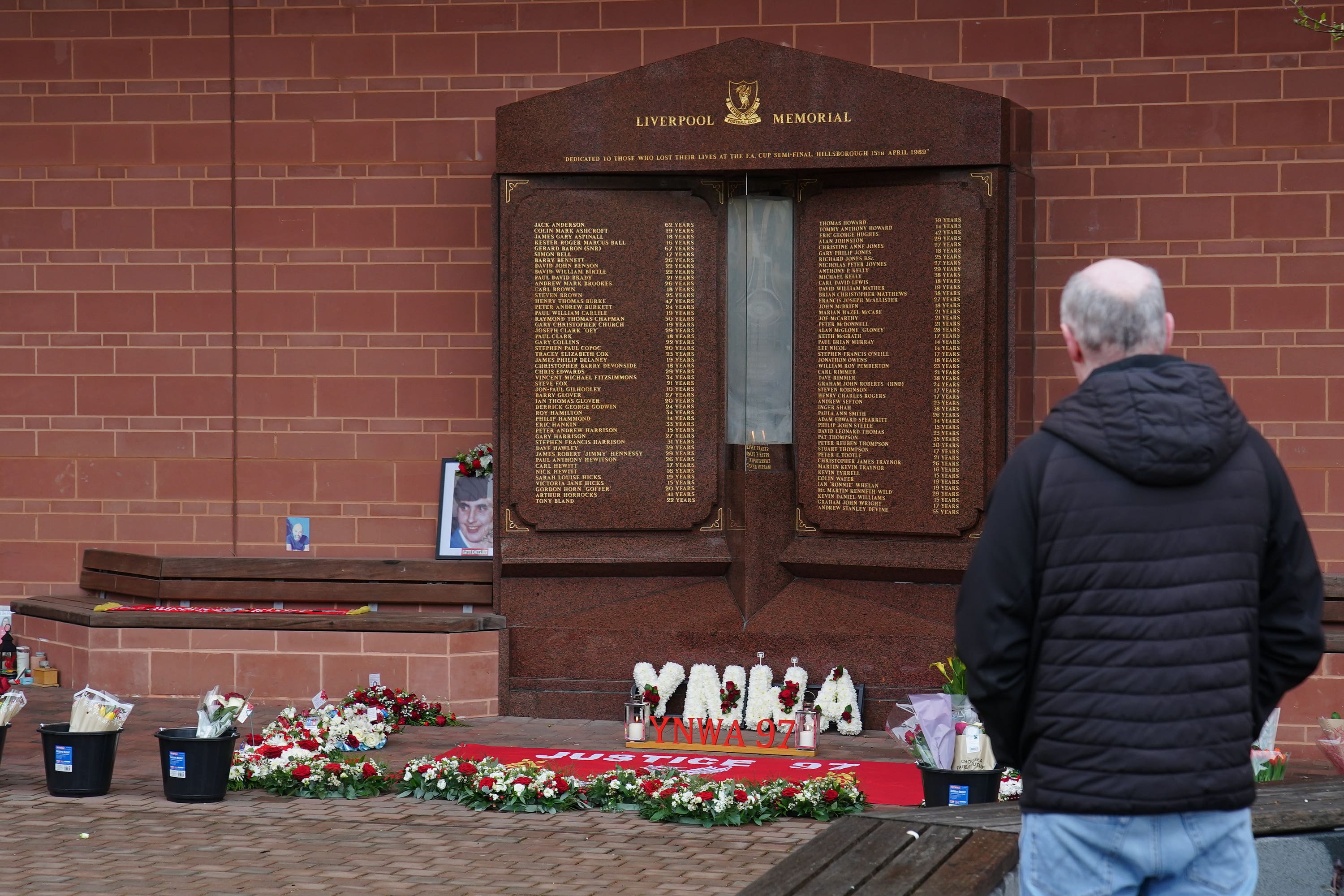 open image in galleryFloral tributes are left by the Hillsborough Memorial at Anfield on the 36th anniversary of the football stadium disaster (Peter Byrne/PA) (PA Wire)
Among those who would have had cases to answer for gross misconduct if they were still serving were South Yorkshire Police’s (SYP) then-chief constable Peter Wright and match commander David Duckenfield, as well as Sir Norman Bettison, who later became Merseyside Police chief constable.
The report’s findings include that Mr Wright, who died in 2011, would have had a case to answer for gross misconduct, had he still been serving, for his part in attempting to minimise culpability and deflect blame for the disaster away from SYP and towards Liverpool supporters.
It reinforces the findings of the Hillsborough Independent Panel Report published in 2012, which concluded that no Liverpool fans were responsible in any way for the disaster and that the main cause was lack of police control. It also supports the Goldring Inquests, which determined in 2016 that all those who died were unlawfully killed.
The new report found that SYP “fundamentally failed” in its planning for the match, in its response as the disaster unfolded and in how it dealt with traumatised supporters and families searching for their loved ones.
It found considerable evidence of a defensive approach adopted by SYP to the investigations and inquiries that followed, as it attempted to deflect blame. This included allegations about the behaviour of supporters, which have been repeatedly disproven.
IOPC deputy director general Kathie Cashell said: “The 97 people who were unlawfully killed, their families, survivors of the disaster and all those so deeply affected, have been repeatedly let down—before, during and after the horrific events of that day.
“First by the deep complacency of South Yorkshire Police in its preparation for the match, followed by its fundamental failure to grip the disaster as it unfolded, and then through the force’s concerted efforts to deflect the blame onto the Liverpool supporters, which caused enormous distress to bereaved families and survivors for nearly four decades.
“They were let down again by the inexplicably narrow investigation into the disaster conducted by West Midlands Police, which was a missed opportunity to bring these failings to light much sooner.
“What they have had to endure over more than 36 years is a source of national shame.”
The West Midlands officers who led the investigation into the disaster, Mervyn Jones, who was assistant chief constable, and then-detective chief superintendent Michael Foster, were referred to the CPS for their failings but the threshold for prosecution was not found to have been met, according to the report.
The IOPC said both former officers would have a case to answer for gross misconduct after failing to conduct a rigorous investigation because they were “biased towards the force and against the supporters”.
Mr Duckenfield, 81, a chief superintendent on the day, was cleared of gross negligence manslaughter by a jury in 2019.
The IOPC report said he “froze in the crisis” and found he had a case to answer for gross misconduct in respect of 10 allegations, including for failing to respond and telling FA officials, in what he later acknowledged was a lie, fans had forced their way in.
The IOPC said its investigation also found that 327 statements from officers had been amended, over 100 more than had previously been uncovered, as part of a defensive approach SYP adopted to control the evidence submitted to the public Taylor Inquiry and WMP.
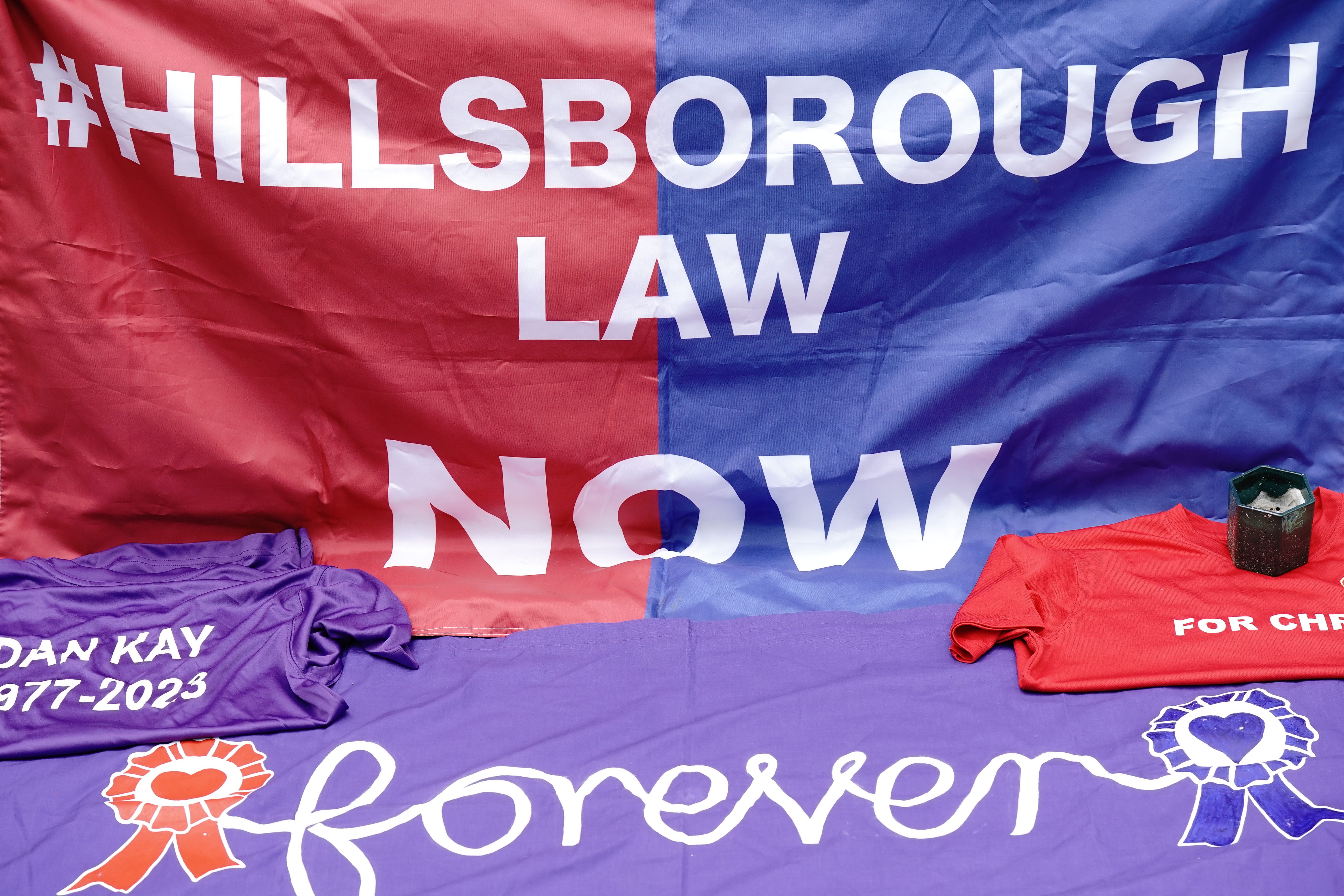 open image in galleryThe ‘Hillsborough Law’ has had its second reading in parliament (Aaron Chown/PA Wire)
Ian Byrne, Labour MP for Liverpool West Derby, is a Hillsborough survivor and the parliamentary lead for the Hillsborough Law Now campaign. He welcomed the report’s findings but said it was further proof of the need for a change in the law.
The Public Office (Accountability) Bill, known as the Hillsborough Law, will force public officials to tell the truth in the aftermath of disasters. The bill had its second reading in parliament last month.
Mr Byrne told The Independent: “It's going to be a hard day for the families and the survivors because of the level of detail within it (the report), but for me there's a sense of relief that they haven't tried to uncover old wounds.”
He added: “The IOPC acknowledged that the Hillsborough Law is much needed and it would have made a whole inquiry a lot shorter, it would have cost a lot less money, because you would have had enforceable duty of candour for the police officers.
“You can face proceedings in retirement now, which is a good thing for any future injustices moving forward. But from a Hillsborough perspective, it sticks in your craw.”
Ms Cashell added: “I hope this report serves as a timely reminder of what happens when organisations focus on protecting their reputation rather than admitting their mistakes and acting to put things right.
“If a legal duty of candour had existed in 1989, it could have helped ensure that all relevant evidence was shared fully and promptly. The families of those who were unlawfully killed would have experienced a far less traumatic fight for answers about what happened to their loved ones. Had that duty existed, our investigations may not have been necessary at all.”
More about
LiverpoolHillsborough disasterIOPCJoin our commenting forum
Join thought-provoking conversations, follow other Independent readers and see their replies
Comments