- News
- UK
- UK Politics
‘None’ of the Labour chancellor’s measures will ‘have a material effect’ on growth, Richard Hughes, the chair of the OBR, has said
Kate DevlinWhitehall Editor ,Millie Cooke,David MaddoxTuesday 02 December 2025 14:03 GMTComments
 CloseAwkward moment Susanna Reid flusters Rachel Reeves in Budget grilling
Sign up to our free Brexit newsletter for our analysis of the continuing impact of Brexit on the UK
Sign up to our free newsletter for the latest analysis on Brexit's impact
Sign up to our free newsletter for the latest analysis on Brexit's impact
Email*SIGN UPI would like to be emailed about offers, events and updates from The Independent. Read our Privacy notice
The UK’s faltering economy risks worsening due to a steep fall in the number of people moving to the UK for work, exacerbated by Brexit, experts have warned.
Following a warning that the UK is already experiencing a “dangerous” brain drain of some of the UK’s brightest and best, fresh figures from the Office for National Statistics (ONS) showed nine out of 10 Brits emigrating in the year to June were of working age.
Leading economists said that if the low levels of net migration – the number of people arriving in the UK versus those leaving – continue, the UK’s economic growth forecasts risk being downgraded again just days after the Office for Budget Responsibility (OBR) slashed predictions for next year and the three years after that.
It comes after the Organisation for Economic Co-operation and Development (OECD) on Tuesday sounded an alarm that a slowing in labour productivity, partly due to a drop in the number of workers coming to the UK, was stalling the economy.
The Independent can also exclusively reveal warnings from a senior executive at one of the world’s leading recruitment companies that the brain drain from the UK because of Brexit is worse than previously believed.
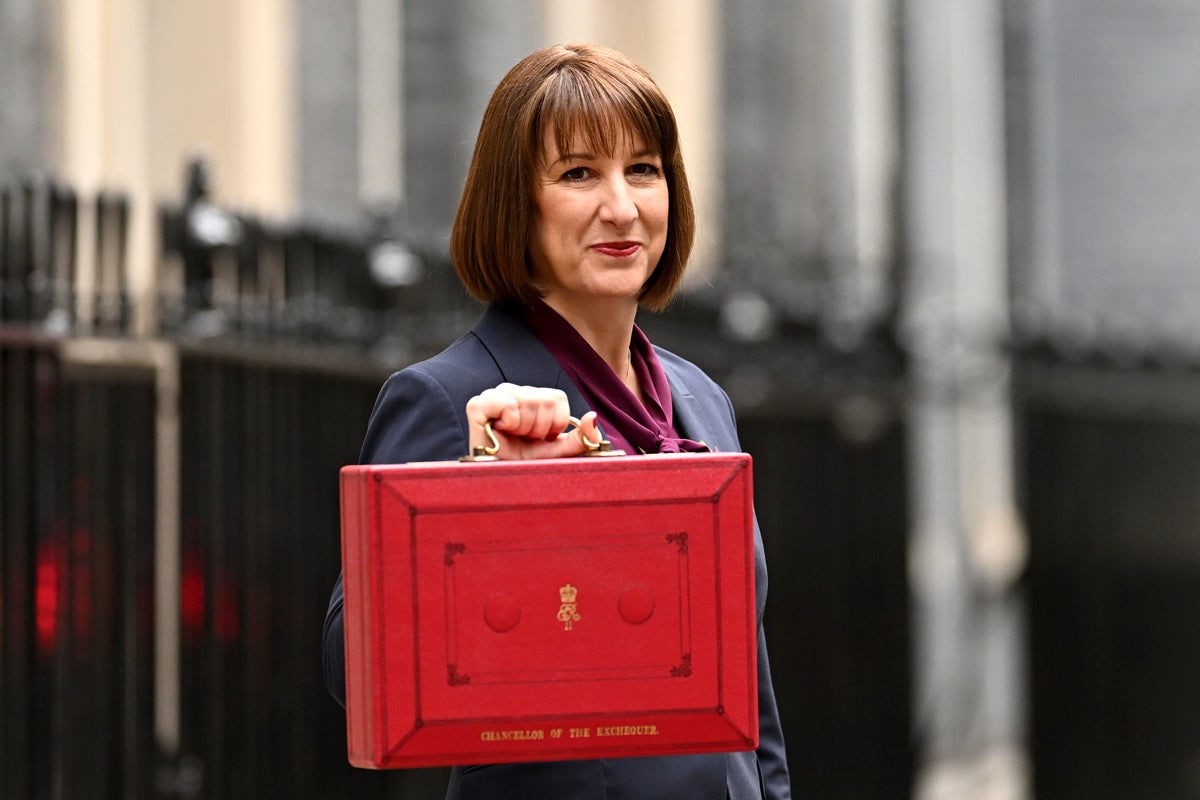
 open image in galleryRachel Reeves has been warned of a new risk to the economy days after her Budget (Getty)
It places more pressure on Rachel Reeves days after she unveiled a Budget which the OBR said contained no measures which would have a “material effect” on growth, but did raise £26bn in taxes.
The ONS figures show that net migration to the UK has fallen by two-thirds in a single year, driven by a huge drop in people coming to Britain for work or study, following a crackdown started by the last Conservative government but continued under Labour.
In the 12 months to June, net migration was an estimated 204,000 – down 69 per cent from 649,000 a year earlier and the lowest annual figure since 2021, after it peaked at 944,000 in 2023. And of the 252,000 British nationals who had emigrated, 90 per cent of them of working age, Mary Gregory, executive director for population and census at the ONS, said.
Oxford Economics chief UK economist Andrew Goodwin said that if the net migration remains at these low levels, “it increases the chances that the OBR will again be forced to downgrade its forecasts at a future fiscal event”.
Jonathan Portes, economics professor at King’s College London and the former chief economist at the Cabinet Office, said while the fall was mostly driven by fewer people from outside the EU coming to work and study and more leaving as their visas expire, he said the impact of people emigrating from the UK would be “negative” as it was reasonable to assume that they were quite skilled and possibly high-earning.
He also accused Labour of “incoherent and economically illiterate” statements on growth, which the government insists is its top priority, saying “their policies on work and study visas are reducing growth and making the fiscal position worse”.
“Reducing migration in the way they are doing is an act of economic self-harm, and they are claiming it as a policy success,” he added.
 open image in galleryNine out of 10 Brits emigrating in the year to June were of working age, ONS figures show (Getty/iStock)
Rakesh Patel, managing director for the UK & Rest of Europe at recruiter SThree, said the issue has been made worse by Brexit and is worse among high-skilled science, technology, engineering and mathematics (STEM) workers, who make up the workforce for developing industries in the UK. He claimed that “while the EU moves to attract more international talent through the new EU Talent Pool, the UK is moving in the opposite direction – and is now facing an exodus of skilled talent as a result”.
SThree’s latest STEM Workforce Report reveals that one in four STEM employers has seen talent move overseas in the past year while 13 per cent of STEM workers are actively planning to relocate.
Another 25 per cent of them are considering relocating while 62 per cent fear tougher UK immigration rules will damage competitiveness. A third (32 per cent) say the UK’s immigration policy restricts them from hiring candidates from other countries – a further two in five (41 per cent) say their organisation won’t sponsor visas.
 open image in galleryDoctors are among those leaving, the BMA said (PA)
Karl Williams, from the Centre for Policy Studies think tank told said it was likely that those leaving the UK are “young, ambitious graduates”. He said that the loss of workers, such as the loss of resident doctors and other healthcare professionals, “it's not just a hit on the economy, it's also a hit on public services”.
Research he conducted a few years ago showed that in order to keep spending on pensioners per head at roughly the same level it is now, without increasing taxes or borrowing, the UK would need economic growth of an average of 2.9 per cent. The OBR has forecast that it will be just 1.5 per cent this year.
“That just looks so far beyond the bounds of possibility at the moment,” he added. “And the real worry is that the people leaving are going to be the top earners, either now or in the future”.
He said that in order to prevent emigration by younger workers, ministers should lower the cost of living around housing and energy prices, but stated that this would take time. A more immediate move would be to cut taxes, allowing young people to keep more of the money they earn, but “the Budget has gone completely in the opposite direction”.
Dr Amit Kochhar, chair of the British Medical Association, which represents doctors, said: “Taxpayers invest thousands of pounds in training up UK doctors, only to now watch many of them take their skills abroad. Four thousand left last year and thousands more are filling out the paperwork to get out. Meanwhile patients are being seen in hospital corridors thanks in part to the overstretching of the workforce that remains. It's a ludicrous waste of resources.”
He called for the government to address wages and tackle the lack of training places that he said was “robbing doctors of their careers here”.
A government spokesperson said: “We are delivering a more controlled migration system that promotes growth with settlement fast-tracked for high earners and entrepreneurs. That’s while net migration is at its lowest level in half a decade and has fallen by more than two-thirds under this government as we end the use of asylum hotels and crack down on illegal immigration.
“Attracting the brightest and the best to Britain is part of our plan for a strong and secure economy, building on the Budget that delivered on the priorities of the British people – cutting NHS waiting lists, cutting borrowing and cutting the cost of living.”
More about
MigrationBudgetOffice for Budget ResponsibilityRachel ReevesOffice for National Statisticsbrain drainJoin our commenting forum
Join thought-provoking conversations, follow other Independent readers and see their replies
Comments