 Sjo/Getty
The 1970s were one of the worst eras for the automotive industry, especially as gas shortages during the decade forced automakers to rethink their model lineups. This has since been called the "Malaise Era," and it's remembered mainly for some of the worst cars built during that time. These were often large land barges that lacked the power to move at a decent pace, or models that carried the names of the fastest muscle cars from the '60s but came with anemic engines. And while these vehicles may look the part, they certainly did not drive the same way.
But aside from these poor-performing beasts, some automakers also made cars that felt right but just absolutely looked wrong. Some of these cars actually had acceptable performance (at least for the time), and their designs might even have been groundbreaking. But unfortunately, their looks just aged like fine milk. These are some of the vehicles from the 1970s that we wouldn't want to be seen in today.
1970 AMC Gremlin
 I, Bob DuHamel/Wikimedia Commons/CC BY-SA 3.0
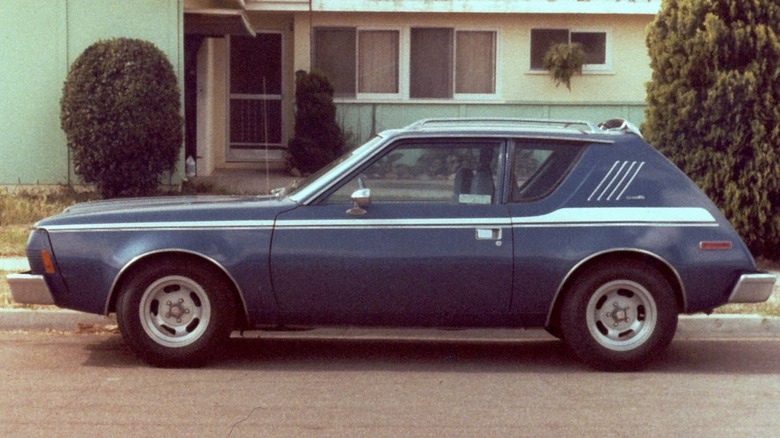
The 1970 Gremlin was AMC's answer to the arrival of cheap import cars, and it would launch alongside other subcompact American cars like the Ford Pinto and Chevrolet Vega, which were among the worst cars Ford and GM ever made. However, AMC did not have enough money to build a completely new model at that time, so the company did what any cost-cutting carmaker would do — get an already existing model and cut it down to size. While the front half (or two-thirds) of the vehicle retained the styling of the larger Hornet, which it was based on, the rear used a rather unique Kammback design that was supposed to cut down on drag, but its designer alluded that it was also done for styling.
"I don't think the Gremlin's going to win any styling awards," AMC design chief Dick Teague said in an interview with MotorTrend. "But at least the car has personality and character, and it has a different-looking little image. It isn't just another little funny-looking sedan. It's a cute little wagon that looks like it'll do the job that we intend for it to do." He also added, "If you're going to do a mini anything, it ought to be a mini wagon."
This unique look certainly turned heads when it came out, but it didn't fare any better over time. Since the car's design was mostly lifted from the larger Hornet, it felt disproportionate. The hood and front doors of the Gremlin looked fine, but its rear end seemed as if it had just been chopped off to save on materials and labor.
1975 AMC Pacer
 Charles01/Wikimedia Commons/CC BY-SA 3.0
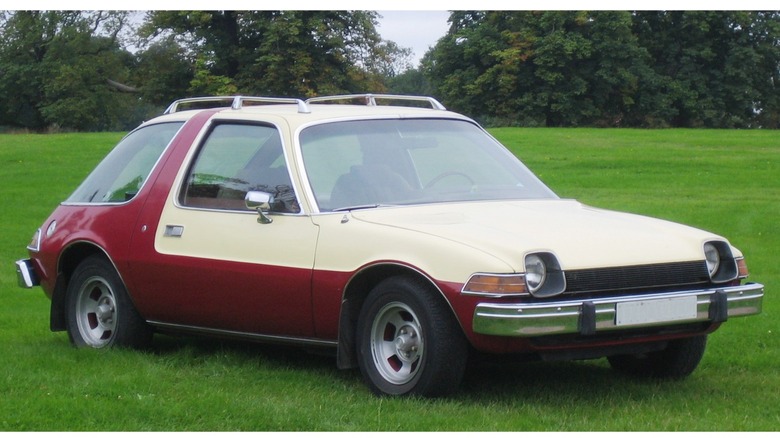
AMC doubled down on the small hatchback design with the 1975 Pacer, which was one of the most expensive developments that the car company undertook in the '70s. Although not exactly a clean-sheet design, it received enough substantial changes that made it unique from the rest of AMC's lineup. The Pacer was actually a unique model, with the company proudly calling it the "first wide small car".
This actually resulted in a quite comfortable, roomy interior while offering good all-around visibility. However, this also led to its weird shape, with some people comparing it to a fishbowl. We were quite surprised to find out that the Pacer was actually moderately successful during its first year, selling more than 117,000 units. Unfortunately, it was all downhill from there, with AMC ending production of the vehicle by 1980 after making just 280,000 examples.
The unique design didn't just make for weird looks, though. It also affected the Pacer's reliability, especially as it was initially designed to use a rotary engine. But because the planned engine for this vehicle never arrived, AMC was forced to use a straight-six engine that had two of its spark plugs sitting under the windshield overhang. This made the vehicle one of the most difficult cars to work on or repair, and some owners even said that the spark plug wires would get cooked from the heat building up under the cowling.
1976 Porsche 914
 AlfvanBeem
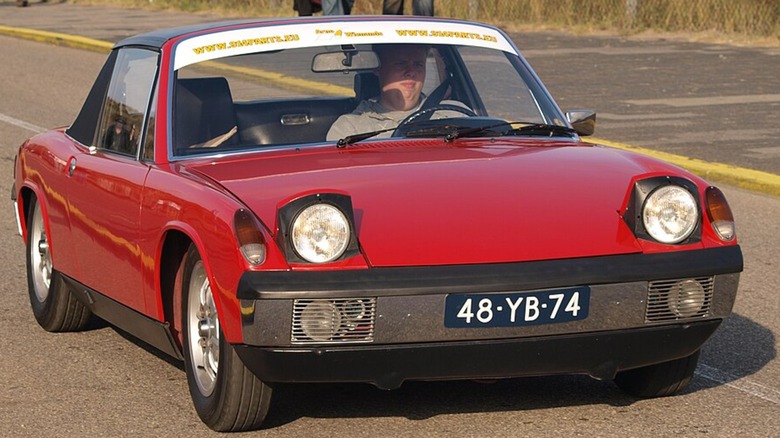
When you hear Porsche, you'd automatically think of a sleek, rear-engined sports car running gracefully on the freeway. But what most people would not imagine is a two-seater that would look like a goofy cartoon character once its headlights are turned on. The legendary car company introduced the 914 as a more attainable model that would sit below the 911, and it built this in partnership with Volkswagen.
Some Porsche sticklers turned away from the 914 because it wasn't a pure Porsche product, but its mid-mounted engine and removable roof made some people consider it the spiritual precursor of the popular Porsche Boxster. Despite being one of the best-selling sports cars in the world, it was still a relatively unknown model and failed to achieve the legendary status of other Porsches. This is why the 914 is a classic Porsche that more enthusiasts can afford (though it might not be true much longer because of people rediscovering it).
Honesty, the Porsche 914 looked quite good as long as you kept the headlights tucked in their closed position. But once you need to drive in the dark, the rounded headlights turn the sports car from a sleek, mysterious vehicle into a kid's companion as they learn their ABCs, earning it a spot in our list of the worst-looking Porsches ever made.
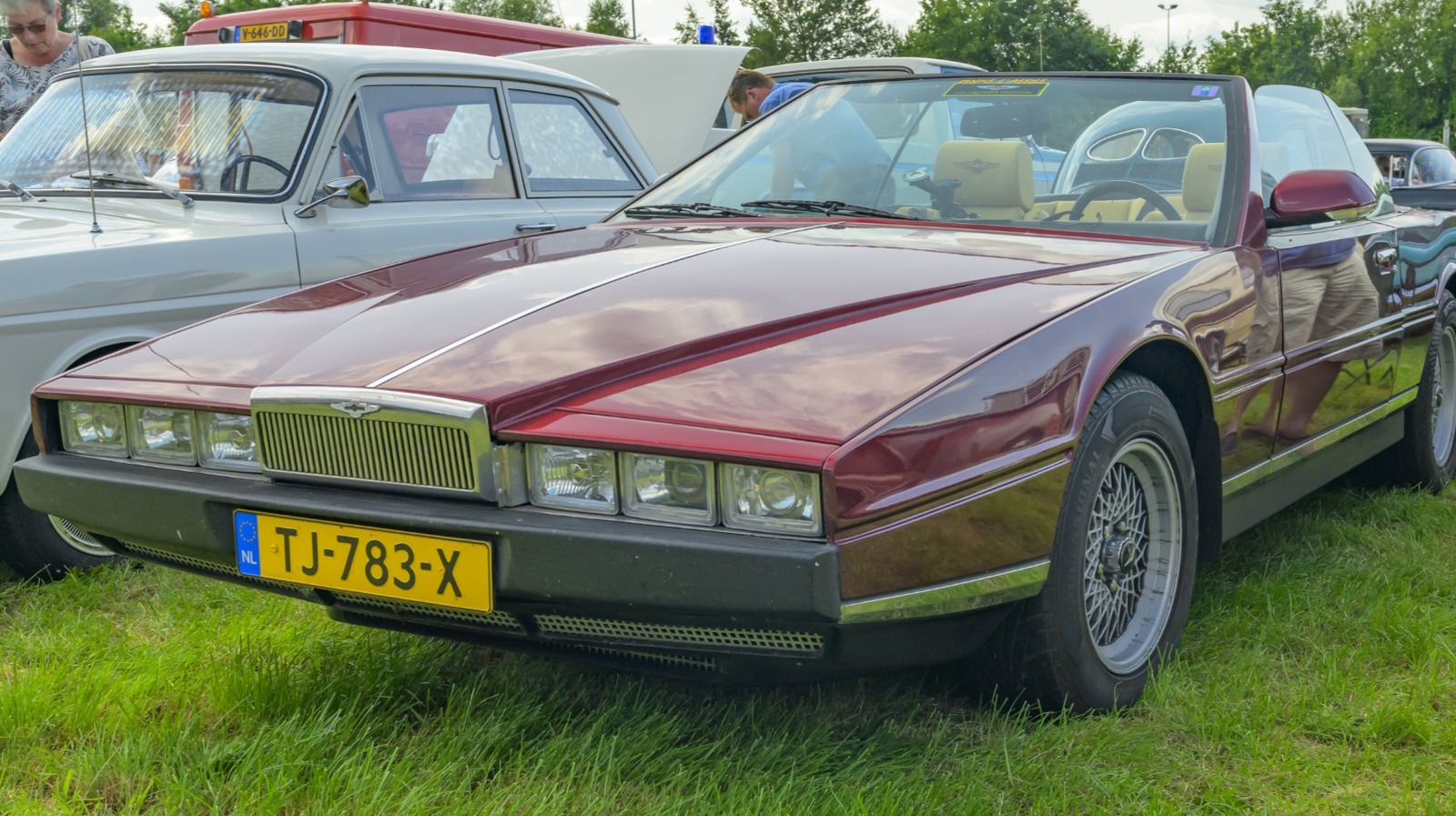
1976 Aston Martin Lagonda
 Vetatur Fumare/Wikimedia Commons
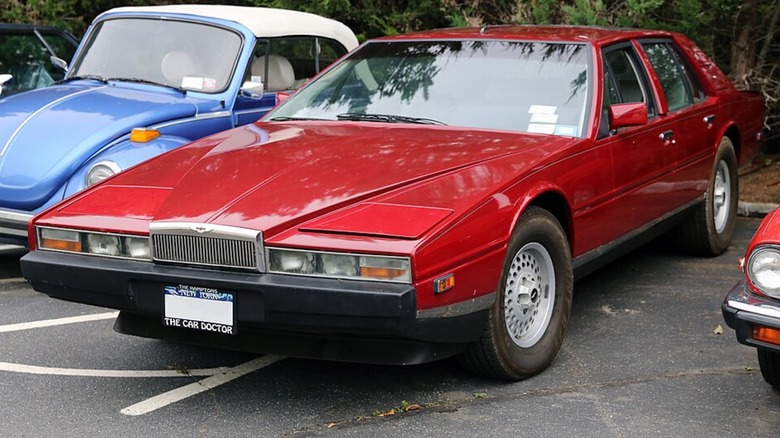
You would think that Aston Martin would never make an ugly car, especially with its status as the preferred mode of transport by a particular British spy. Unfortunately, you'd discover you're dead wrong when you see the Aston Martin Lagonda. This four-door saloon actually had some great features — a digital dash, cruise control, auto locking doors, and touch controls — standard in today's vehicles, but advanced technology you wouldn't find in most other vehicles almost 50 years ago.
In the company's bid for a futuristic look, it gave the Lagonda a wedge shape similar to the iconic Lamborghini Countach that was released just a few years earlier. Unfortunately, while the shape worked well for a supercar, it looked out of place as a four-door full-sized luxury saloon. Furthermore, it has the same issue as the Porsche 914: When the sun goes down, the pop-up headlights break the sleek nose of the vehicle, making it look like an out-of-this-world bug.
One of the painful truths about this expensive failure is that its most advanced features actually did not work as intended or weren't installed at all. This left it with the controversial looks of a forward-looking car, without the benefits of future technologies. It probably would've been better if the Aston Martin had stuck with the Lagonda Series 1, which is what a BMW M5 would probably look like if it came out in the 1970s.
1977 Dodge Charger
 Greg Gjerdingen/Wikimedia Commons/CC BY 2.0
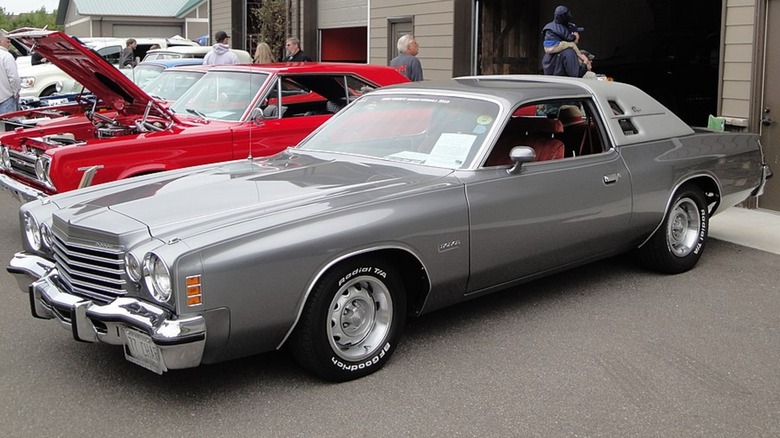
The Dodge Charger has quite a storied history, first arriving on showroom floors in 1966 to kick off a mostly continuous run until 1987. It was eventually revived in 2006 and now has returned both as an EV and an ICE vehicle with a twin-turbo V6. But out of all the generations of the Charger, the one produced between 1975 to 1978 is arguably the worst-looking of them all.
This generation lost its muscle car heritage and became just another personal luxury car. Its rectangular front grill is flanked by two round headlights on both sides, giving it a bug-eye look, while its boxy body makes it look like a brick trying to break through the wind. Thankfully, Dodge still gave it a relatively powerful engine, with the option to get it with a 5.9-liter E58 four-barrel V8 that pushed out 225 horsepower.
Because of this change in its philosophy, this generation of the Charger is one of the least popular among its fans. The only advantage you get with this is that it's one of the classic '70s muscle cars you can still find for under $10k.