 Credit: Google
 By
Chandra Steele
Published 22 minutes ago
Chandra Steele has been writing about tech for the entirety of her journalism career. She loves making tough topics easy to understand. Before joining Android Police, Chandra was senior features writer at PCMag where she did everything from interviewing Jeff Goldblum to explaining crypto.
Sign in to your Android Police account
Summary
Generate a summary of this story
follow
Follow
followed
Followed
Like
Like
Thread
Log in
Here is a fact-based summary of the story contents:
Try something different:
Show me the facts
Explain it like I’m 5
Give me a lighthearted recap
By
Chandra Steele
Published 22 minutes ago
Chandra Steele has been writing about tech for the entirety of her journalism career. She loves making tough topics easy to understand. Before joining Android Police, Chandra was senior features writer at PCMag where she did everything from interviewing Jeff Goldblum to explaining crypto.
Sign in to your Android Police account
Summary
Generate a summary of this story
follow
Follow
followed
Followed
Like
Like
Thread
Log in
Here is a fact-based summary of the story contents:
Try something different:
Show me the facts
Explain it like I’m 5
Give me a lighthearted recap
If your Android device has felt a little lackluster to you lately, it’s time for some year-end updates. Google rolled out changes today, including Android 16 options that will have your phone looking like new, as well as general Android and accessibility updates.
Exclusive to Android 16
The Android 16 updates will come to Pixel devices first, starting today, and then roll out to other phones. This release marks a new schedule for Android updates, with Google announcing that instead of a single annual OS release, going forward there will be frequent releases as soon as new features are ready.
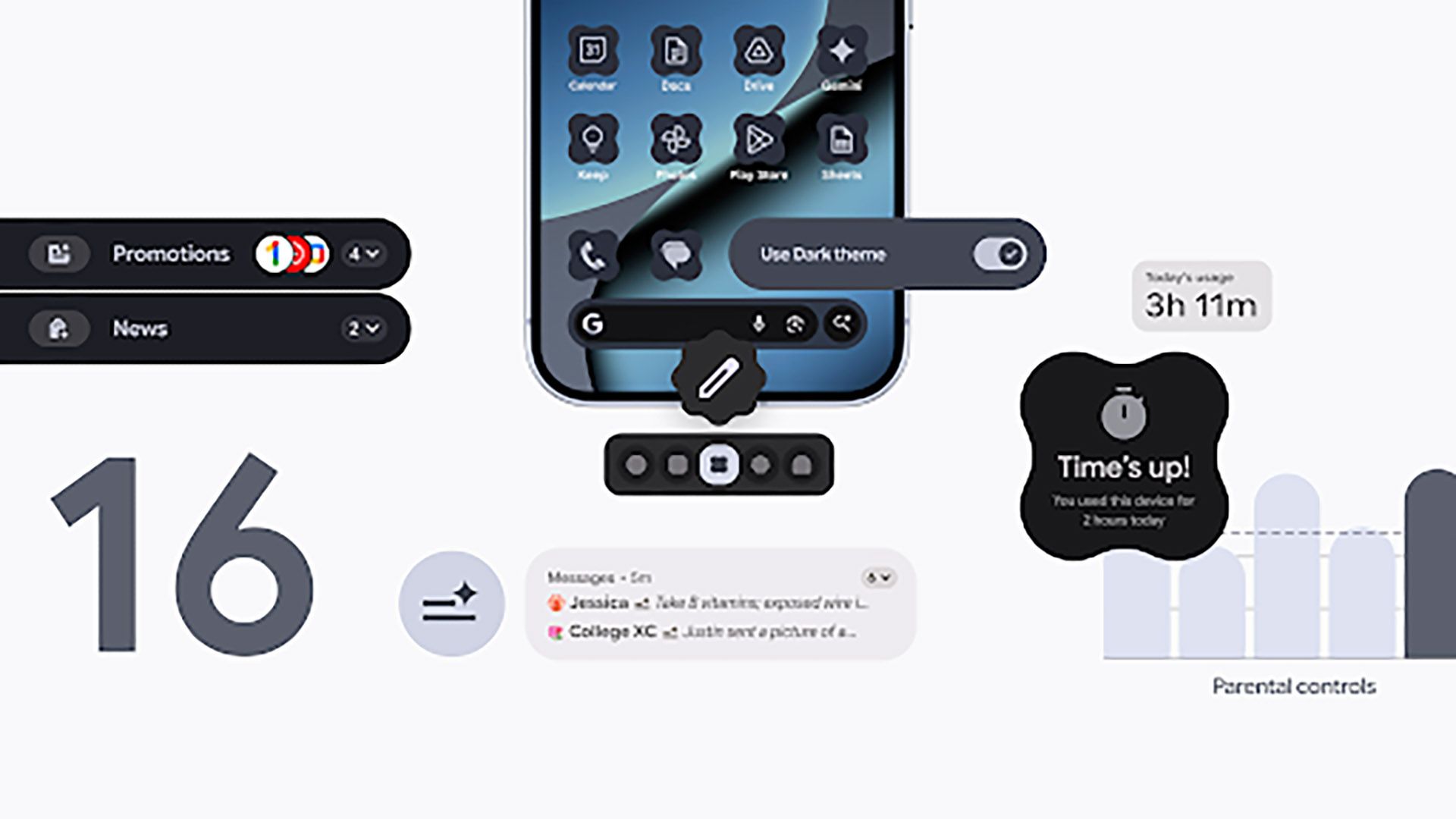
The first big changes are in how the OS will look. IRL icons aren’t square and now the ones on your phone don’t have to be either. They can be set to be one of five shapes. Along with the new shape come themed icons and a dark theme that will solve the issue of apps that don’t have a native dark mode.
Notifications in Android 16 are getting simplified with AI-powered notification summaries for an overview of what you need to know and why. And to put priorities first, there’s now a notification organizer that will silence things like social media alerts and news in favor of more urgent things.
Finally, parents can set parameters on their children’s devices directly with a PIN-locked Parental Controls option in Android Settings. There they can set screen time limits, downtime schedules that will lock the device during certain hours, control app usage through limits or blocking, and add more time to limits as they see fit.
For all Android devices
Phones that don’t have Android 16 will also get some new things to make their devices more useful.
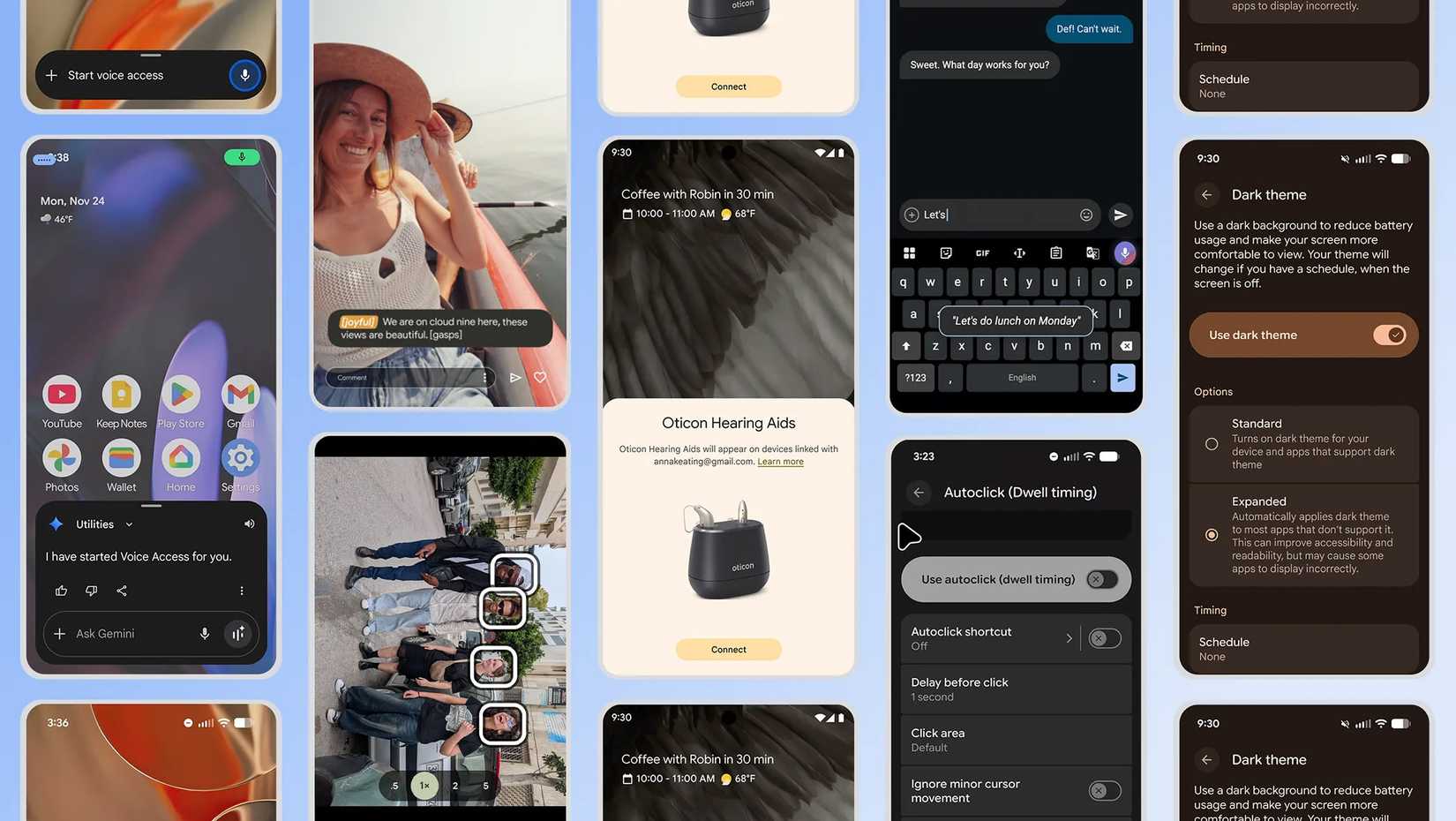
This includes something called Expressive Captions. They give live videos — whether they’re from a message, in a social media post, or a livestream — emotion tags that label captions with the tone of voice in them, so that even without sound, you’ll know if you’re watching something [sad] or [joyful].
Emoji enthusiasts who don’t feel like the current slate of options quite expresses how they feel can cook up new ones with Emoji Kitchen that lets you combine emoji.
Sometimes just hearing a phone ring makes you feel like something urgent is happening. Now you can know for sure with Call Reason. You can mark an outgoing call as urgent so that it alerts the recipient on the call screen and in the call history.
For when you don’t want someone to contact you at all, there are now ways to take quick action if you’re added to a group chat by an unknown number. As soon as it happens, you’ll get an alert, along with some info about the group, tips on how to stay safe, and one-tap ways to leave the chat, block the number, and report it as spam.
And for when you outright suspect a scam, you can Circle to Search within a message to get an AI Overview opinion on whether that message that says “Are you free this weekend?” is a phishing expedition.
Tab enthusiasts can now pin tabs in Chrome. They’ll stay at the front of the browser for easy access.
Accessibility additions
 Credit: Google
Google noted that some of the above features, like the dark theme and Expressive Captions, make Android more accessible. They join four other such features ahead of International Day of Persons with Disabilities day tomorrow.
That includes fast pair for hearing aids that allows for one-tap pairing for Bluetooth LE Audio-enabled hearing aids. It’s launching with Demant hearing aids, and will expand to Starkey ones in early 2026.
Those who use Voice Access won’t have to tap a screen first anymore. Instead they can say, “Hey Google, start Voice Access” for hands-free phone control.
Anyone who pairs a mouse with their Android device can now click without having to physically press a button. Auto Click lets you set a timer for the cursor, so that when you hover over something for that amount of time, it will automatically click.
The Guided Frame feature in the Pixel camera app that describes what’s in a frame for people who are blind or who have low-vision is getting a boost in its narrative qualities. Instead of simple descriptors, users will hear things like, “Four friends stand in the street and laugh.”
Lastly, voice dictation is getting easier with TalkBack on Android. While this feature is not available yet, it’s coming soon and allows users to start dictating in Gboard with a two-finger double-tap.
-
 Operating Systems
We want to hear from you! Share your opinions in the thread below and remember to keep it respectful.
Be the first to post Images Attachment(s) Please respect our community guidelines. No links, inappropriate language, or spam.Your comment has not been saved
Send confirmation emailThis thread is open for discussion.
Be the first to post your thoughts.
- Terms
- Privacy
- Feedback
 2 days ago
Google Messages takes a step toward less-annoying SIM switching
 1 day ago
I switched from a $1,000 flagship to a $200 budget device; here's what I learned
 3 days ago
Samsung's Now Brief may soon offer improved YouTube and Spotify recommendations
 1 day ago
Netflix turns off casting on newer TVs and Chromecasts
Trending Now Google Messages change means your employer may be able to see your messages
 I didn't think an e-reader could replace my smartphone — but now I'm not so sure
 The Samsung Galaxy S25 is boring, but it's exactly what I needed