 ...
... By Newsweek EditorsShareNewsweek is a Trust Project member
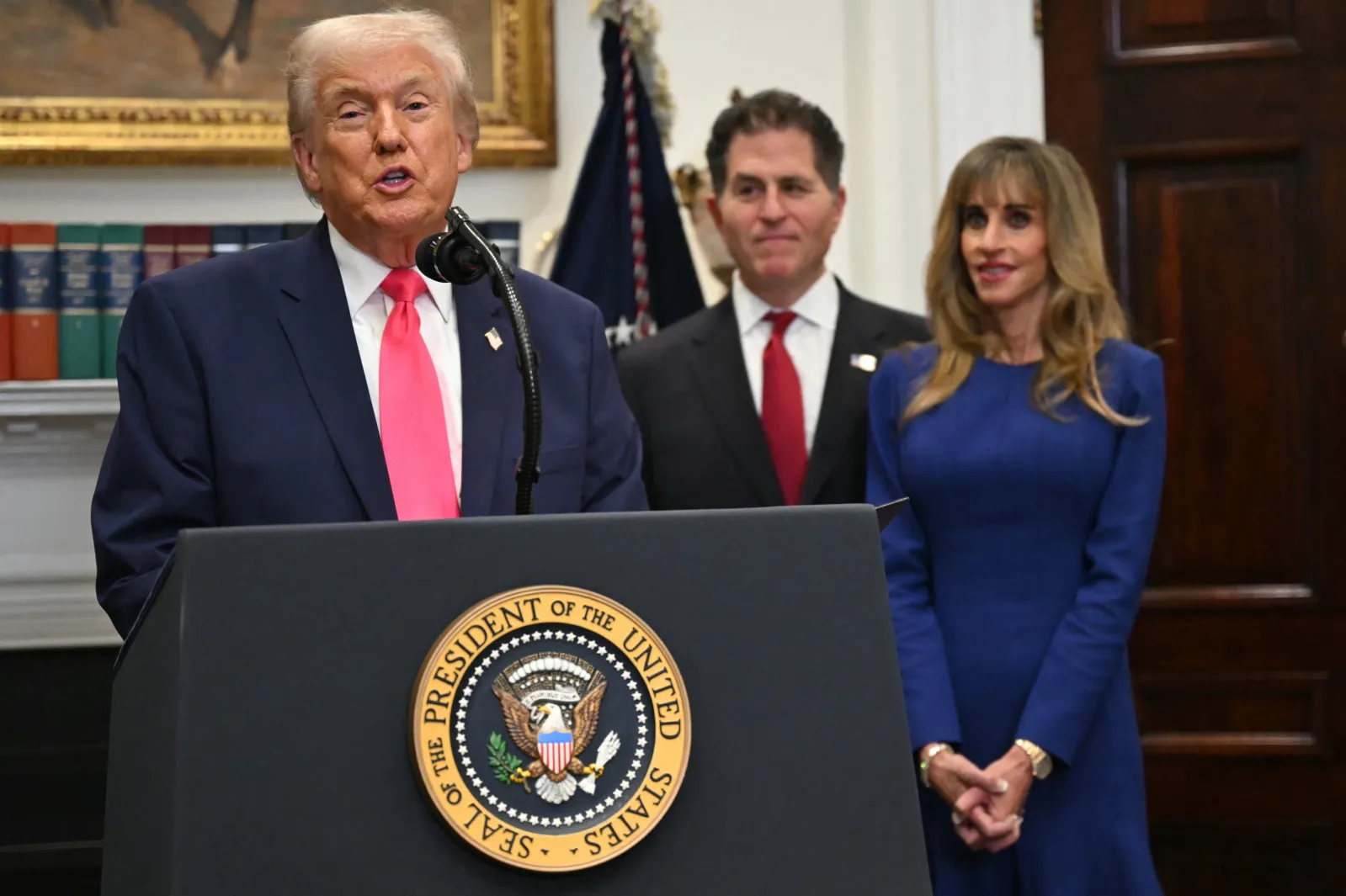
America wants to put a little capitalism in every cradle. On GivingTuesday, Michael and Susan Dell promised a donation that would make the Rockefellers blush: $6.25 billion to top up "Trump Accounts," the new tax-advantaged investment accounts for U.S. children created this year. Their pledge—$250 each for 25 million kids—is meant to prod families to claim the benefit. The federal government, for its part, will seed $1,000 for babies born 2025–2028. If all goes to plan, accounts open to contributions in 2026 and pay out in adulthood for school, a first home, a business—capital for a life’s landmark acts.
The Dells' record-breaking generosity was widely lauded. But there might be a problem obscured by all the confetti. Programs like these are often celebrated at the White House podium and then tripped by the front-desk clerk—by logins, forms, IDs, mismatched databases, and the quiet fact that the families who would benefit most are the least likely to battle bureaucracy. California’s CalKIDS—which has some similarities to Trump Accounts—has money waiting for millions of low-income students. Yet in San Francisco only about 12 percent of eligible students had claimed their funds as of June. Across the state last year, fewer than 8.3 percent of eligible families had claimed their accounts.
The pattern has been repeated across the world. A few summers ago, Britain discovered an awkward truth: nearly £1.7 billion ($2.25 billion) meant for teenagers was simply not being claimed. The money belonged to almost a million young adults who never accessed their government-seeded Child Trust Funds, a universal savings scheme launched in the 2000s and forgotten by many families. About 42 percent of 18–20-year-olds hadn’t accessed their matured accounts—an object lesson in how grand social designs can fail upon contact with red tape.
Common Knowledge
Supporters hail the accounts as a practical demonstration of the benefits of capitalism. "This will afford a generation of children the chance to experience the miracle of compounded growth," the White House declared when the program was rolled out. Michael Dell called the accounts "a simple yet powerful way to transform lives." In a bipartisan flourish, Senators Ted Cruz and Cory Booker have urged corporate America to treat each newborn as an "immediate shareholder."
Critics say it doesn't go far enough. "Trump accounts fall drastically short of the promise of baby bonds," wrote Representative Ayanna Pressley and economist Darrick Hamilton in the Washington Post in June, arguing that what poor families lack "is disposable income" to contribute. Hamilton went further in an interview this summer: the policy "co-opted a good idea," he said, and because it relies on private contributions it will subsidize "the transmission of intergenerational wealth for those that already have wealth in the first place." He also warned that without explicit protections, balances could trigger "the benefit cliff" by counting against means-tested aid.
Even some on the right have winced at the politics. Treasury Secretary Scott Bessent’s remark in July that the plan was "in a way, a backdoor for privatizing Social Security" was quickly walked back by allies who insisted the accounts would "supplement—not replace" the program.
Uncommon Knowledge
The best argument for the accounts is not ideological. Giving every child an indexed stake in the economy at birth is a rare example of a policy that compounds while politicians are bickering. The statute itself reflects that intention: under new Internal Revenue Code §530A, Trump Accounts are treated like IRAs for kids, with contributions allowed up to $5,000 a year and strict investment rules until age 18—most notably a cap that keeps fees under 0.10 percent.
But the most important—and least discussed—data point is the bureaucracy gap. In programs that require families to do anything, participation plummets. Maine ran the definitive A/B test. In the early years of the Harold Alfond College Challenge, parents had to "opt in" by opening a 529 before their child’s first birthday; roughly 35–40 percent did. In 2014, Maine flipped to automatic enrollment at birth. Participation effectively went to 100 percent overnight.
California’s CalKIDS offers the same warning in a bigger state. The program has opened millions of accounts for newborns and low-income students, automatically seeding at least $500 for the latter. And yet, as of last year, fewer than 8.3 percent of eligible families had actually claimed their accounts; in San Francisco this summer, city leaders pleaded with families after finding only 12 percent had claimed. Britain’s Child Trust Funds later left £1.7 billion unclaimed—a cautionary parallel.
If Trump Accounts are to avoid that fate, two implementation questions will matter most.
First, do poor families actually get the money? The law’s bones are there: Treasury seeds $1,000 for babies born 2025–2028; employers and family can add more; accounts open automatically once a Social Security number is issued. But automatic at birth is not automatic at 18. Someone will need to find the young adult again. Britain did not plan that part well. Maine solved it with a one-and-done design. That last part is crucial.
Second, do the balances jeopardize safety-net benefits? Trump Accounts are treated "in the same manner as" IRAs under §408. SNAP typically excludes retirement accounts from asset tests. Supplemental Security Income (SSI) does not—SSI has a hard resource limit of $2,000 for an individual. Congress carved out such a protection for ABLE disability accounts, but as far as is known there is no parallel exclusion in §530A. Therefore, the "benefit cliff" worry is not theoretical.
None of this negates the democratic appeal of putting every child on the same on-ramp to wealth. America is already a shareholder nation—58 percent of households owned stock in 2022, a record—but it is a sharply unequal one, with roughly half of all corporate equities and mutual-fund shares held by the top 1 percent.
The Dells’ gift is the storybook part—American billionaires deciding that the smartest investment is other people’s kids. But money for children is an easy thing to announce and a hard thing to deliver. If America wants its new accounts to be more than a patriotic brand extension, it should copy what has worked elsewhere, and learn the lessons of what has not worked. Otherwise, a decade from now, it will discover—awkwardly—that billions of dollars meant for young adults were simply…sitting there.
If you’re enjoying Uncommon Knowledge, please share. If you have suggestions for future editions or feedback, email [email protected]. We want to hear your voice.
Request Reprint & LicensingSubmit CorrectionView Editorial & AI Guidelines Add Newsweek as a preferred source on Google to see more of our trusted coverage when you search.
Recommended For You
 U.S.Half of Gen Z Wants Crypto For Christmas3 min readFor MembersNewsUncommon Knowledge: Will Trump Accounts Pay Off?6 min read
 NewsIRS Issues Update on Trump Accounts3 min read
 NewsMalaysia Relaunches Hunt for Missing MH370 Flight: What To Know3 min read
 NewsTennessee Election Map Shows Huge Voter Shift From Trump to Democrats4 min read
 NewsExclusive: Democrat Targets Trump’s $175B Immigration Funds for Housing7 min read
Related Podcasts
Top Stories
NewsExclusive: Democrat Targets Trump’s $175B Immigration Funds for Housing7 min read NewsUkraine War Live Updates: Russia Says No ‘Compromise’ Peace Deal Reached2 min read
 NewsVideo of Hegseth Telling Military Not to Follow ‘Illegal Orders’ Resurfaces5 min read
 NewsDonald Trump’s Major Medicaid Cuts for Abortions Blocked4 min read
 WorldDonald Trump’s Honduras Gamble Hangs in Balance as Election Results Turn4 min read
 PoliticsRepublican Ousted By Democrat In Georgia3 min read
Trending
 WeatherList of Schools Closed Tuesday as Snowstorm Hits4 min read
 TennesseeTennessee Special Election: Behn Teases Another Run After Losing to Van Epps2 min read
 Winter StormWinter Storm Warning As 12 Inches of Snow To Hit: ‘Delay All Travel’3 min read
 ViralCat Arrives at Vet for Neuter, Staff Not Ready for What’s in the Carrier3 min read
 ImmigrationGreen Card Update: New Changes for Holders in December6 min read
Opinion
 For MembersOpinionConventional Wisdom: Trump Pardons Former Honduran President3 min read
 OpinionHas President Trump Ushered in an Era of Peace in the Middle East? Newsweek Contributors Debate6 min read
 OpinionRand Paul: My Proposal Will Improve Health Care and Lower Costs | Opinion4 min read
 OpinionBridging the AI Velocity Gap | Opinion5 min read
 OpinionPaving the Way Forward—It’s Time To Build the Roads and Bridges to America’s Next Golden Age | Opinion4 min read