- News
- World
- Africa
The UN’s World Food Programme has a reputation for handing out large quantities of food in disaster zones and then moving on. But in Ethiopia, Nick Ferris finds an aid agency increasingly prioritising ‘resilience’ and aiming to make the country self-sustaining. However, escalating aid cuts and the climate crisis are making things harder
Wednesday 03 December 2025 12:34 GMTComments
 CloseRelated video: Ethiopians on the brink as they endure climate catastrophe with almost no support
On The Ground newsletter: Get a weekly dispatch from our international correspondents
Get a weekly dispatch from our international correspondents
Get a weekly international news dispatch
Email*SIGN UPI would like to be emailed about offers, events and updates from The Independent. Read our Privacy notice
The UN’s World Food Programme (WFP) – considered the world’s largest humanitarian organisation – was at the forefront of the global response to the devastating Ethiopian Famine of 1984 and 1985 during which one million people died.
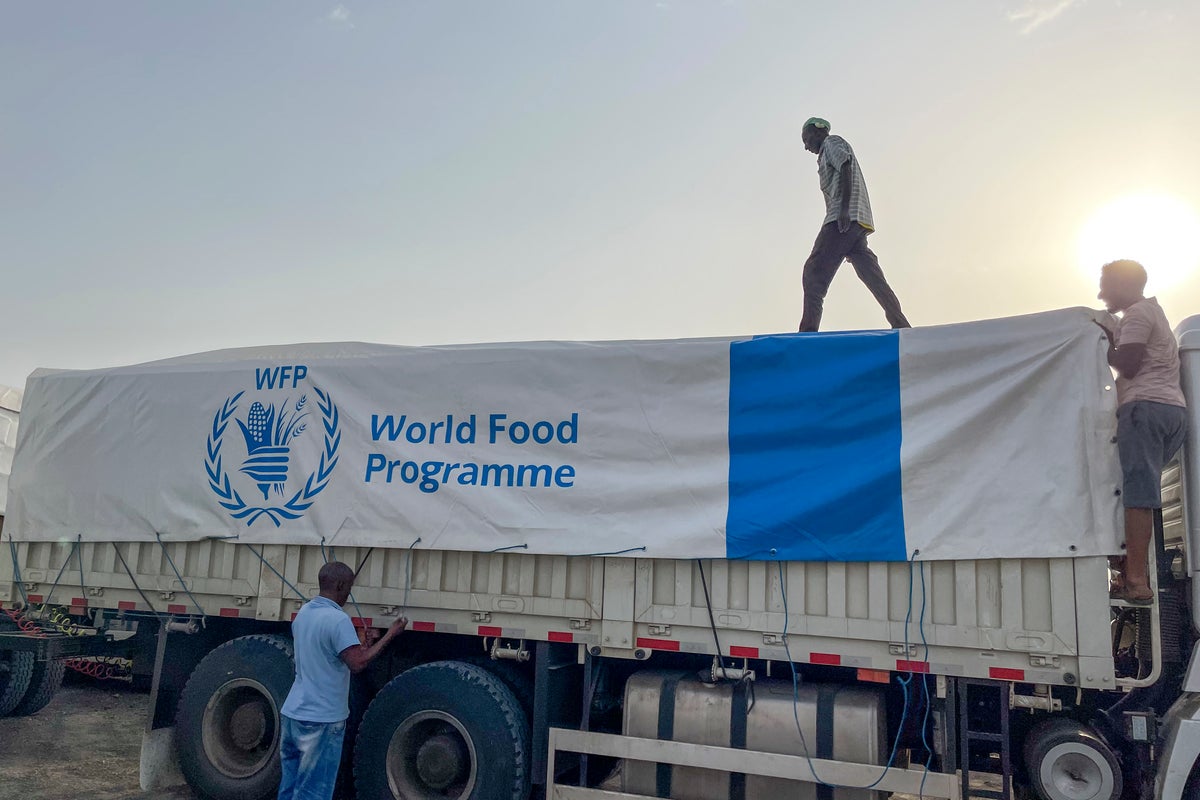
Forty years on, if you drive through many parts of Ethiopia, you will still regularly see big, blue and white WFP trucks traversing the country’s roads. They form part of a 515-strong fleet of vehicles helping to feed the country of 130 million, which remains one of the world’s poorest nations and is one of the most climate-vulnerable.
But while the organisation’s footprint remains significant, the actual work WFP is doing in the country is changing fast. While around four million people received food relief from WFP last year, that was down from 4.6m the year before. The growing focus is now a multi-pronged approach aiming to make the country’s own agricultural systems more resilient, with the hope that one day WFP might not be needed in Ethiopia at all.
“We still truck and distribute food. This year we are also providing nutrition support for around 600,000 people per month, and providing school meals for 700,000 school children,” explains Zlatan Milisic, the WFP country director for Ethiopia. “But food is not the only lifeline… We are focusing more now on community resilience, investments in local economic activities, and also helping to strengthen the Ethiopian government’s own humanitarian systems.”
Speaking at the African Climate Summit in Ethiopia’s capital Addis Ababa earlier this year, Milisic further elaborated on how he believes aid systems need to change, describing how aid can “save lives but it cannot build futures”. Instead of the reactive, fragmented, and short-term-focused aid operations that has led to aid dependency in some areas over recent decades, we need instead a paradigm-shift towards adaptation and resilience building, Milisic said.
Data shows this shift in action: Last year, some 1.4 million people were targeted with “livelihood” interventions. These can include everything from supplying grain silos or weighing scales for better farm management, to designing community-level loan or insurance schemes that can help support pastoral communities at times of drought, to constructing huge infrastructure projects like ponds or irrigation canals that can sustain thousands of households. That was up from 700,000 such interventions in 2023.
In 2025 alone, for example, around 30 ponds are expected to be completed in the country’s drought-stricken Somali Region, some of which hold many millions of litres of water, and are capable to supplying water to many thousands of livestock. The first half of this year has also seen seven irrigation schemes completed in Tigray - the Northern region which, before the 2020-2022 civil war was considered the country’s “breadbasket” - as well as the rehabilitation of 7.2km of canals in the Afar region, which neighbours Tigray.
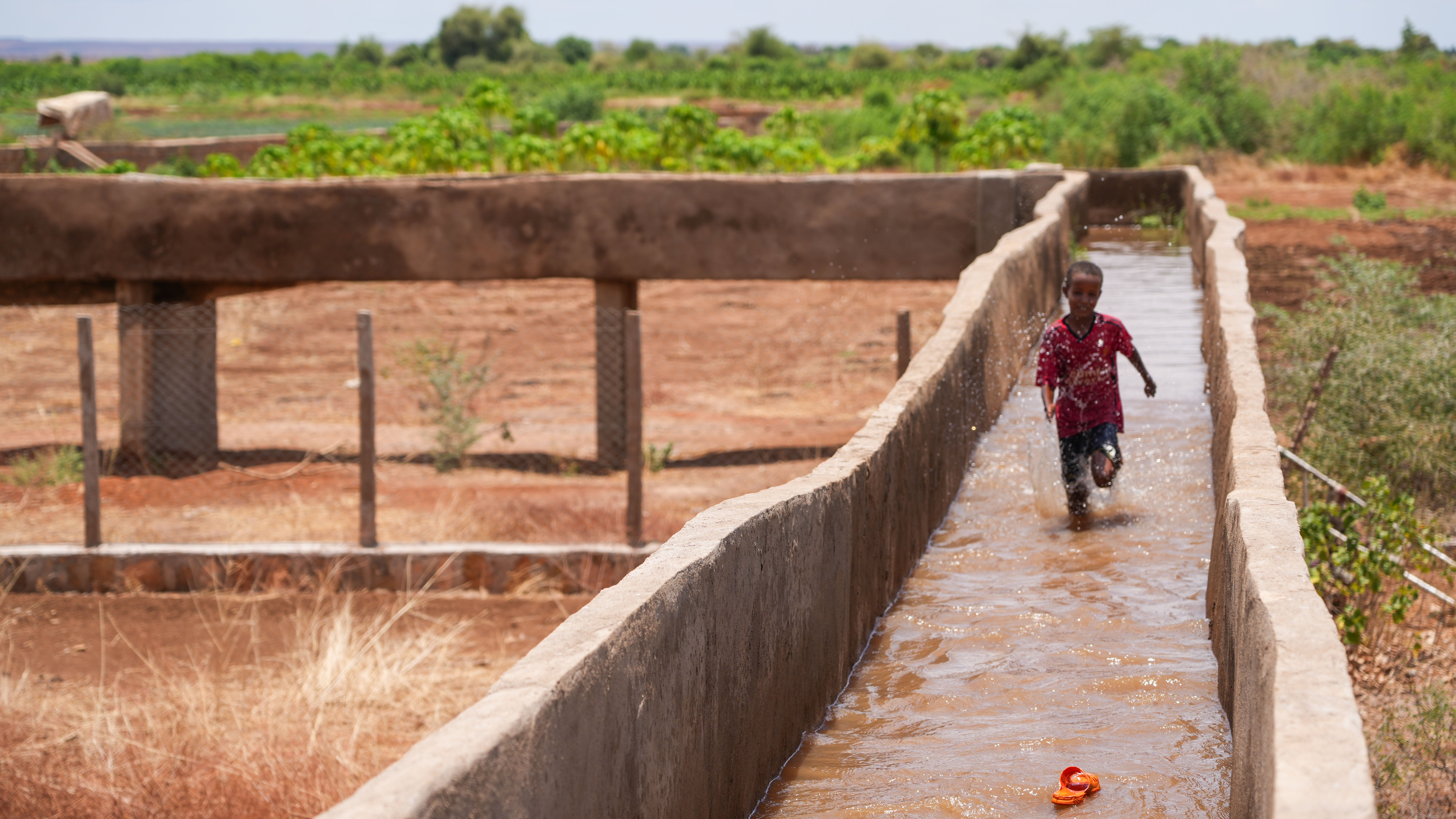 open image in galleryA solar-powered Irrigation scheme, designed and build by WFP, in the Somali Region of Ethiopia, which is helping communities there move from aid dependence to self-sufficiency (© WFP/Michael Tewelde)
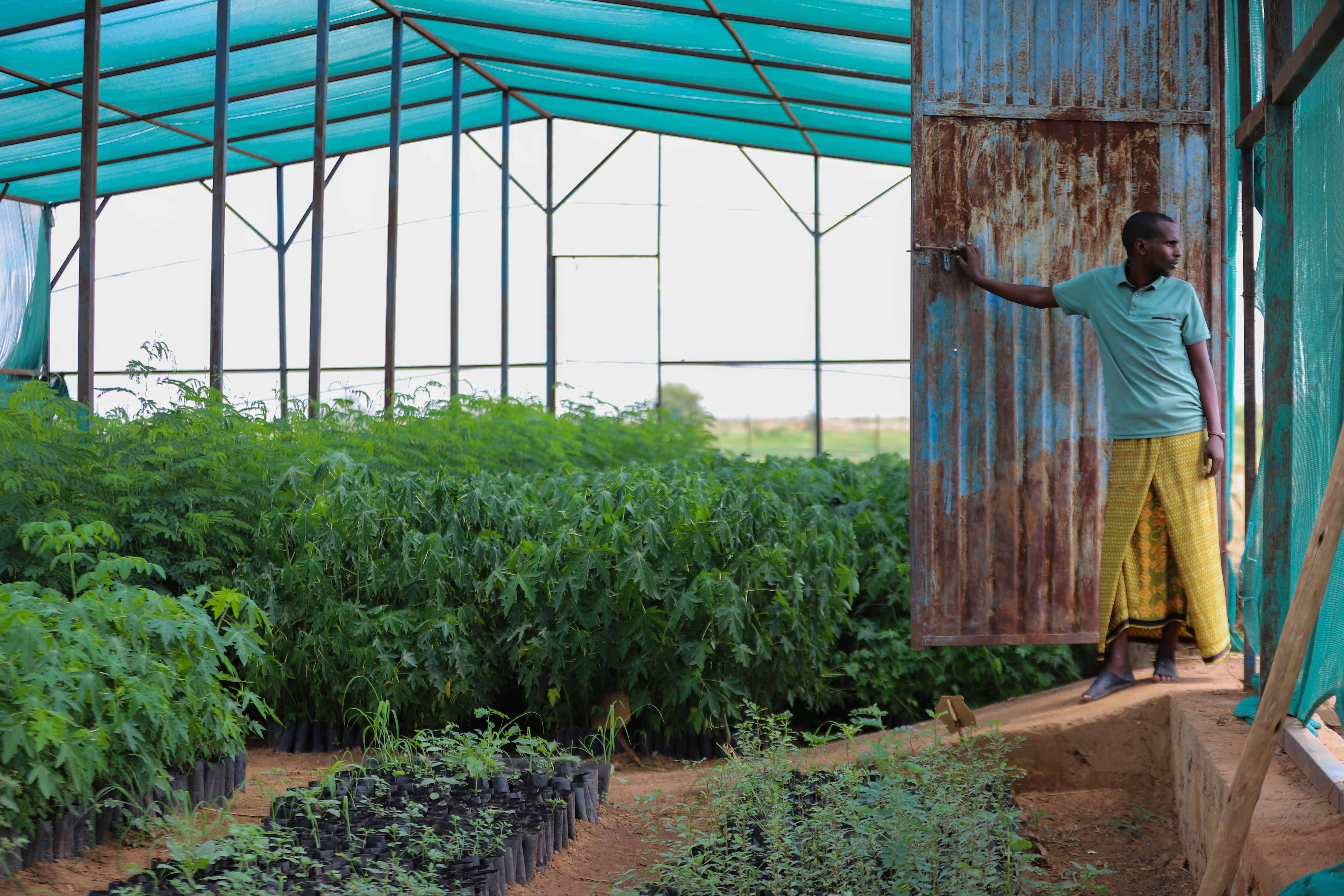 open image in galleryAden Mohamed opens the door to his nursery in the Somali Region of Ethiopia, which is irrigated by WFP-backed projects (© WFP/Michael Tewelde)
The Independent recently saw some of these interventions in action, during a visit to Afar. It’s a region roughly the size of Scotland of some two million inhabitants, most of whom are pastoralists that travel for many miles with herds of animals, or those who keep animals and also grow crops.
WFP has cut its team from 87 to 46 this year, strategically realigning operations due to both budgetary pressures in the wake of aid cuts, and the decision - with war in neighbouring Tigray having ceased - to transfer food relief operations from WFP to a less expensive consortium of other NGOs led by US NGO the Catholic Relief Services. WFP continues to feed some 60,000 refugees that live in the region, maintains school feeding programmes in 336 schools, and also has a programmes to tackle malnutrition - with Afar bearing the unfortunate crown of having the highest malnutrition rate in the country.
But increasingly, the priority in the region is to invest in environmental resilience programmes, with the aim of helping farmers develop more effective farming practices that can withstand climate impacts, and ultimately produce enough food to make the region self-sufficient. The north of the region is one of the hottest, driest places on Earth, and food security there is currently rated “IPC 4” - or “Food Emergency”, the level before famine - so the long-term plan would be for districts in the South to produce enough food that extra that can be sent up North.
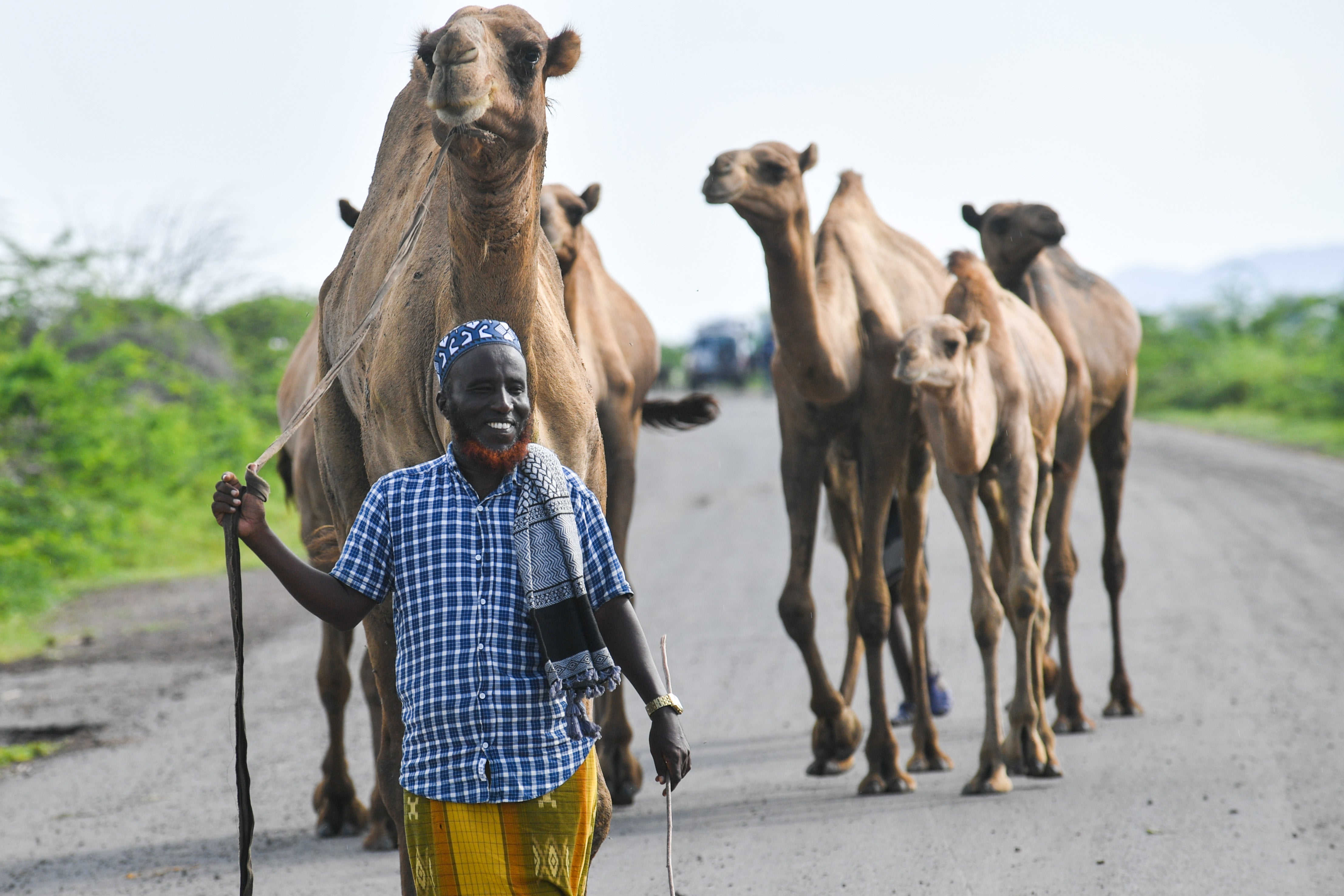 open image in gallerySaid Muhaba is a farmer and pastoralist in the Afar Region of Ethiopia with 10 camels, 10 cattle, and 20 goats. He told The Independent that WFP has played a key role in making his farming activities more resilient to climate change (© WFP/Michael Tewelde)
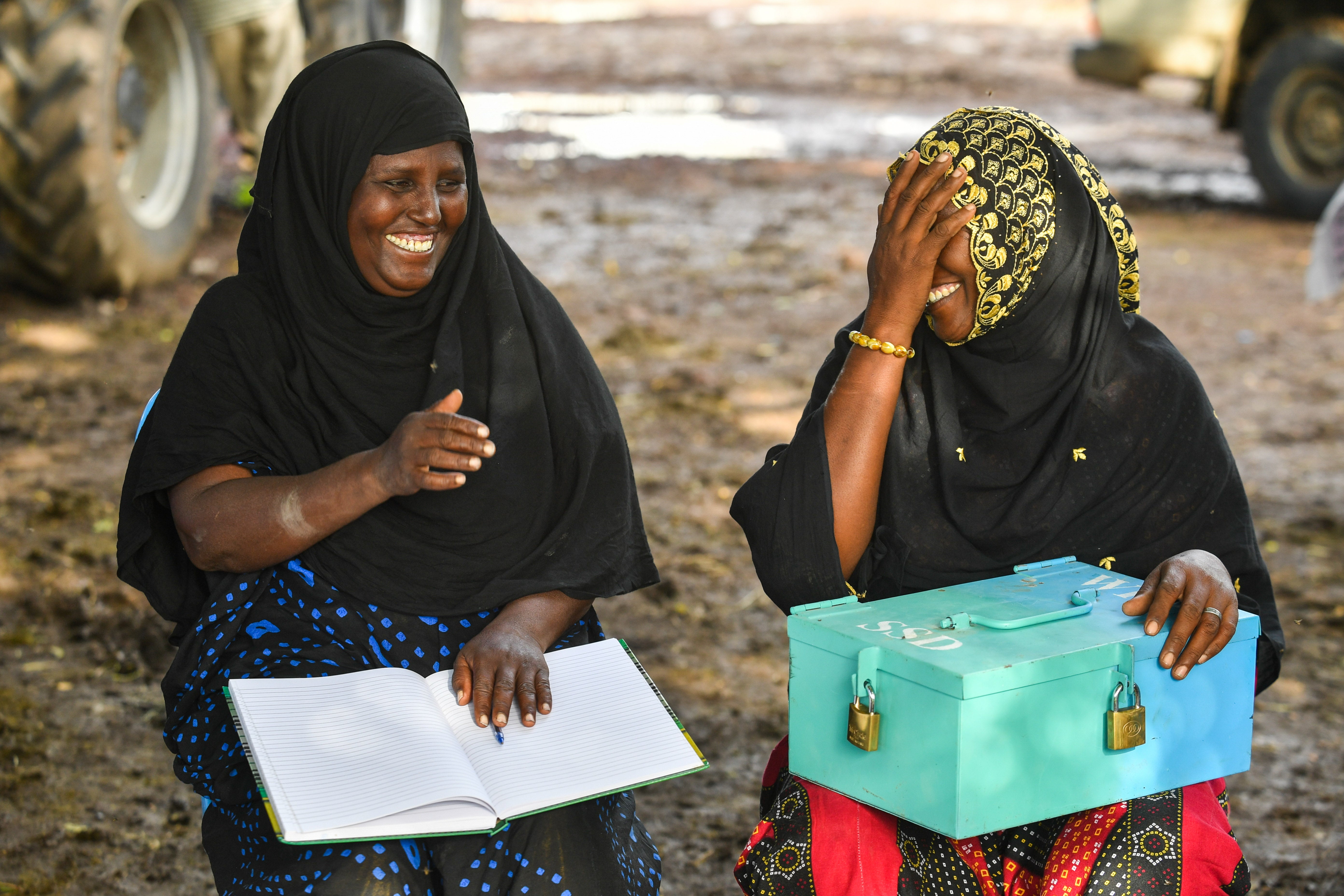 open image in galleryKemice Ali (left) and Malika Mehamed (right) are seen holding a savings box belonging to their village saving and loan association (VSLA), which acts as a substitute for a formal bank for rural communities. Said is part of the same VSLA group (© WFP/Michael Tewelde)
To that end, 2025 has seen the number of smallholder farmers targeted with resilience programmes increase from 1,200 households in 2023/4 to 8,500 households in 2025. Key targets - some of which have already been achieved - include helping farmers till 1,000 hectares of land; training households in animal health practices; establishing kitchen gardens in five schools; supplying climate-resilient maize seed to 3,000 households; rehabilitating 25 irrigation schemes; and establishing 90 village saving and loan association (VSLA), which involves providing a centralised money box to communities through which farmers can deposit and borrow money, acting as a substitute for a formal bank.
“We have not had access to our irrigation canal since it silted up during floods six years ago… but WFP came this year and asked us what help we required, and they have supported us with the rehabilitation of the canal,” says Said, a farmer in Afar that The Independent met, who has been a recipient of resilience investment this year. Other support includes tillage services, the supply of climate-resilient seed (for onions and tomatoes), and the establishment of a VSLA for him and his neighbours: “We have learnt a huge amount, and we are really very grateful for the support,” says Said.
For Ali Kamisi, another member of Said’s VSLA, the sense of economic empowerment that the savings scheme has brought has allowed her to think more seriously about her career ambitions: “As well as reinvesting in agricultural activities, one day I would like to open a small business serving coffee on the side of the road here,” she explains. The community now feels more resilient to future climate shocks, she adds, and there has been a “total shift in attitude” around money-saving.
$230m funding gap
There remain many challenges driving forward these programmes, however, both in Afar and in Ethiopia as a whole.
For starters, there’s a strong sense that the scale of the food insecurity challenge in Ethiopia means that it remains extremely hard to get a handle of: “There is a huge gap in terms of what we are able to do, and the size of the food insecurity challenges,” says Ebrie, who leads on WFP’s work on livelihoods and resilience in Afar.
That gap risks continuing to widen as the climate continues to warm, driving ever more severe droughts and flooding events, and potentially accelerating resilience challenges at a faster rate than WFP and other organisations are able to keep up with. “The threat climate change is causing to food insecurity is real,” says WFP’s Milisic. “Ethiopia is one of the most visibly-affected countries by extreme weather… Drought is displacing people people by causing pastoralists to lose all their animals… Drought is also causing farming communities to need more support for them to continue their traditional activities.”
Milisic acknowledges, too, that aid cuts from the US - traditionally the largest donor to Ethiopia - and others is putting at risk efforts to make the country self-sustaining. Significant funds that were expected this year in the country have not materialised, he says, and there is currently an “urgent need” for $230m for WFP to be able to keep its programmes running between now and March 2026, even after taking such measures as cutting refugee rations to 40 per cent of their usual level.
“The cuts are real and across the board. We have no choice right now but to prioritise the people most at risk - but even then there are some people in accute and urgent need of food assistance we seem to be cutting off,” says Milisic. If more urgent feeding requirements are prioritised then there’s a risk resilience activities lose access to funds - a move that, ironically, threatens longer term efforts to drive down feeding requirements.
Having just produced a five-year strategy that puts resilience activities front-and-centre, Milisic is nonethless bullish on WFP’s prospects of making Ethiopia more resilient. A key reason for that is the belief that the private sector can play a much larger role pushing programmes forward, in partnership with NGOs like WFP.
In climate circles, it is often thought that adaptation and resilience in low income countries are usually not “investable” for private financiers in the same manner as, say, a renewable energy project - as evidenced by the fact that private sources provided an average of just $1.5bn out of $63bn in tracked adaptation finance across 2021/22, with public money originating from governments providing the rest. However, Milisic rebuts the idea that the situation is hopeless.
“I admit there is a long there is still a long way to go to really have the private sector invest in resilience activities - but the signals in front of us are nonetheless really encouraging,” he says. At the time of speaking, Milisic had just spent several days visiting irrigation projects in the Somali Region that - while they might have initially been built with WFP grants - have had a transformative economic impact on the region, which is now driving private investment.
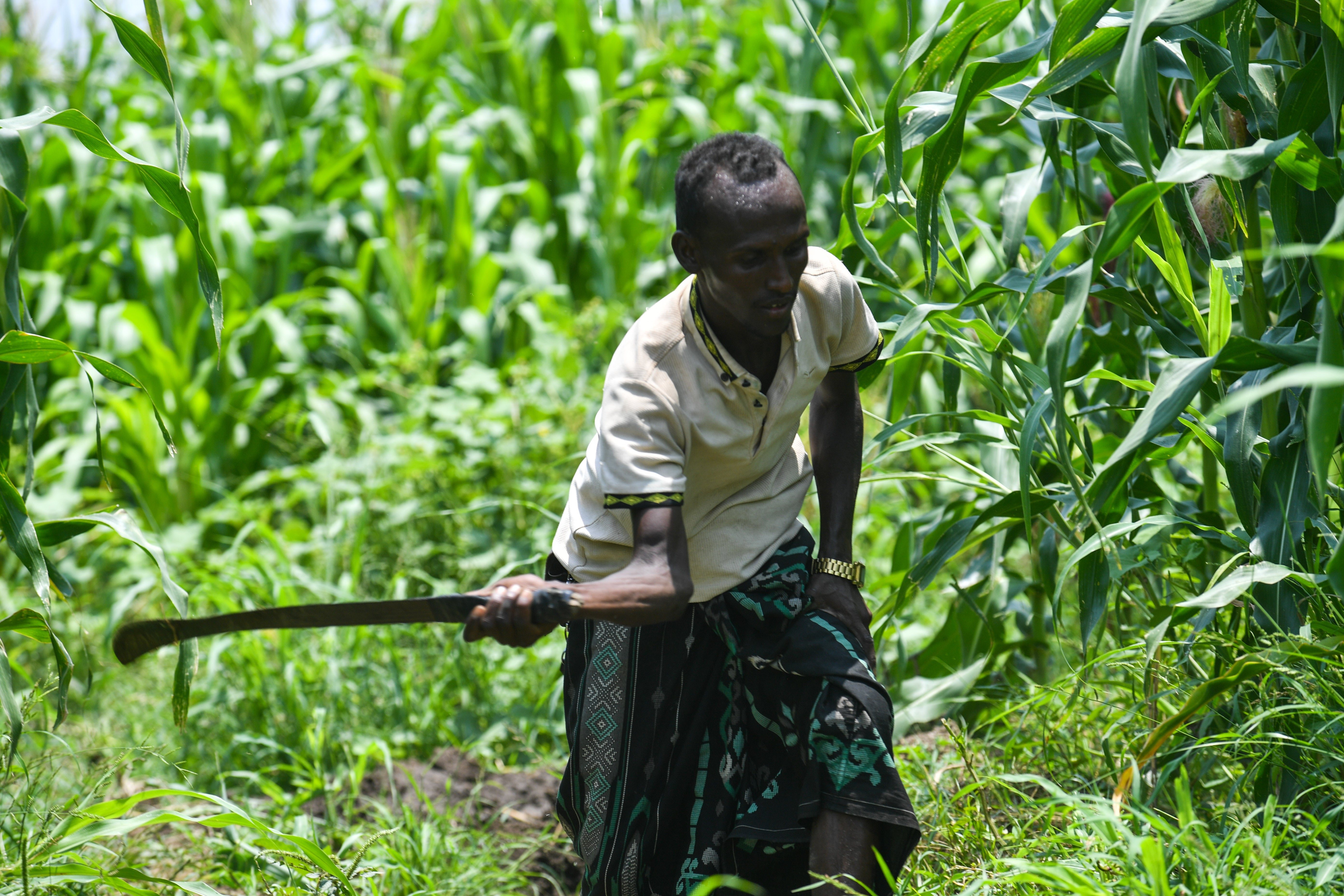 open image in galleryFather-of-four Saidou, who WFP has also helped with his farming activities in Afar (© WFP/Michael Tewelde)
“In one place I visited, before only 20 per cent of the community was cultivating crops, but now it is 100 per cent,” he says. “All of this is creating opportunities for the private sector in resilience - in seeds, fertiliser, machinery, and other things - and when the private sector starts benefits, that brings new jobs, boosts purchasing power, and communities continue to benefit.”
The success of resilience projects such as these are among the things keeping Milisic positive as he looks ahead.
“We are definitely continuing to make progress, and I think if we keep demonstrating success through our projects that donors will continue to support us, as they will want to be part of that success story,” he says. “Global funding situation today is very worrying for us… but I remain optimistic.”
This article has been produced as part of The Independent’sRethinking Global Aid project
More about
World Food ProgrammeEthiopiaRethinking Global AidClimateJoin our commenting forum
Join thought-provoking conversations, follow other Independent readers and see their replies
Comments