- Cars
- Electric Vehicles
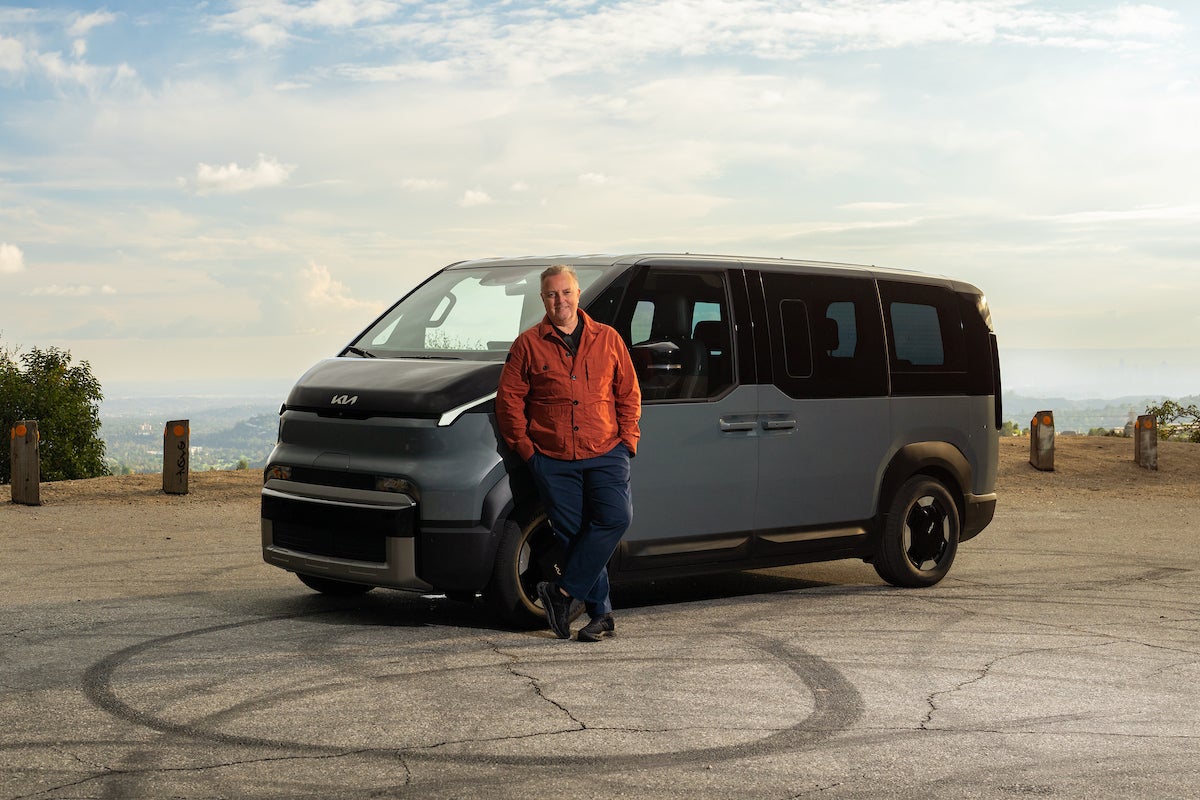
We’ve driven the passenger version of the Kia PV5 van and discovered it could be one of the family car bargains of the year.
Steve FowlerElectric Vehicles EditorWednesday 03 December 2025 16:02 GMTComments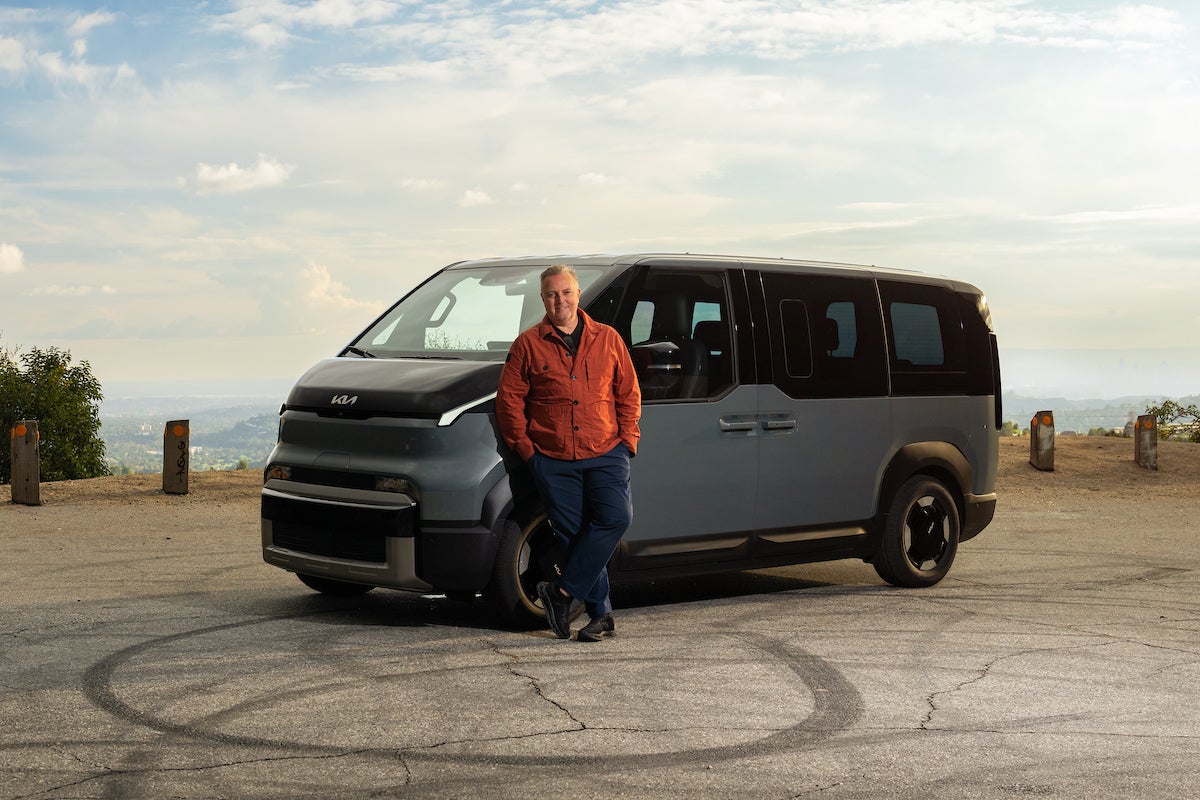 open image in galleryKia's new PV5 passenger van is a brilliant family vehicle, says Steve Fowler (Kia/Adam Warner)
Get our weekly Drive Smart newsletter for motoring news, reviews and advice from EV editor Steve Fowler
Get motoring news, reviews and advice from EV editor Steve Fowler
Get our EV editor’s weekly Drive Smart newsletter
Email*SIGN UPI would like to be emailed about offers, events and updates from The Independent. Read our Privacy notice
Some electric vehicles shout about their technology; others simply get on with the job. The Kia PV5 manages to do both. It’s Kia’s first purpose-built electric van, but also one of the cleverest family EVs on sale – a combination that explains why it’s already been crowned International Van of the Year 2026 and holds a Guinness World Record for the longest distance travelled by an electric van, covering 430 miles on an urban route.
This isn’t just a converted van with a battery shoved underneath. The PV5 is the first in Kia’s new Platform Beyond Vehicle (PBV) family – a modular, all-electric range designed from the ground up on a new E-GMP.S platform. It’s a skateboard-style setup that allows the same underpinnings to support everything from a workhorse Cargo version to the five-seat Passenger model driven here, and even upcoming wheelchair-accessible and seven-seat derivatives.
From the outside, it looks like something from the future. While the Volkswagen ID. Buzz plays retro, the PV5 takes the high-tech route: crisp LED lighting, upright proportions and a modern simplicity that’s very Kia. The boxy body maximises space, while the wraparound glass area and low beltline keep it feeling light and friendly rather than utilitarian.
And friendly is a good word for it, because the PV5 isn’t just aimed at businesses. The Passenger version is a full-on electric MPV alternative that costs less than many smaller EVs yet offers genuine five-seat space, loads of kit and a driving experience that’s more refined than some premium SUVs.
As first attempts go, Kia’s PBV project couldn’t have started much better.
Recommended Sony and Honda are building a car, and I’ve been behind the wheel
 BYD Seal 6 DM-i review – the dog-friendly plug-in hybrid that’ll go 935 miles in one go
 Nissan Leaf review – British built and an EV to be proud of
 MG S6 review – a calm and practical family EV
How we tested
Kia took a PV5 to California for the annual World Car Awards judging session, which is where I drove it. However, I was so impressed with the PV5 Passenger that was there, I not only tested it on my usual test route up in the hills above Pasadena, on the freeway and then down in the town, I also drove it into downtown LA.
I then even chose it ahead of other more exotic cars for a trip up the Pacific Coast Highway to Malibu for lunch! We had five people on board to test the practicality, a boot full of photographic and video kit, and I tested the range, the tech and even how easy it was to park in a US shopping mall.
Kia PV5: £32,995–£38,295 (Passenger) / from £30,995 (Cargo), Kia.com
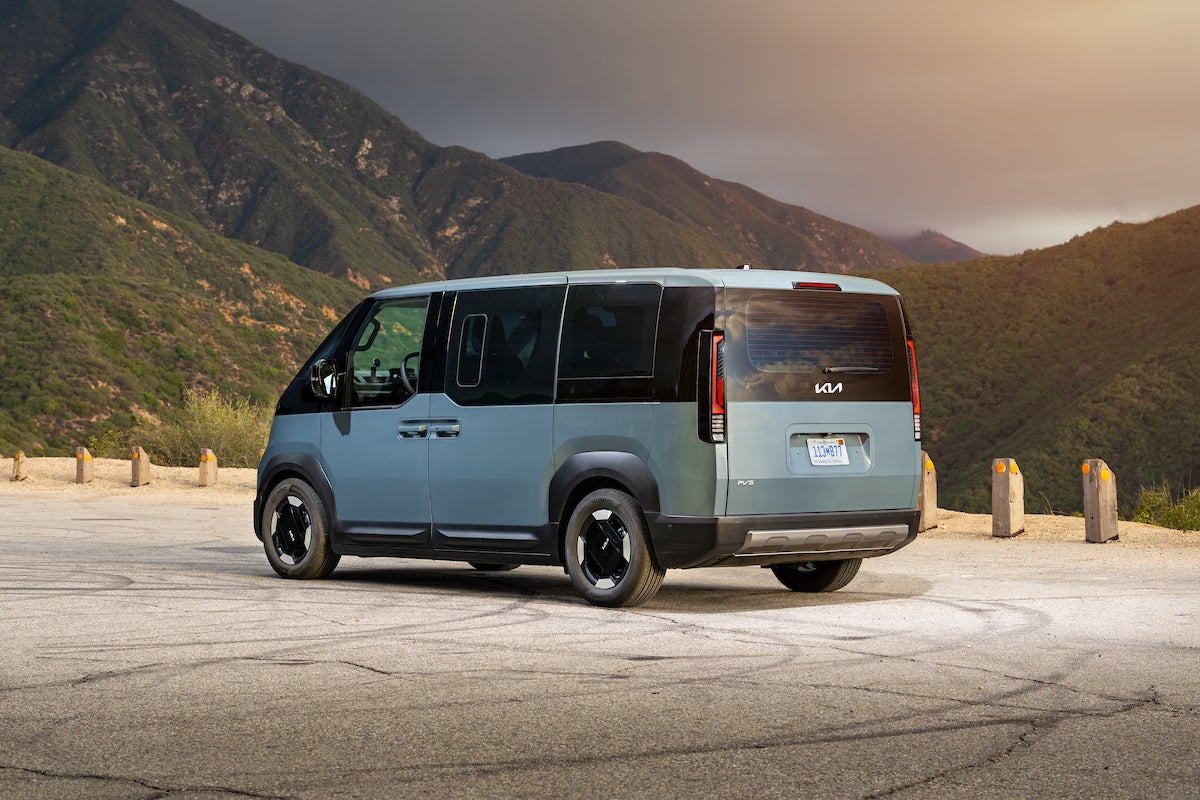 open image in galleryThe Kia PV5 Passenger is better and cheaper than Volkswagen's ID. Buzz (Kia/Adam Warner)
Independent rating: 9/10
- Pros: Clever design, great to drive, family-friendly practicality, excellent value
- Cons: Charging speed trails best rivals, no seven-seat option (yet)
Kia PV5 specs
- Price range: £32,995–£38,295 (Passenger) / from £30,995 (Cargo)
- Battery size: 51.5kWh & 71.2kWh
- Maximum claimed range: 256 miles (Passenger) 268 miles (Cargo)
- Miles per kWh: Up to 3.9 miles/kWh
- Maximum charging speed : 150kW DC (10–80% <30 min)
Battery, range, charging, performance and drive
Kia keeps things simple: two battery options, both powering the front wheels through a single-motor setup. The standard 51.5kWh pack produces 120bhp and 250Nm, good for a 0–62mph time of 12.8 seconds and a range of up to 183 miles. Step up to the 71.2kWh long-range battery and power rises to 160bhp, trimming the 0–62mph sprint to 10.6 seconds and stretching the maximum claimed range to 256 miles.
In the real world, the PV5 is likely to comfortably manage more. On our test drive, largely urban and suburban but also taking in some US freeways, the PV5 Passenger indicated well over 280 miles on a charge – proof of how efficient this large, bluff-sided van can be when driven sensibly. Kia’s record-setting 430-mile urban run was achieved using the same battery and drivetrain, underscoring how effective its regenerative braking and low-speed efficiency are.
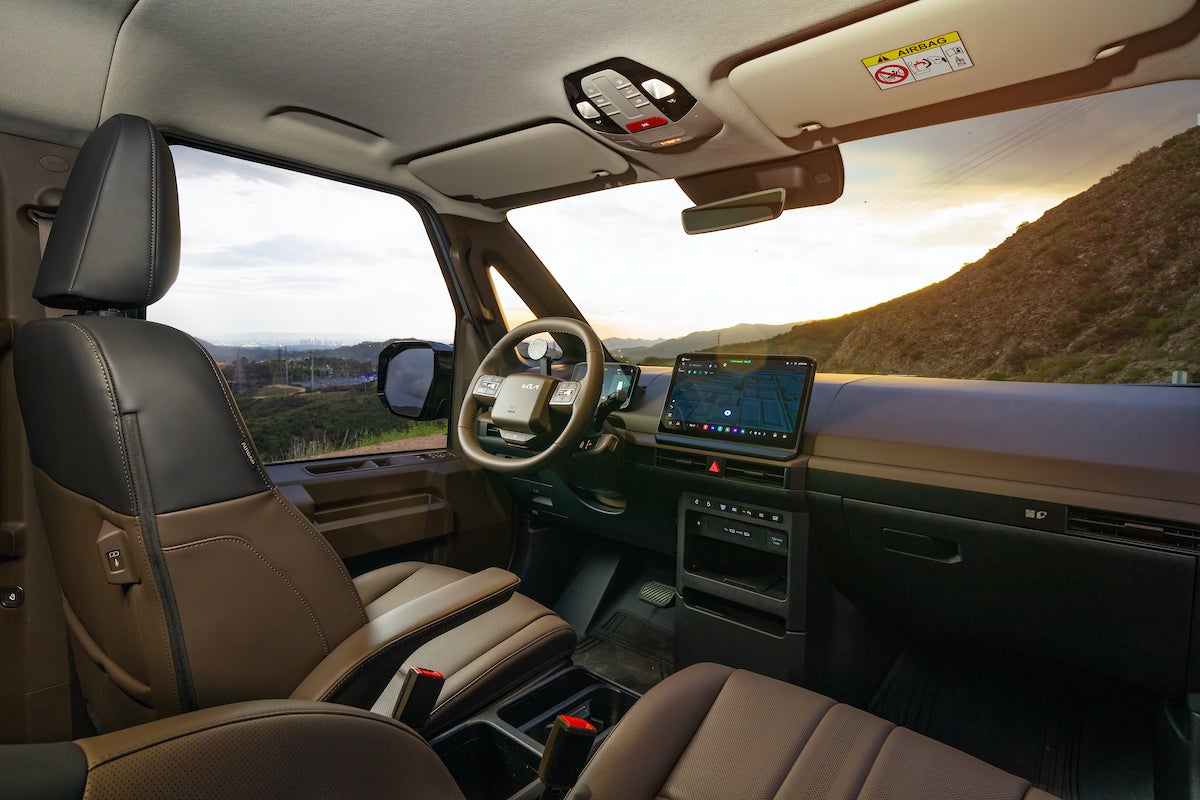 open image in galleryThe PV5 Passenger feels almost as luxurious inside as any of Kia's cars (Kia/Adam Warner)
Charging is brisk if not class-leading. The PV5 supports 150kW DC fast charging, enough to take the battery from 10–80 per cent in under 30 minutes. Those figures won’t worry most buyers, as the PV5’s running costs are tiny – a full charge at home costs around £6–£8 depending on your electricity tariff, meaning it’s among the cheapest large EVs to run per mile.

Get your charger and tariff now. Save happily EV after.
T&Cs apply
Find out moreADVERTISEMENT
Get your charger and tariff now. Save happily EV after.
T&Cs apply
Find out moreADVERTISEMENT
Out on the road, the PV5 is a revelation. It sits on the same platform as the Kia EV3 compact SUV, and you can feel the shared DNA in its balance and refinement. The steering is light but accurate, visibility unsurprisingly excellent, and the ride impressively composed even without a load in the back. Many vans fidget and bounce when empty; the PV5 doesn’t. Kia’s suspension tuning and long wheelbase (2,995mm) deliver a calm, settled feel that makes it an easy and enjoyable vehicle to drive long distances.
In fact, when testing the PV5 in the US for World Car Awards judging, I chose it for a jaunt out to Malibu rather than the more exotic machinery on offer. Part of that was down to the comfort and refinement, but also just how easy it is to drive, with a superb turning circle meaning excellent manoeuvrability (and parkability!).
It’s also quiet. Motor noise is barely perceptible, wind noise minimal, and tyre roar well suppressed. With passengers on board, it feels more like a people carrier than a van, and it’s genuinely relaxing to drive – especially in urban traffic, where instant torque and good visibility make for effortless progress.
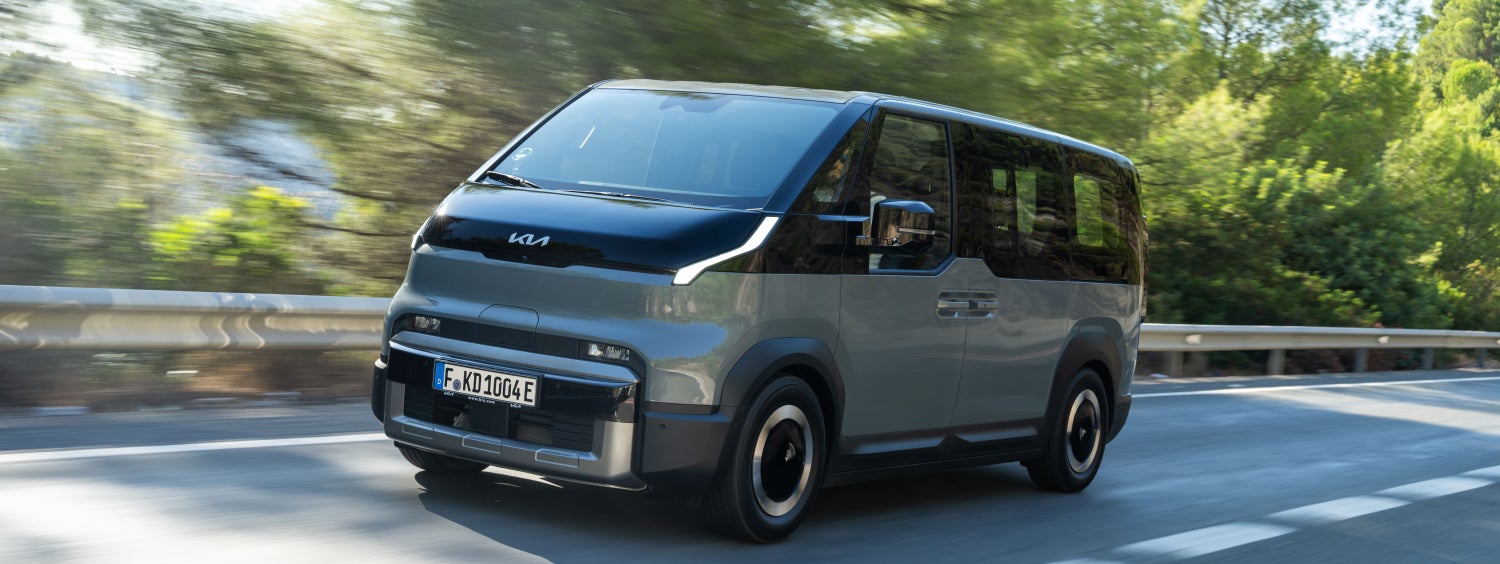 open image in galleryThe Kia PV5 uses car tech and, unsurprisingly, drives very much like a car (Kia)
The Cargo version uses the same powertrains and offers identical charging specs, though its lighter body and lower drag mean a slightly longer 268-mile range in long-range form. It’s aimed squarely at fleets and urban delivery firms, but the driving experience is similarly refined – a far cry from the rattly Transits and Berlingos of old.
Interior, practicality and boot space
Step inside and you quickly forget this started life as a van. The cabin feels more EV3 crossover than commercial vehicle, with a broad, minimalist dashboard, twin-screen layout and quality materials that wouldn’t be out of place in a Kia Niro. It’s all well screwed together, with a mix of soft-touch plastics and durable eco-friendly surfaces designed to withstand years of heavy use.
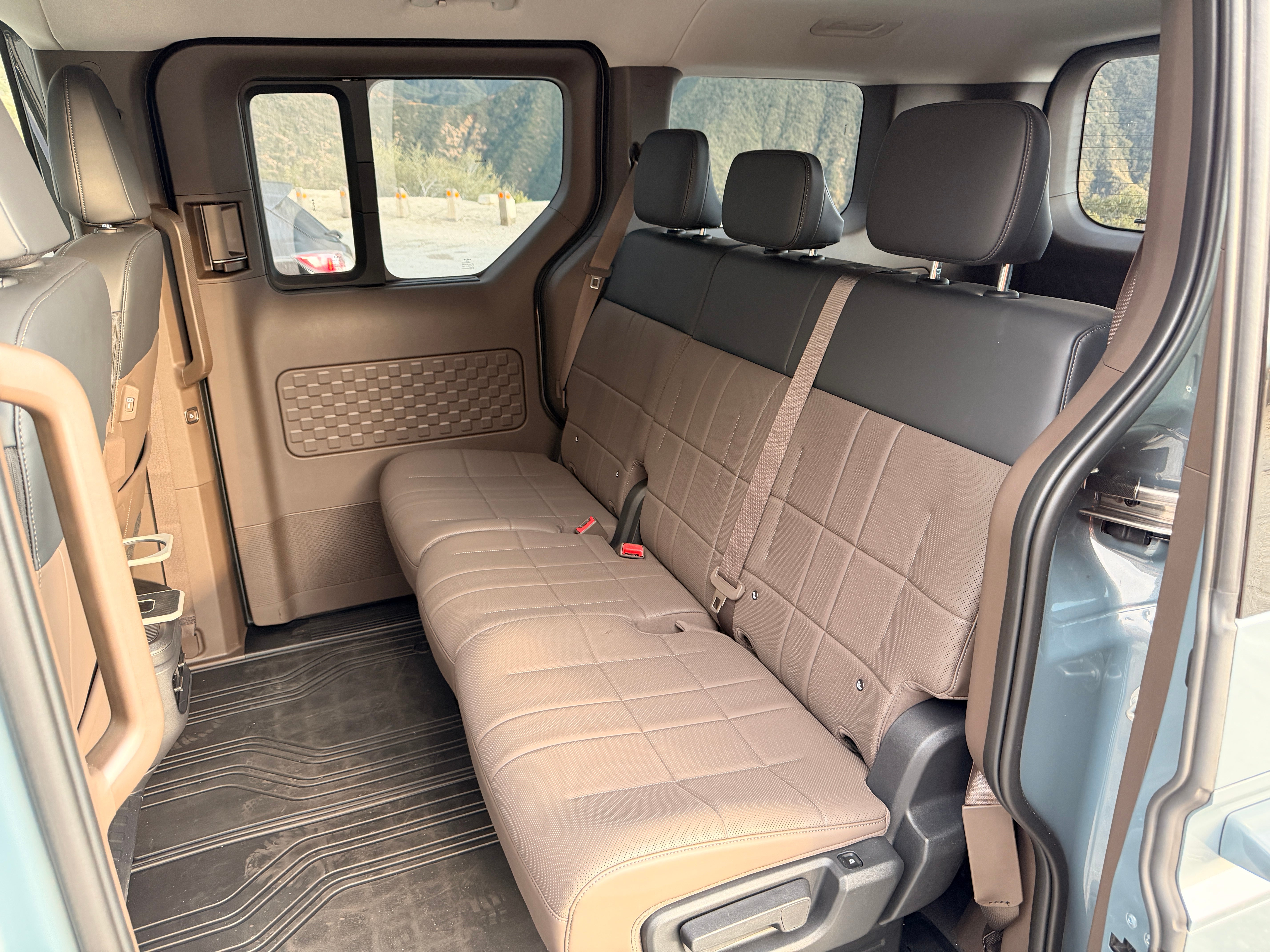 open image in galleryBehind the electrically-sliding side door of the Kia PV5are three easy to access, spacious and comfortable rear seats (Steve Fowler)
Storage is excellent. Kia’s clever AddGear trays are scattered around the cabin, including under-seat compartments, side trays and multiple floor bins. There’s even a removable tray on the rear assist handle, plus USB-C ports for the second row. Cupholders, coat hooks and nets make it feel thoroughly thought-through for everyday life – whether you’re carrying tools or toddlers.
Space is vast. The five-seat (2-3-0) layout provides a proper three-seat bench in the second row with good legroom and headroom (995mm and 1,076mm respectively). Behind it lies a boot big enough to embarrass some estate cars: 1,330 litres with all seats up, expanding to 2,300 litres with the rear seats folded. The tailgate is powered on Plus models, opening high to reveal a low load lip and a near-flat floor – ideal for loading bikes, prams or work gear.
The rear side doors are sliding and powered, too, so access is effortless even in tight spaces, and the low 399mm step height helps elderly passengers or children climb aboard easily. Heated rear seats feature on Plus trim, and there’s a genuine feeling of airiness thanks to the low beltline and big windows.
Quality is robust rather than plush, but this feels deliberate. Kia’s use of sustainable materials – including recycled PET fabrics and bio-based polyurethane – gives the PV5 a clean, contemporary look while ensuring it’ll handle daily wear and tear. It’s easy to imagine this cabin still feeling fresh after 100,000 miles.
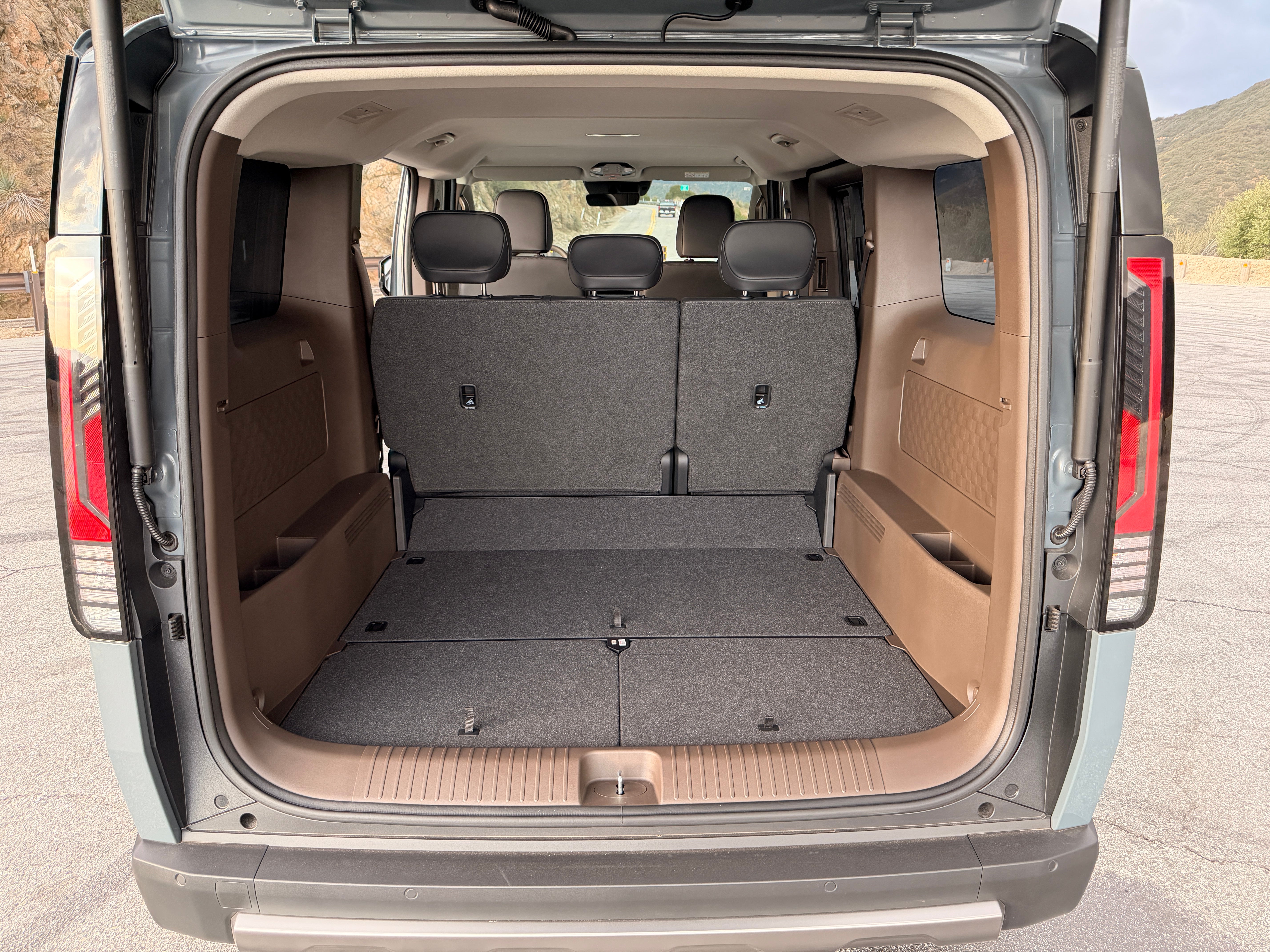 open image in galleryAs you'd expect from a van-based vehicle, rear luggage space is enormous in the Kia PV5 Passenger (Steve Fowler)
The Cargo model swaps those seats for a huge 5.2 m³ load bay with a 1,500 kg braked towing capacity (long-range model) and the same low load floor. Its wide-opening twin rear doors and side access make it ideal for urban couriers or tradespeople – and thanks to identical running gear, it’ll be just as comfortable to drive as the Passenger model.
Technology, stereo and infotainment
For a van, the PV5’s technology offering is outstanding; for a family EV, it’s class-leading. The Android Automotive OS infotainment system means Google Maps, Assistant and Play store apps are built in, eliminating the need for smartphone mirroring – though wireless Apple CarPlay and Android Auto are still included if you prefer. Over-the-air updates keep everything fresh, and Kia Connect services come free for seven years.
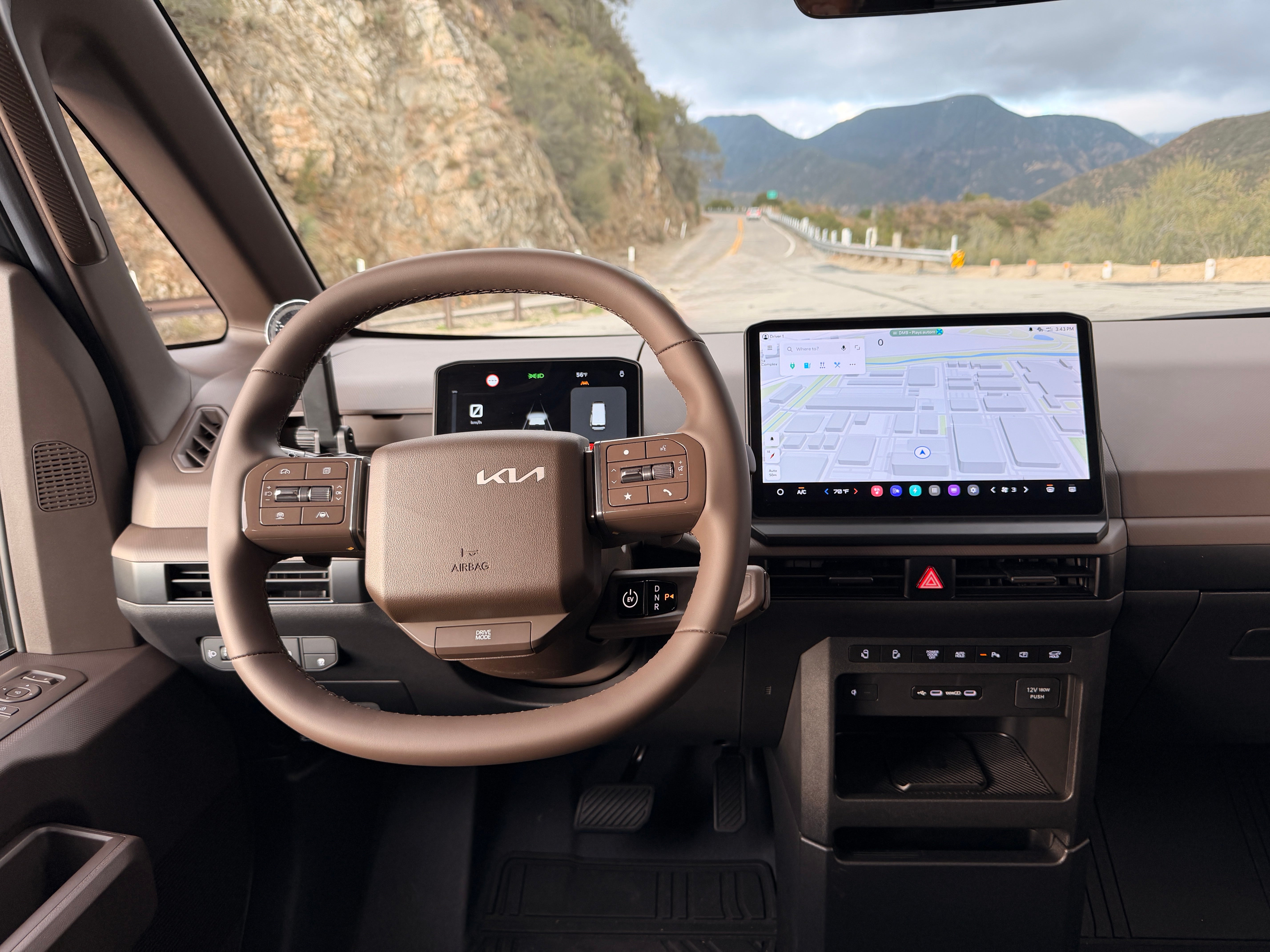 open image in galleryThe tech on board the Kia PV5 is impressive for families or for businesses (Steve Fowler)
One detail I loved was the handy, magnetic smartphone holder that sits to the side of the driver display – a neat and clever solution.
There’s also serious business tech onboard. Kia has partnered with Geotab to integrate fleet management tools directly into the PV5’s system. It lets fleet operators monitor location, battery health and driver behaviour without extra hardware. The optional SmartThings Pro link with Samsung’s IoT platform connects the vehicle to workplace systems, allowing automated charging, building access or equipment monitoring – clever stuff for commercial users.
Higher-spec Plus models add Vehicle-to-Load (V2L) functionality, letting you power tools, camping gear or appliances straight from the battery. It’s standard-issue camper-van convenience on a vehicle that costs less than many family hatchbacks.
Safety tech is equally strong. Every PV5 gets Forward Collision-Avoidance Assist, Lane Keep Assist, Highway Driving Assist, Smart Cruise Control, Rear Cross-Traffic Alert and Blind-Spot Collision-Avoidance Assist, plus a reversing camera and parking sensors front and rear. Six airbags, including curtain protection, are standard, and Kia’s Safe Exit Warning prevents passengers opening doors into passing traffic.
The stereo system, a six-speaker unit with Bluetooth voice control, is crisp enough for music or podcasts. The quiet drivetrain helps too – conversation levels are hushed even at motorway speeds.
Prices and running costs
Value has long been a Kia hallmark, and the PV5 takes it to new levels. The Passenger range starts at £32,995 for the Essential (51.5kWh), rising to £35,995 for the long-range version and £38,295 for the Plus. Add £780 for the optional heat pump and you’re still looking at a fully loaded electric people carrier for comfortably less than a VW ID. Buzz.
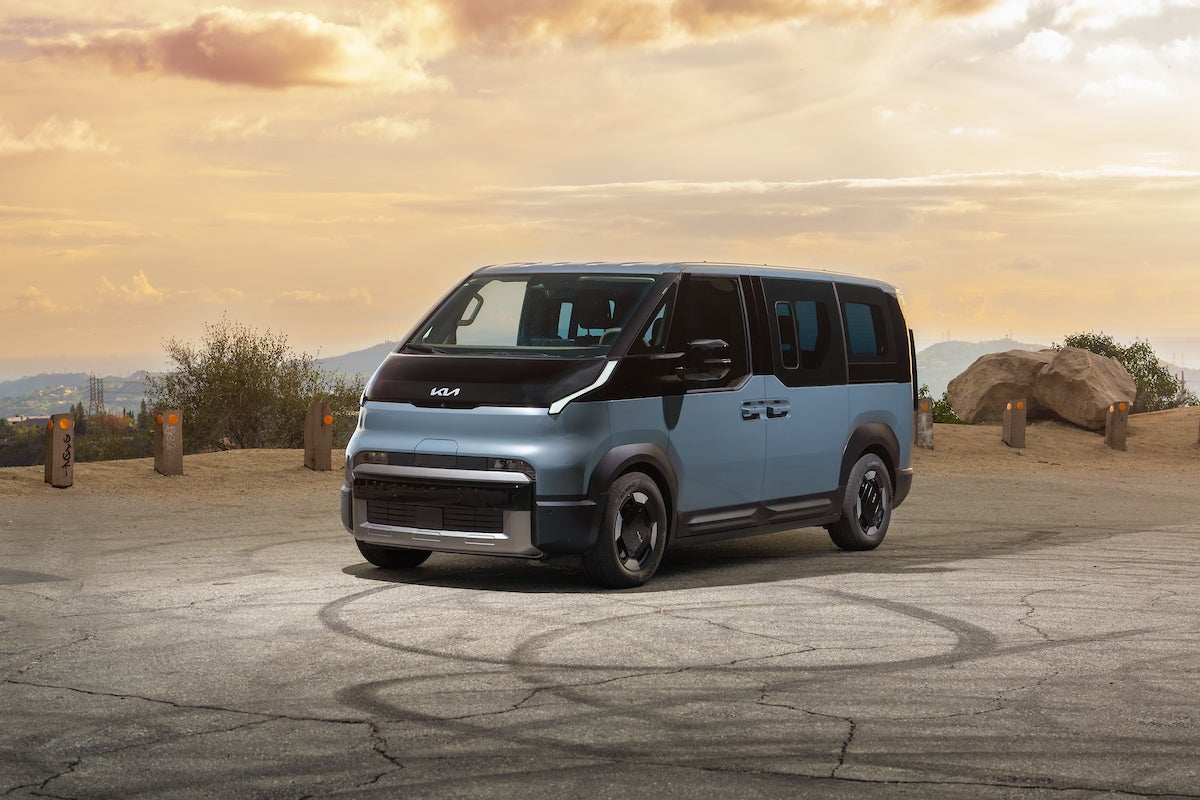 open image in galleryThe Kia PV5 Passenger is as good looking as any Kia car (Kia/Adam Warner)
The Cargo version starts from around £30,995, depending on configuration, and qualifies for the UK’s plug-in van grant, reducing the purchase price further for businesses.
Running costs are minimal. With real-world efficiency close to 3.9 miles/kWh, a full charge costs less than £10 at home. Servicing is infrequent and inexpensive, and Kia’s seven-year warranty covers the lot – although the battery gets another twelve months’ cover on top. The heat pump on some trims further improves winter efficiency, while the regenerative braking paddles on the steering wheel make stop-start driving energy-positive rather than wasteful.
Insurance is expected to be low for such a large vehicle, and because it qualifies as a zero-emission van, company car tax for business users will remain minimal for the foreseeable future. Add in exemption from ULEZ and some congestion charges (although things are changing on that score) and the PV5’s financial appeal is undeniable.
Recommended Will.i.am just invented an AI-powered car radio – and I’ve tried it
 Best family electric cars 2025: Practical seven seater EVs tested
 Think electric cars are expensive? My new EV costs me less than a couple of posh coffees a day
 Step one in Audi’s big comeback? Killing off over 100 steering wheels
Kia PV5 rivals
- Volkswagen ID.Buzz
- Ford E-Transit Custom
- Renault Trafic E-Tech
FAQs
How long does it take to charge?
At a 150kW DC rapid charger, the PV5 goes from 10–80 per cent in under 30 minutes. A full charge on an 11kW home wallbox takes around six-and-a-half hours for the long-range battery or just under five hours for the standard pack.
Is the Kia PV5 worth it?
Definitely. Whether you’re a family after a practical, tech-laden EV with masses of space or a business seeking a clean, cost-effective van, the PV5 hits the mark. Kia’s first PBV isn’t just a clever idea – it’s a properly polished product, and an early contender for electric vehicle of the year.
Does Kia replace batteries for free?
Yes – Kia’s industry-leading seven-year/100,000-mile warranty applies to the entire PV5 range, with eight years’ battery coverage. Connected services via Kia Connect are free for seven years.
Why trust us
Our team of motoring experts have decades of experience driving, reviewing and reporting on the latest EV cars, and our verdicts are reached with every kind of driver in mind. We thoroughly test drive every car we recommend, so you can be sure our verdicts are honest, unbiased and authentic.
The verdict: Kia PV5
I’ll admit, I wasn’t expecting to enjoy the PV5 as much as I did. Vans – even electric ones – usually prioritise function over finesse, but the Kia manages both. It looks brilliant, drives far better than it has any right to, and feels properly thought-through for both family life and business use.
This Passenger model is genuinely one of the best-value family EVs on sale right now: five seats, vast space, loads of kit, and refinement that rivals some premium SUVs for less than £40k. It’s so good that you start wondering whether you really need an MPV or SUV at all.
As for Kia’s first attempt at a van? It’s a triumph. The established players – Ford, Mercedes, Volkswagen – should be watching nervously, because Kia has just built an electric van that feels every bit like a modern Kia car: smart, efficient, desirable and great to drive.
More about
Electric carsKiaVanJoin our commenting forum
Join thought-provoking conversations, follow other Independent readers and see their replies
Comments