
- News
- Health
Certain amounts of hydrogen sulfide can help protect aging brains from Alzheimer’s disease, according to a 2021 study
Isabel Keanein New York Wednesday 03 December 2025 15:39 GMTComments open image in galleryScientists suggest that smelling the rotten-egg stench that often comes with flatulence may help ward off Alzheimer’s disease (Getty Images/iStockphoto)
Sign up for our free Health Check email to receive exclusive analysis on the week in health
Get our free Health Check email
Get our free Health Check email
Email*SIGN UPI would like to be emailed about offers, events and updates from The Independent. Read our Privacy notice
Instead of stopping to smell the flowers, scientists suggest stopping to smell your farts.
While the thought may be enough to make your stomach turn, scientists at Johns Hopkins Medicine say the gas behind the foul, rotten-egg-smelling stench, known as hydrogen sulfide, can help protect aging brain cells from Alzheimer’s disease.
While the smelly gas is highly toxic in large quantities, smaller doses may provide some serious health benefits, Johns Hopkins researchers noted in a study published in an issue of the Proceedings of the National Academies of Science.
“Our new data firmly link aging, neurodegeneration and cell signaling using hydrogen sulfide and other gaseous molecules within the cell,” said the study’s lead scientist, Dr. Bindu Paul.
The human body naturally creates small amounts of hydrogen sulfide, which helps regulate functions throughout the body. The gases can facilitate cellular messaging with the brain.
open image in galleryScientists suggest that smelling the rotten-egg stench that often comes with flatulence may help ward off Alzheimer’s disease (Getty Images/iStockphoto)The hydrogen sulfide modifies target proteins through a process called chemical sulfhydration, according to co-author Dr. Solomon Snyder.
Sulfhydration levels in the brain decrease with age, the scientists said, noting the trend has a greater presence in Alzheimer’s patients.
“Here, using the same method, we now confirm a decrease in sulfhydration in the AD brain,” collaborator Dr. Milos Filipovic said.
As part of the study, Johns Hopkins Medicine scientists looked at mice that were genetically modified to mimic human Alzheimer’s disease.
The mice were injected with a hydrogen sulfide-carrying compound called NaGYY, which slowly released passenger hydrogen sulfide molecules throughout the body. The mice were tested for changes in memory and motor function over a 12-week period.
Behavior tests on the mice showed that hydrogen sulfide improved cognitive and motor function by 50 percent compared to mice that did not receive the injections.
The mice that received the treatment were better able to remember the locations of platform edits and appeared more physically active than the mice that had simulated Alzheimer’s disease but did not receive the treatment.
“The results showed that the behavioral outcomes of Alzheimer’s disease could be reversed by introducing hydrogen sulfide, but the researchers wanted to investigate how the brain chemically reacted to the gaseous molecule,” Johns Hopkins Medicine wrote in a press release about the study.
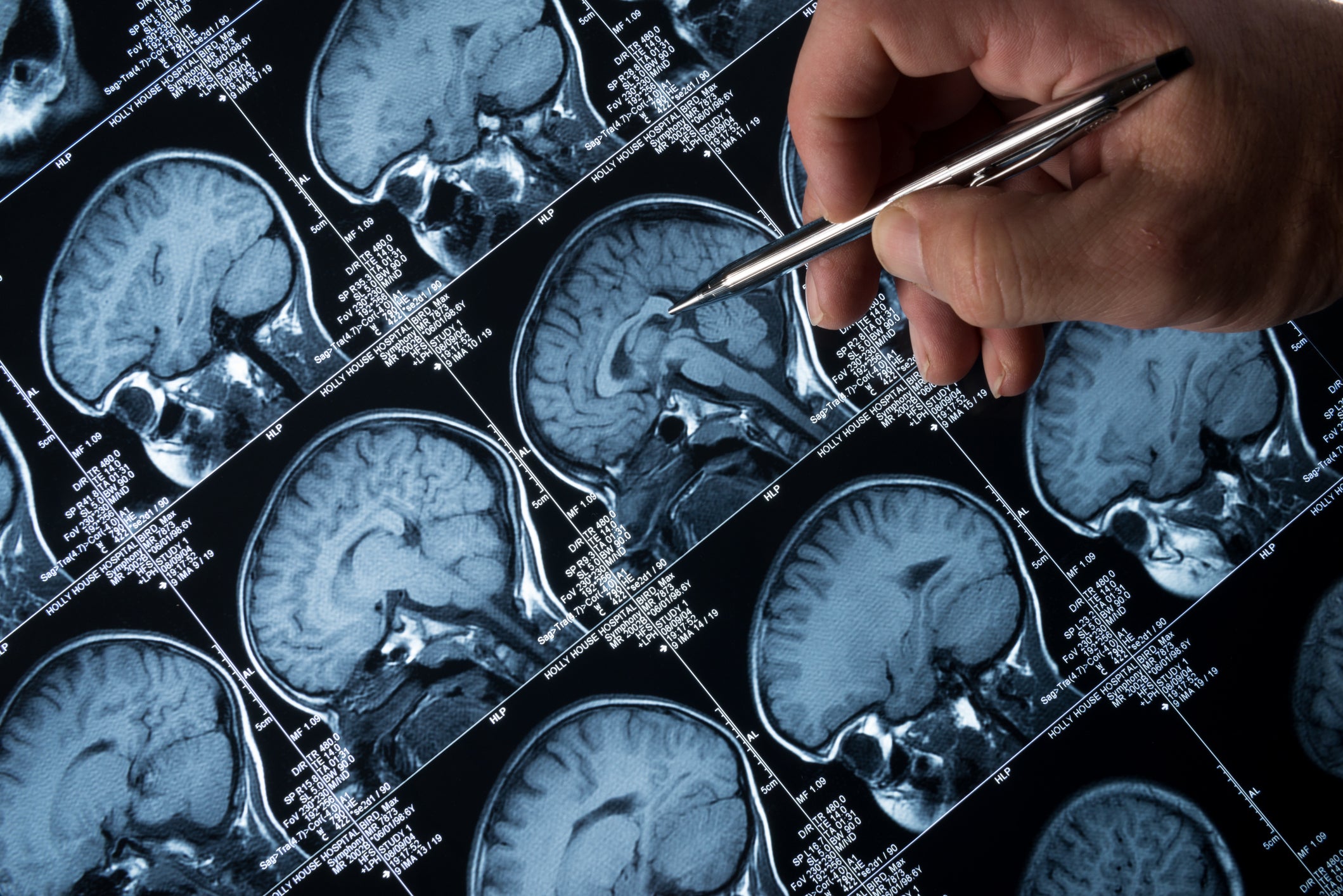 open image in gallerySulfhydration levels in the brain decrease with age, the scientists said, noting the trend has a greater presence in Alzheimer’s patients (Getty/iStock)
A series of experiments revealed a change to a common enzyme called glycogen synthase β (GSK3β). When there are healthy levels of hydrogen sulfide, GSK3β acts as a signaling molecule.
Researchers found that in the absence of hydrogen sulfide, GSK3β is overattracted to another protein in the brain called Tau.
When GSK3β and Tau interact, Tau causes clumps inside nerve cells. As those clumps grow, the tangled proteins block communication between the nerves, eventually causing them to die, according to the researchers.
“This leads to the deterioration and eventual loss of cognition, memory and motor function that is characteristic of Alzheimer’s disease,” the press release said.
“Understanding the cascade of events is important to designing therapies that can block this interaction like hydrogen sulfide is able to do,” Ph.D student Daniel Giovinazzo, the first author of the study, said.
Until just a few years ago, researchers lacked the tools to mimic how the body makes small quantities of hydrogen sulfide inside cells.
“The compound used in this study does just that and shows by correcting brain levels of hydrogen sulfide, we could successfully reverse some aspects of Alzheimer’s disease,” collaborator Dr. Matt Whiteman said.
More about
researchersScientistsAlzheimer's diseaseGasbrain cellsJohns HopkinsJoin our commenting forum
Join thought-provoking conversations, follow other Independent readers and see their replies
Comments