- News
- World
- Americas
Human trials are scheduled to begin in the Netherlands early next year
Graig Graziosiin Washington, D.C.Wednesday 03 December 2025 17:08 GMTComments
 CloseRelated video: Trump signs HALT Fentanyl Act
The latest headlines from our reporters across the US sent straight to your inbox each weekday
Your briefing on the latest headlines from across the US
Your briefing on the latest headlines from across the US
Email*SIGN UPI would like to be emailed about offers, events and updates from The Independent. Read our Privacy notice
A biotech company in New York is testing out a fentanyl vaccine that, if effective, could completely upend overdose prevention and treatment.
Fentanyl abuse has been a driving cause of overdoes deaths in the U.S. for more than a decade. According to the Drug Enforcement Administration, fentanyl was responsible for nearly 70 percent of overdose deaths in the U.S. in 2023. In some parts of the country it may be more likely to see a box of overdose-counteracting Narcan on the wall of a public place than a defibrillator.
Collin Gage, the CEO of ARMR Sciences in New York, wants to change the way we approach overdoses.
“It became very apparent to me that as I assessed the treatment landscape, everything that exists is reactionary,” he told Wired. “I thought, why are we not preventing this?”
Unlike Narcan — drug name Naloxone — which reverses the effects of overdoses, ARMR is developing a vaccine that he describes conceptually as similar to a suit of armor. Like any other vaccine, receiving it first will, in theory, protect an individual from danger if they encounter fentanyl.
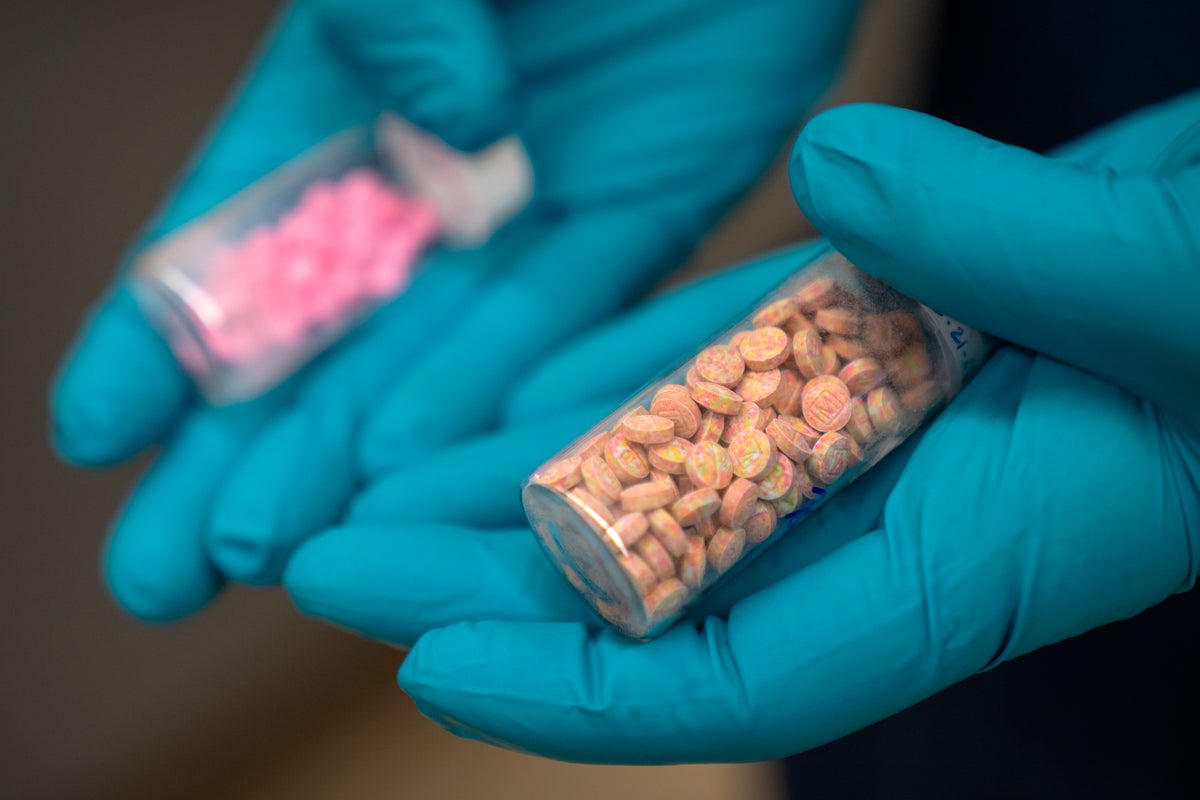
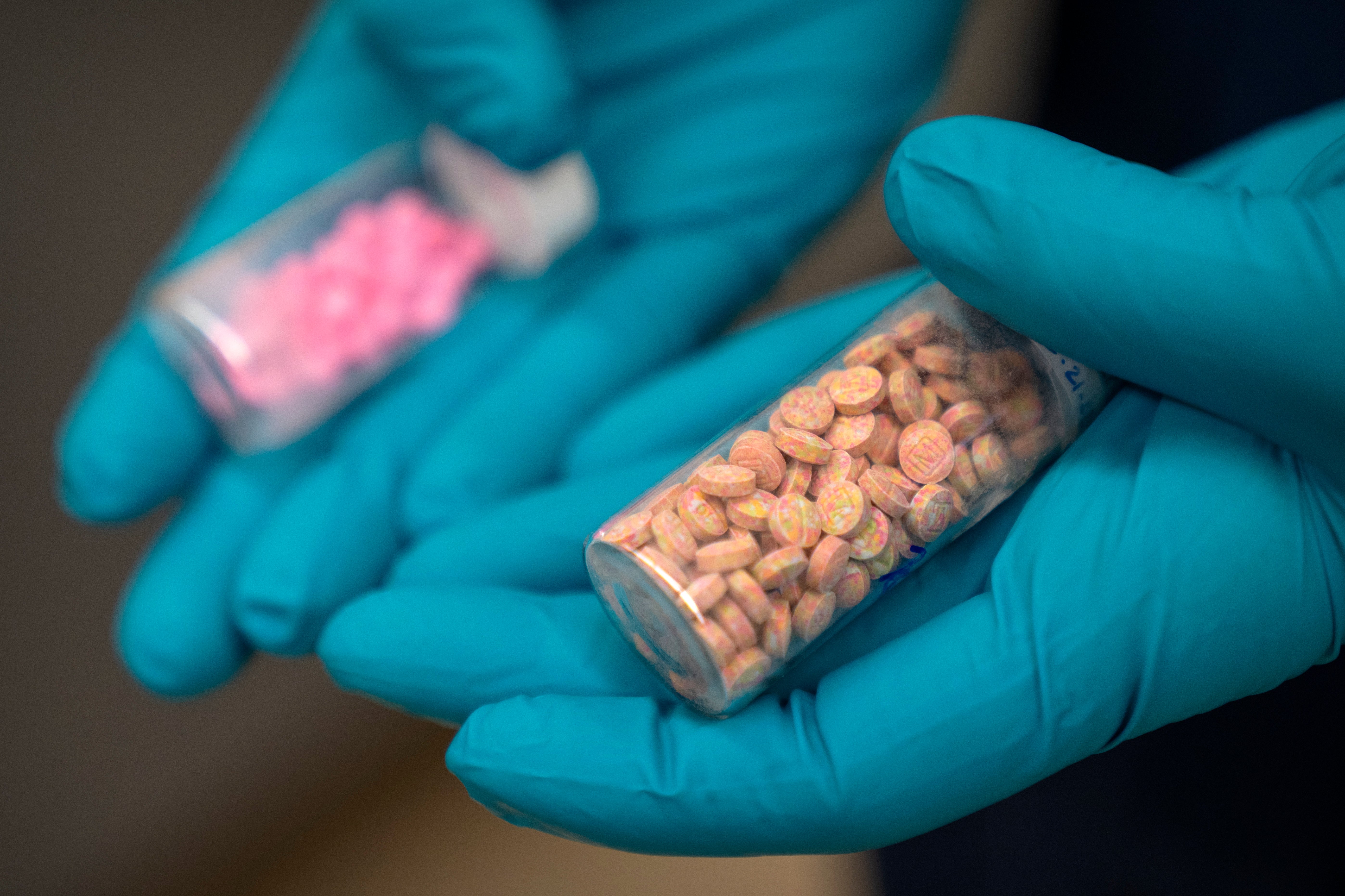 open image in galleryJonathan Dumke, a senior forensic chemist with the Drug Enforcement Administration, holds vials of fentanyl pills at a DEA research laboratory on Tuesday, April 29, 2025, in Northern Virginia. The New York-based ARMR Sciences is working on a vaccine that would stop both the dangerous and euphoric effects of the drug on humans (Copyright 2025 Associated Press. All rights reserved)
He said that the vaccine could “completely change the paradigm” for how individuals respond to overdoses, because it would no longer require someone to be carrying medicine — like Narcan — on their person to treat an overdose.
The proposed vaccine would eliminate fentanyl in the bloodstream before it reaches the brain. By keeping it out of the brain, it would prevent the drug from causing respiratory failure and death. It would also prevent the extreme highs that come from using fentanyl.
Since fentanyl does not trigger an autoimmune response on its own due to its size, ARMR wants to attach a "carrier" protein to a fentanyl-like molecule. Gage says doing so will hopefully prompt the body to make counteractive antibodies that will recognize real fentanyl as a threat if it ever enters the body, according to Wired.
If antibodies in the blood collect around fentanyl molecules, they will be too large to pass through the blood-brain barrier, preventing both the high, and the overdose. ARMR is reportedly developing the drug as an injection but has also considered an oral version for future trials.
The drug will begin trials early next year using 40 healthy adults at the Centre for Human Drug Research in the Netherlands.
Sharon Levy, an addiction specialist at Boston Children's Hospital and an adviser to ARMR, told Wired that she believed that there would be demographics willing to accept a fentanyl vaccine. She said that teenagers and young adults who might accidentally be exposed to fentanyl — for example, if the drug is cut into another drug without the user knowing — have been receptive to the idea, as have their parents.
 open image in galleryMore than 40 percent of Americans know someone who has died of an overdose, according to 2024 RAND analysis. (DEA)
“Parents who had lost kids to overdose were especially enthusiastic, saying ‘Every kid should get this’ or ‘Every kid going to college should get this,’”Elissa Weitzman, the director of research at Boston Children's Division of Addiction Medicine, said in a report.
Individuals in active treatment for opioid use disorders would also be prime candidates for vaccination, according to Levy.
“Overall, our experience has been that people would be interested in this,” she told the magazine.
According to Gage, the vaccine is based on work done by the University of Houston and collaborators at Tulane University. Those projects found that, in rat trials, vaccines blocked 92 to 98 percent of fentanyl from entering the animal's brain.
The protection lasted 20 weeks in the rats, which Gage thinks may translate to up to a year of protection in humans.
As of 2024, more than 40 percent of Americans know someone who died from an overdose, according to a RAND analysis.
More about
drug overdosesFentanylNew YorkVaccineJoin our commenting forum
Join thought-provoking conversations, follow other Independent readers and see their replies
Comments