- Home
Edition
Africa Australia Brasil Canada Canada (français) España Europe France Global Indonesia New Zealand United Kingdom United States Edition:
Global
Edition:
Global
- Africa
- Australia
- Brasil
- Canada
- Canada (français)
- España
- Europe
- France
- Indonesia
- New Zealand
- United Kingdom
- United States
Academic rigour, journalistic flair
 Elphaba and Glinda exchange words – but who is correct?
Universal Pictures
Wicked: what lies beneath correcting the way people speak?
Published: December 3, 2025 5.46pm GMT
Emma Humphries, Queen's University Belfast
Elphaba and Glinda exchange words – but who is correct?
Universal Pictures
Wicked: what lies beneath correcting the way people speak?
Published: December 3, 2025 5.46pm GMT
Emma Humphries, Queen's University Belfast
Author
-
 Emma Humphries
Research Fellow, School of Arts, English and Languages, Queen's University Belfast
Disclosure statement
Emma Humphries receives funding from The Leverhulme Trust and is currently employed by Queen's University Belfast.
Partners

Queen's University Belfast provides funding as a founding partner of The Conversation UK.
View all partners
DOI
https://doi.org/10.64628/AB.edj5wqshh
https://theconversation.com/wicked-what-lies-beneath-correcting-the-way-people-speak-270639 https://theconversation.com/wicked-what-lies-beneath-correcting-the-way-people-speak-270639 Link copied Share articleShare article
Copy link Email Bluesky Facebook WhatsApp Messenger LinkedIn X (Twitter)Print article
“Pink goes good with green.” This is a lesson we learned from Glinda (Ariana Grande) in Wicked part one. But do you remember the line that comes after that? “Goes well with green.”
A small, easily missed comment from the green-skinned outsider Elphaba (Cynthia Erivo), but one that reveals something important about language and common usage. Hierarchies of “correct” and “incorrect” language are not just found in grammar books and classrooms, but in popular culture too.
From “holding space” to “sex cardigans”, Wicked continues to dominate popular culture, but one thing that has been overlooked is Elphaba’s insistence on correct language.
In the first film, we see Elphaba ostracised and eventually positioned as public enemy number one by the Oz propaganda machine. From the film’s very opening, a flashforward to citizens celebrating Elphaba’s death, her unpopularity is made clear in the song No One Mourns The Wicked.
One way in which the filmmakers signal Elphaba’s unlikeability is through her often awkward, borderline rude social encounters, including when she first meets her frenemy, Glinda. It’s safe to say that the two characters don’t hit it off and Elphaba’s correction seems to upset Glinda.
Glinda: I could care less what others think.
Elphaba: Couldn’t.
Glinda: What?
Elphaba: You couldn’t care less what other people think. Though, I … I doubt that.
In the land of Oz, where people “pronuncify” and “rejocify”, are “disgusticified” and “moodified”, Elphaba’s comments demonstrate the idea that there is only one correct way to use language and that incorrect language should be corrected.
From stage to cinema
Elphaba’s corrections are not in the original stage musical. They were added to the film. The adaptation of a stage show for film offers an opportunity to modernise and change parts of the story that have been controversial or become outdated.
One excellent example of this in Wicked is its improvement of the stage show’s depiction of disability. The addition of language policing, however, is more disappointing. Because when we correct someone’s language, it’s about much more than the words themselves.
Correcting language is not neutral. When we place value on using language correctly, those who fall short often find themselves judged and discriminated against.
The policing of correct language can be seen as a gatekeeping tool, deciding who belongs and who is excluded. This has inevitable consequences for diversity. The way we speak, write and sign can reflect many aspects of our identities: where and how we grew up, our gender, age and race.
Rules and rebellion
With the run time of the films almost doubling that of the stage show, there is much more time devoted to character development in the films. Elphaba’s language pedantry has been added to demonstrate how she can rub people up the wrong way. However, it also suggests an adherence to authority and to socially constructed rules that stands in contrast to her character more broadly.
Elphaba is an outsider who starts the film wanting to be “degreenified”, but by the end of Wicked part one and as a main storyline in Wicked: For Good, she is willing to sacrifice her safety and reputation to do what is morally right, rather than what is socially acceptable.
Adherence to the strict rules of correct language suggests the opposite: a tendency to want to be accepted and to uphold the societal status quo. Elphaba resists social norms in every other respect, yet the film makes her a standard grammar enforcer.
Given that this trait is absent from part two, rather than undermining her personality as a resister, perhaps this further signals Elphaba’s journey from wishing to fit in to fully embracing her outsider status. Indeed, Elphaba’s insistence on correctness speaks to a broader challenge facing anyone positioned as an outsider: having to work that much harder to be accepted.
Glinda’s (famous) need to be popular and her interests in social climbing align with traits of a language enforcer, yet her behaviour tells a different story. She corrects language only once and it concerns her original name, Galinda. When Dr Dillamond, a professor at Shiz University – who also happens to be a goat – struggles to pronounce the “gah” in Galinda, Glinda corrects his pronunciation and berates him.
This moment, present in both the stage musical and the film, does not reflect a desire to uphold the prescriptive rules of the language, but rather a personal motivation. Glinda’s name is central to her self-image and public persona, and protecting that matters to her.
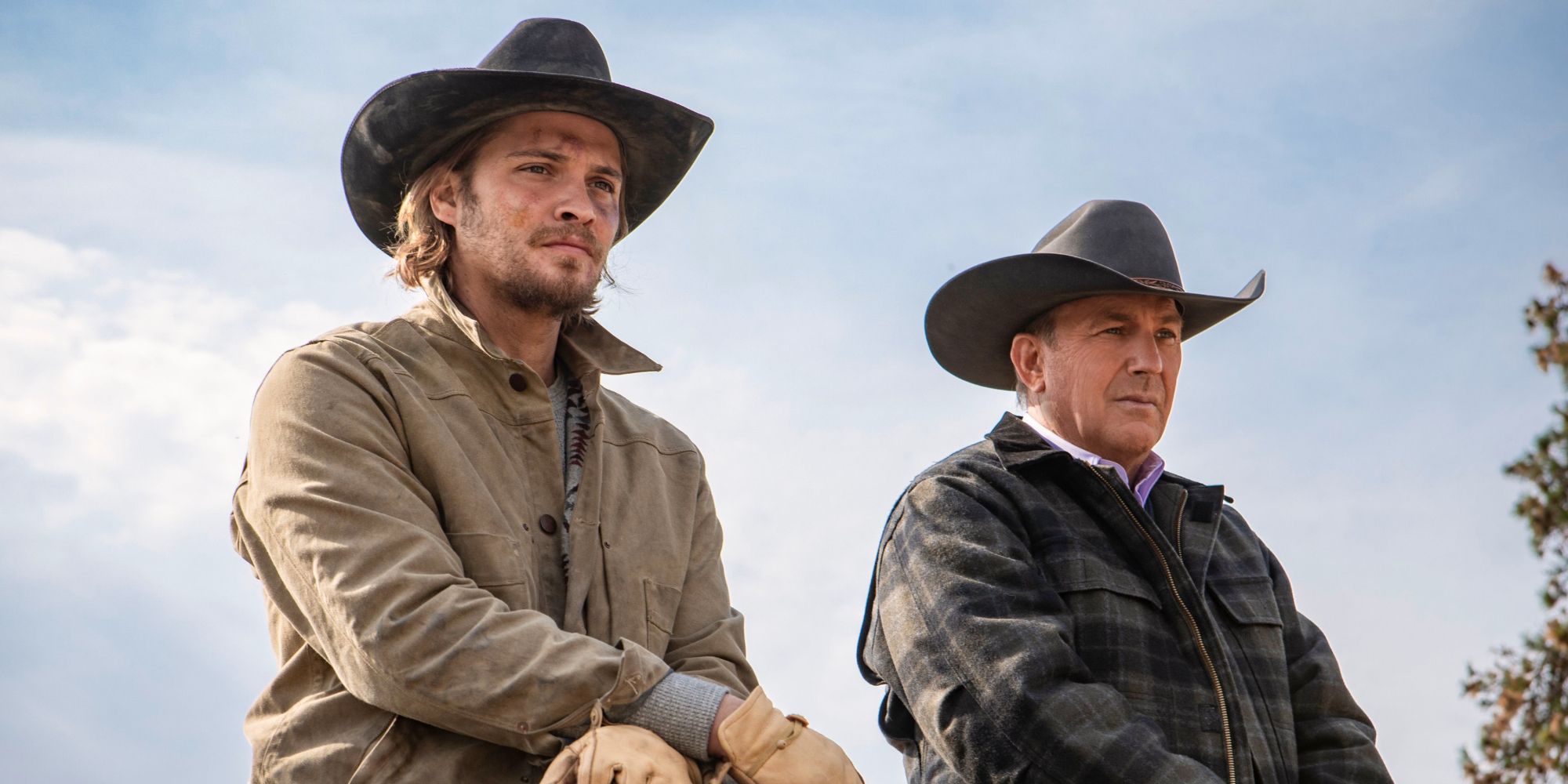
 For some who is herself excluded, it seems odd that Elphaba chooses to do something that can exclude others.
Universal Pictures
For some who is herself excluded, it seems odd that Elphaba chooses to do something that can exclude others.
Universal Pictures
Beyond Oz
In an era when equality, diversity and inclusion initiatives are being rolled back, and languages other than English face renewed marginalisation, Wicked offers a case study in how linguistic hierarchies operate under the radar of popular culture. But there are plenty other examples. Think about Ross in Friends, Ted in How I Met Your Mother and Sheldon in The Big Bang Theory – all notorious language correctors.
Elphaba’s corrections are more than just a shorthand to signal an abrasive character. They reflect the linguistic hierarchies and gatekeeping that exist beyond Oz. Using language “correctly” is a marker of belonging and shows adherence to societal norms.
Across the two films, Elphaba moves from wanting to conform and erase a stigmatised part of her identity, her skin colour, towards rebellion against convention. It’s clear she questions blind adherence to political power, but perhaps this extends further to questioning the rules we construct around language.
Looking for something good? Cut through the noise with a carefully curated selection of the latest releases, live events and exhibitions, straight to your inbox every fortnight, on Fridays. Sign up here.
- Language
- Discrimination
- Popular culture
- Give me perspective
Events
Jobs
-
 Respect and Safety Project Manager
-
Associate Dean, School of Information Technology and Creative Computing | SAE University College
-
Senior Lecturer, Clinical Psychology
-
University Lecturer in Early Childhood Education
-
Case Specialist, Student Information and Regulatory Reporting
 Respect and Safety Project Manager
 Associate Dean, School of Information Technology and Creative Computing | SAE University College
 Senior Lecturer, Clinical Psychology
 University Lecturer in Early Childhood Education
 Case Specialist, Student Information and Regulatory Reporting
- Editorial Policies
- Community standards
- Republishing guidelines
- Analytics
- Our feeds
- Get newsletter
- Who we are
- Our charter
- Our team
- Partners and funders
- Resource for media
- Contact us
-
-
-
-
Copyright © 2010–2025, The Conversation