- Home
Edition
Africa Australia Brasil Canada Canada (français) España Europe France Global Indonesia New Zealand United Kingdom United States Edition:
Global
Edition:
Global
- Africa
- Australia
- Brasil
- Canada
- Canada (français)
- España
- Europe
- France
- Indonesia
- New Zealand
- United Kingdom
- United States
Academic rigour, journalistic flair
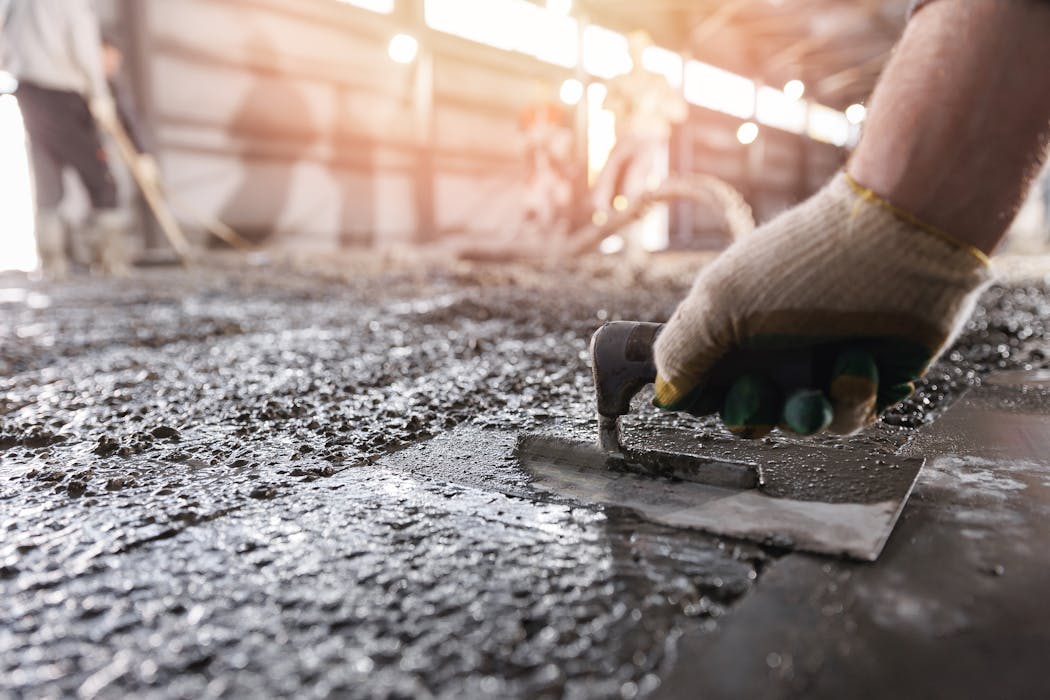
 Concrete is the most widely used man-made material on Earth.
Parilov/Shutterstock
Could electric vehicle battery waste fix concrete’s carbon problem?
Published: December 3, 2025 5.44pm GMT
Mehdi Chougan, Riccardo Maddalena, Cardiff University
Concrete is the most widely used man-made material on Earth.
Parilov/Shutterstock
Could electric vehicle battery waste fix concrete’s carbon problem?
Published: December 3, 2025 5.44pm GMT
Mehdi Chougan, Riccardo Maddalena, Cardiff University
Authors
-
 Mehdi Chougan
Research and Innovation Associate at the School of Engineering, Cardiff University
-
Riccardo Maddalena
Associate Professor in Civil Engineering, Cardiff University
Disclosure statement
Riccardo Maddalena receives funding from UKRI EPSRC.
Mehdi Chougan does not work for, consult, own shares in or receive funding from any company or organisation that would benefit from this article, and has disclosed no relevant affiliations beyond their academic appointment.
Partners

Cardiff University provides funding as a founding partner of The Conversation UK.
View all partners
DOI
https://doi.org/10.64628/AB.f4yy5s576
https://theconversation.com/could-electric-vehicle-battery-waste-fix-concretes-carbon-problem-268609 https://theconversation.com/could-electric-vehicle-battery-waste-fix-concretes-carbon-problem-268609 Link copied Share articleShare article
Copy link Email Bluesky Facebook WhatsApp Messenger LinkedIn X (Twitter)Print article
Imagine waking up in 2040 to unusually quiet streets. By then, an estimated 60% of vehicles worldwide could be electric, cutting air pollution and noise in cities. But the shift to cleaner transport comes with a lesser-known problem – a huge rise in mining waste.
Lithium, a vital ingredient in electric vehicle batteries, leaves behind extraordinary amounts of waste. In 2023 alone, the global battery industry generated 1.8 million tonnes of lithium-related waste, almost all of it sent to landfill.
At the same time, the construction sector faces its own environmental crisis. Concrete is the most widely used man-made material on Earth. We produce enough of it each year to build a wall around the planet twice over.
Its main ingredient, Portland cement, is responsible for nearly 8% of global carbon emissions. As demand rises, the industry is running out of cleaner alternatives.
These two challenges – booming lithium production and the carbon cost of cement – may seem unrelated. But the solution to both could be the same: turning lithium mining waste into a new kind of low-carbon cement.
A waste problem hiding in plain sight
Lithium-ion batteries have reshaped the global energy landscape since they were invented in the 1970s. Their value is expected to soar to more than US$400 billion (£302 billion) as electric vehicle sales continue to increase.
But lithium does not appear in nature as a pure metal. It must be extracted from minerals or salty brines. Most of them are in the “lithium triangle” of Chile, Argentina and Bolivia, which together hold more than 60% of the world’s reserves.
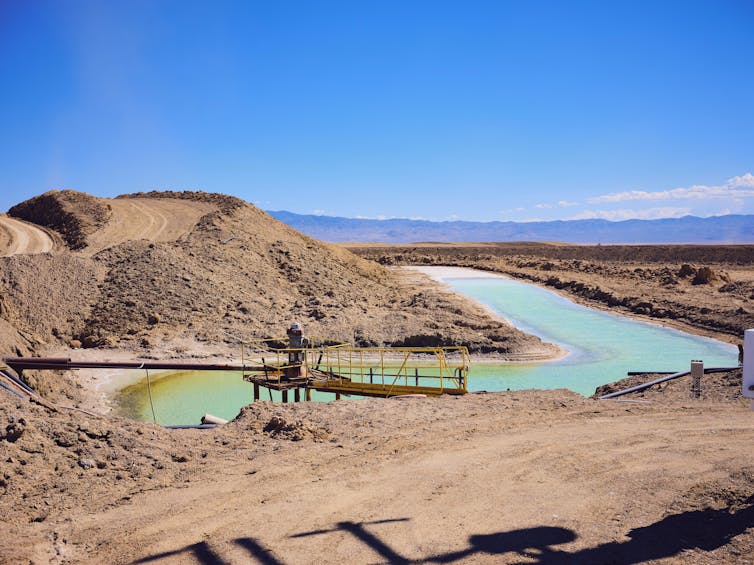 Brine pools for lithium mining.
Cavan-Images/Shutterstock
Brine pools for lithium mining.
Cavan-Images/Shutterstock
Extracting lithium is a messy business. For every tonne of battery-grade lithium carbonate produced, around nine to ten tonnes of waste are created. As countries race to meet climate targets, demand for lithium is expected to triple by 2030.
The UK government plans to develop new extraction sites in Cornwall and the northeast of England.
Read more: As mining returns to Cornwall, lithium ambitions tussle with local heritage
But this growing waste stream contains something valuable. Chemically, lithium mining waste is rich in the same compounds (silicates, alumina and calcium oxides) that help cement harden and gain strength. In other words, the waste from one green technology could help clean up another.
Our team is testing whether UK lithium mining waste can be used to replace cement in concrete.
The idea is simple. If this waste can act as a supplementary binding material, it could cut the amount of traditional cement needed. This could reduce carbon emissions by up to 50%. But proving this requires detailed scientific work.
Work is underway to analyse the microstructure, chemical behaviour and long-term durability of lithium waste-based concretes, from early lab tests to full-scale trials in real conditions. If successful, “lithicrete” could provide the UK with a way of using waste from the country’s emerging lithium industry to build low-carbon infrastructure.
For years, the concrete industry has tried to reduce its reliance on Portland cement by blending it with industrial byproducts such as fly ash and blast furnace slag. But these materials are becoming scarce as coal power plants shut down and heavy industry changes. In fact, there could be an imminent shortfall in traditional cement alternatives, threatening progress on decarbonisation.
This makes the search for new materials urgent. Lithium mining waste, available in large volumes and chemically compatible with cement, offers a promising option just as the sector faces a bottleneck.
Why this matters
The environmental stakes are high. Concrete underpins almost everything we build, from homes to hospitals, schools and bridges. Demand is only growing. Cutting emissions from clinker (the core component of cement) and using alternative binders could deliver 20% of the reductions needed for the sector to reach net zero by 2050.
If lithium mining waste could replace part of the cement used in concrete, it would help slash emissions, reduce landfill and strengthen the UK’s resilience as it moves away from imported industrial by-products. It would also mean the transition to green transport like electric cars doesn’t simply shift environmental burdens elsewhere.
We argue that the transition to cleaner technology must also be circular. Rather than allowing one part of the green transition to create problems for another, materials should be reused and designed to stay in the system for as long as possible.
- Lithium
- Cement
- Concrete
- Educate me
Events
Jobs
-
 Respect and Safety Project Manager
-
Associate Dean, School of Information Technology and Creative Computing | SAE University College
-
Senior Lecturer, Clinical Psychology
-
University Lecturer in Early Childhood Education
-
Case Specialist, Student Information and Regulatory Reporting
 Respect and Safety Project Manager
 Associate Dean, School of Information Technology and Creative Computing | SAE University College
 Senior Lecturer, Clinical Psychology
 University Lecturer in Early Childhood Education
 Case Specialist, Student Information and Regulatory Reporting
- Editorial Policies
- Community standards
- Republishing guidelines
- Analytics
- Our feeds
- Get newsletter
- Who we are
- Our charter
- Our team
- Partners and funders
- Resource for media
- Contact us
-
-
-
-
Copyright © 2010–2025, The Conversation