- Home
Edition
Africa Australia Brasil Canada Canada (français) España Europe France Global Indonesia New Zealand United Kingdom United States Edition:
Global
Edition:
Global
- Africa
- Australia
- Brasil
- Canada
- Canada (français)
- España
- Europe
- France
- Indonesia
- New Zealand
- United Kingdom
- United States
Academic rigour, journalistic flair
 Nick Laham/Getty Images
Andrew Pippos’ The Transformations: a touching story of love, loss and newspapers
Published: December 3, 2025 11.30pm GMT
Kevin John Brophy, The University of Melbourne
Nick Laham/Getty Images
Andrew Pippos’ The Transformations: a touching story of love, loss and newspapers
Published: December 3, 2025 11.30pm GMT
Kevin John Brophy, The University of Melbourne
Author
-
 Kevin John Brophy
Emeritus Professor of Creative Writing, The University of Melbourne
Disclosure statement
Kevin John Brophy does not work for, consult, own shares in or receive funding from any company or organisation that would benefit from this article, and has disclosed no relevant affiliations beyond their academic appointment.
Partners

University of Melbourne provides funding as a founding partner of The Conversation AU.
View all partners
DOI
https://doi.org/10.64628/AA.5ht4ahtaa
https://theconversation.com/andrew-pippos-the-transformations-a-touching-story-of-love-loss-and-newspapers-269929 https://theconversation.com/andrew-pippos-the-transformations-a-touching-story-of-love-loss-and-newspapers-269929 Link copied Share articleShare article
Copy link Email Bluesky Facebook WhatsApp Messenger LinkedIn X (Twitter)Print article
In Andrew Pippos’ successful epic migrant family saga, Lucky’s (2020), the characters were often larger than life and violence never far from the picture. His new novel, The Transformations, takes a psychologically darker, slower and more internal trajectory across a narrative that encompasses the online transformation of newspapers and journalism during the last decade, but goes much further.
The novel pursues transformations consequent upon divorce, parenting a teenager, recovery from childhood sexual abuse, struggles with alcoholism, emerging queer identity, managing the complexities of an open marriage, workplace romances and generational change among the wealthy.
Review: The Transformations – Andrew Pippos (Picador)
The range of issues raised is extraordinary, and makes for a rich reading experience. Inevitably, however, some of the scenarios are dealt with too summarily, because they are not central to what is at the passionate heart of the book.
At the book’s centre is a lonely man, George Desoulis, who, in an echo from the earlier novel, is the son of a Greek migrant cafe-owning family. George is a subeditor at The National, a newspaper run out of Sydney and owned by an old-style broadsheet magnate – a rival to the Murdochs.
The point of this fiction is not to create a roman à clef about the Packers or the Fairfax family, but to document the transformation of a workplace as the usual business and vocational models for newspapers and journalists collapsed around this time.
There are many highly detailed, nostalgic and even loving accounts of newsrooms, printing presses, conversations and the pub-centred community around the production of physical daily editions of a newspaper. As an extension of this context, the novel is also an homage to the city of Sydney.
For George, the newspaper is a kind of home and family. It is the place where everyone likes him, where his expertise is appreciated, and where he can more or less put aside the currents of fear, shame, doubt and withdrawal that flow through him as a result of being repeatedly abused by a Marist brother as a schoolboy.
It is no surprise that he finds himself a lover in the newsroom. Cassandra is an older married woman, more skilled, knowledgeable and experienced than George at making sexual encounters work for both partners, better at communication, and perhaps at love.
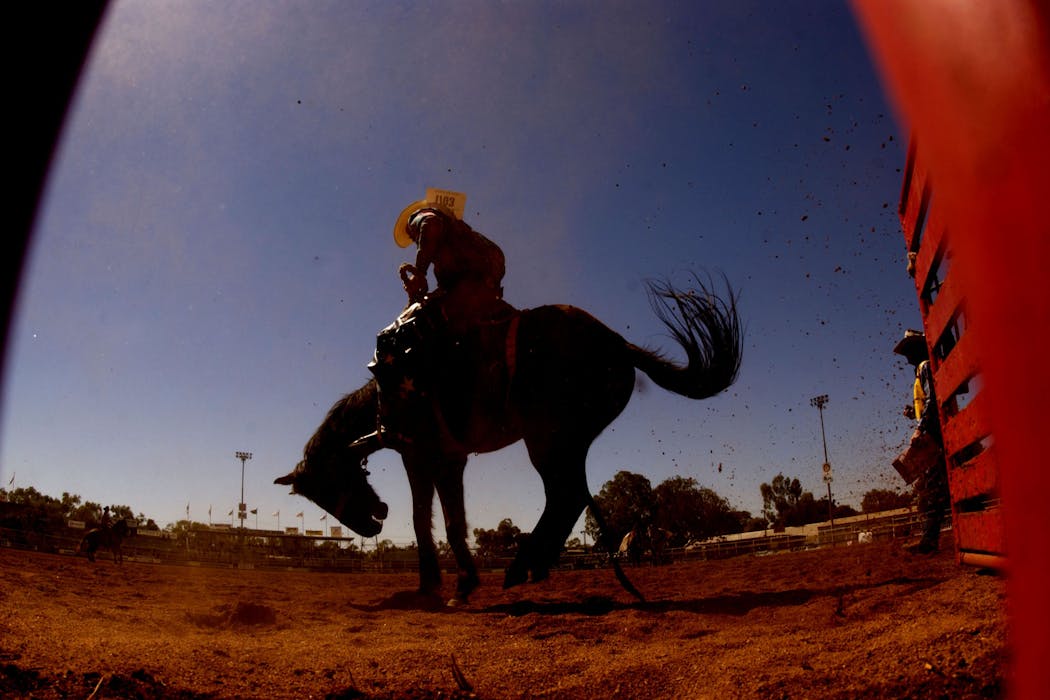
Early in the novel George tells a story from his childhood about learning to ride a horse. His uncle put him on an old horse and entered him in the Goulburn rodeo without offering any lessons in riding or dressage. The horse was a veteran, he knew what to do, the uncle said.
And sure enough, George took out the children’s prize on his uncle’s horse. The story becomes emblematic of George’s path through life. His early sexual encounters with girls and his latest love affair with Cassandra all follow this pattern of a boy being taken in hand by a practised partner.
 Pan Macmillan
Even though he lives in self-imposed solitude in his studio-sized apartment, George reassures himself that he never feels lonely, for he has Borges, Chekhov, Duras, Montaigne, Astley and Ovid as his companions on his home bookshelf.
These books (themselves nostalgic objects from a time when literature was a dominating physical presence in homes and libraries) become his link to his queer teenage daughter, Elektra, who wants desperately to escape from her mother’s marriage and its successful “materialist” trappings.
George is a passive character throughout, but his intelligence, sensitivity, tolerance and even his hesitant vulnerability are the endearing qualities that leave the reader caring about him and what might happen to him. Though the rodeo ride ended in medals and honours, there can be no such easy outcomes when the other characters and partners in George’s life are themselves struggling to find ways through.
A story that stayed with me
No experience or topic escapes being researched and reported upon in this novel. As a writer, Pippos has a streak of focused conscientiousness. Or perhaps it is that he has endless curiosity about how things work.
For instance, when Cassandra and her husband-in-recovery-from-alcoholism enter into therapy together, we receive a detailed account of the time it takes for the therapist to decide to intervene and what kinds of advice are given (for example, if sex is bad, try something new, or masturbate together), including the fact that the therapist supplied them with the Gottman relationship checkup survey and Rapoport’s Rules for Conversation and Argumentation – in case the reader might want to follow up on some helpful resources.
I haven’t yet, but I will. I am curious too.
Similarly, we are provided with a step-by-step description of how newspapers are printed, down to the smells in the room as paper, inks and greased machinery come into contact with each other.
We even learn about the importance of kaimaki (the dark foam that forms on Arabica coffee as it is expressed) in the making of Greek coffee, itself a metaphor for George’s ultimately foolish desire to make everything right around himself.
There is a good amount of information about the devastation alcoholism can bring to a life, and repeated references to the importance of a safe place to confide about childhood sexual abuse, though neither of these contexts seem to grip the novel in the same way the love story does.
As the novel progresses, and George’s life spirals downwards, as complications, disappointments, defeats and compromises accumulate, for the reader the tension mounts because there don’t seem to be enough pages left for George to climb out of his several holes into clearer territory.
I guess the uncertainty around the outcome of the narrative arc raises for the reader the question of what kind of novel this is. Is it a love story? A literary novel? A saga? A cautionary tale about the entanglement of sex with love and friendship? A slice of modern life from about a decade ago? Or all of these at once?
I am not sure of the answer, having got through to the end letting George subside a little within me. It is, though, a novel that will last within me well beyond stopping reading it, an achievement, I feel, that goes significantly beyond his previous work and promises something more for the future.
- Fiction
- Australian literature
- Book reviews
Events
Jobs
-
 Respect and Safety Project Manager
-
Associate Dean, School of Information Technology and Creative Computing | SAE University College
-
Senior Lecturer, Clinical Psychology
-
University Lecturer in Early Childhood Education
-
Case Specialist, Student Information and Regulatory Reporting
 Respect and Safety Project Manager
 Associate Dean, School of Information Technology and Creative Computing | SAE University College
 Senior Lecturer, Clinical Psychology
 University Lecturer in Early Childhood Education
 Case Specialist, Student Information and Regulatory Reporting
- Editorial Policies
- Community standards
- Republishing guidelines
- Analytics
- Our feeds
- Get newsletter
- Who we are
- Our charter
- Our team
- Partners and funders
- Resource for media
- Contact us
-
-
-
-
Copyright © 2010–2025, The Conversation