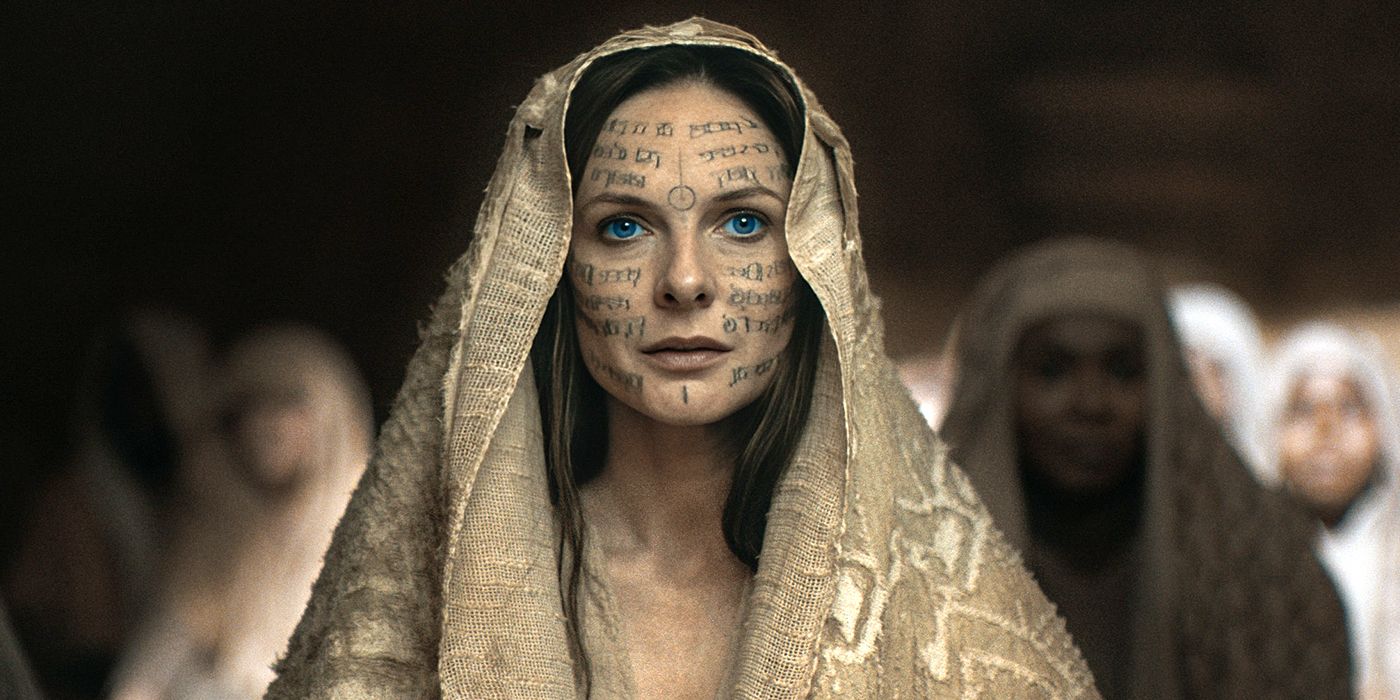
 Rebecca Ferguson as Lady Jessica in Dune IIImage via Warner Media - © Warner Media
 By
Amanda M. Castro
Published 1 hour ago
By
Amanda M. Castro
Published 1 hour ago
Amanda M. Castro is a Network TV writer at Collider and a journalist based in New York. Born and raised in Puerto Rico, Amanda is a bilingual Latina who graduated from the University of New Haven with a degree in Communication, Film, and Media Studies. She covers the world of network television, focusing on sharp, thoughtful analysis of the shows and characters that keep audiences tuning in week after week. At Collider, Amanda dives into the evolving landscape of network TV — from long-running procedural favorites to ambitious new dramas — exploring why these stories matter and how they connect with viewers on a cultural level.
Sign in to your Collider account Add Us On Summary Generate a summary of this story follow Follow followed Followed Like Like Thread Log in Here is a fact-based summary of the story contents: Try something different: Show me the facts Explain it like I’m 5 Give me a lighthearted recapBefore Rebecca Ferguson became synonymous with steely sci-fi authority in Silo or quiet power in Denis Villeneuve’s Dune films, she delivered one of the most commanding performances of her career in a very different genre. In 2013, Ferguson led the BBC historical miniseries The White Queen, a 10-episode political thriller dressed up as a period drama — and it remains one of the clearest early indicators of the screen presence that would later make her a star.
Set during England’s Wars of the Roses, The White Queen doesn’t approach history as a dusty recounting of battles and bloodlines. Instead, it frames power as something negotiated in bedrooms, birthing chambers, and whispered alliances — a perspective that places women at the center of a story usually told through men. Ferguson’s Elizabeth Woodville isn’t just the show’s emotional anchor; she’s its sharpest weapon.
What 'The White Queen' Is About
 Rebecca Ferguson and Max Irons as Queen Elizabeth and King Edward IV in The White Queen.Image via Starz
The White Queen tells a story of the prolonged civil war between the Houses of York and Lancaster for the English throne, with constantly changing hands; this series will show how three women, i.e., the above-mentioned, Elizabeth Woodville (Ferguson), Margaret Beaufort (Amanda Hale), and Anne Neville (Faye Marsay). Through their manipulation of the machinations behind the scenes, they try to determine how the future will develop.
Initially, Elizabeth was just a widow with no formal power, until she married King Edward IV (Max Irons), and was immediately thrust into the middle of court politics. From here on, there will be a constant reorganization of alliances, betrayals, and survival strategies. Marriage and heirs are as significant in Elizabeth's world as armies. The end result is a series that resembles a political soap opera, but has actual historical importance.
Today, The White Queen remains strong because it knows that intrigue is not necessarily defined by action, but rather by the way tension is generated by the relationships between characters, e.g., who can enter the space, who is being monitored, and who is manipulating things without being witnessed.
 Related
The 33 Best Shows on Netflix That Are Longer Than 5 Seasons
Related
The 33 Best Shows on Netflix That Are Longer Than 5 Seasons
For those long days spent indoors.
Posts By Hannah SaabRebecca Ferguson’s Breakout Performance as Elizabeth Woodville
 Rebecca Ferguson sits on a throne with a crown and serious expression in The White Queen.Image via Starz
Elizabeth Woodville, as portrayed by Ferguson in the series, is what makes the series work so well. From her very first appearance, Elizabeth Woodville exudes an aura of restraint rather than explicit ambition. This prompts viewers to ask whether her calmness stems from instinct or calculation. Ferguson's portrayal is one of patience, stillness, and timing. These qualities are also present in Ferguson's performances in Silo and Dune.
The balance of vulnerability and authority of Ferguson's actions is what makes this portrayal so compelling. Several factors, such as Elizabeth being subject to male heirs, loyalty to the crown, and public perceptions, play a role in how her fate ultimately unfolds; however, Ferguson never portrays Elizabeth as passive. Every time Elizabeth finds herself in situations with very few options available to her, she continues to be very aware of her surroundings, emotionally aware, and continues to watch for opportunities, which allows the viewer to see a very human character who retains agency, without rewriting history by giving her powers or attributes that are more modern. The role earned Ferguson a Golden Globe nomination, and it’s easy to see why. She anchors the show without dominating it, allowing the ensemble to thrive while still making Elizabeth the figure around whom everything ultimately orbits.
One of The White Queen’s smartest choices is its focus on how power functions when you’re technically excluded from it. The men go to war; the women negotiate the consequences. Pregnancies become political events. Marriages are treated like military maneuvers. Reputation is currency. This approach creates a contemporary vibe in what could have easily been a melodramatic story. The interest of this series lies not in portraying clean-cut characters as heroes or villains but rather in detailing the journey of surviving long enough to write the next chapter. Viewers drawn to shows such as House of the Dragon and Succession will find The White Queen similar, as it explores how personal ambition clashes with institutional power; it is not about the show's flashiness but about providing insight into how these two concepts interact.
Why 'The White Queen' Is Essential Viewing for Ferguson Fans
 Rebecca Ferguson and Max Irons as Queen Elizabeth and King Edward IV in The White QueenImage via Starz
Looking back, The White Queen reads like a blueprint for Ferguson’s later career. The same quiet intensity that defines her work as Juliette in Silo or Lady Jessica in Dune is fully formed here. She’s playing another woman navigating a rigid system, forced to think several moves ahead just to stay alive — and Ferguson makes every choice feel deliberate.
Subscribe for deeper looks at Rebecca Ferguson's craft
Get the newsletter for in-depth analysis of Rebecca Ferguson's breakout work - including The White Queen - and thoughtful essays connecting performance, power, and historical drama across film and TV. Subscribe By subscribing, you agree to receive newsletter and marketing emails, and accept Valnet’s Terms of Use and Privacy Policy. You can unsubscribe anytime.While the series later spawned follow-ups (The White Princess and The Spanish Princess), Ferguson’s performance remains the emotional high point of this corner of historical television. It’s the role that announced her as a lead capable of carrying complex material, long before Hollywood fully caught on. If you’ve only encountered Ferguson through her recent genre work, The White Queen is well worth revisiting — not as a curiosity, but as one of her strongest, most quietly impressive performances.
 The White Queen
TV-MA
Drama
History
Release Date
2016 - 2013-00-00
Network
BBC One
Directors
Colin Teague, James Kent
Powered by
The White Queen
TV-MA
Drama
History
Release Date
2016 - 2013-00-00
Network
BBC One
Directors
Colin Teague, James Kent
Powered by
 Expand
Collapse
Expand
Collapse
-
 Rebecca Ferguson
-
 The White Queen
What To Watch
 July 20, 2025
The 72 Best Movies on Netflix Right Now
Trending Now
July 20, 2025
The 72 Best Movies on Netflix Right Now
Trending Now
 Stephen King’s Sequel Concept for His Underrated Sci-Fi Miniseries Is Way Darker Than the Original
 The 10 Most Intense Movies of the 1960s, Ranked
 Luke Skywalker Was Supposed To Have a Larger Role in ‘The Force Awakens,’ but Not the Way You Think