 By Tom O'ConnorShareNewsweek is a Trust Project member
Recent developments in Sudan's bloody civil war have left one of Africa's largest nations split in two, entrenching two factions that have both been accused of widespread abuses and threatening to spread further instability across the region.
Already considered to be the worst humanitarian crisis today by the United Nations, the conflict raging between the Sudanese Armed Forces and the Rapid Support Forces since April 2023 has garnered renewed international attention in recent weeks as the United States and fellow "Quad" partners Egypt, Saudi Arabia and the United Arab Emirates accelerated efforts toward a peaceful resolution.
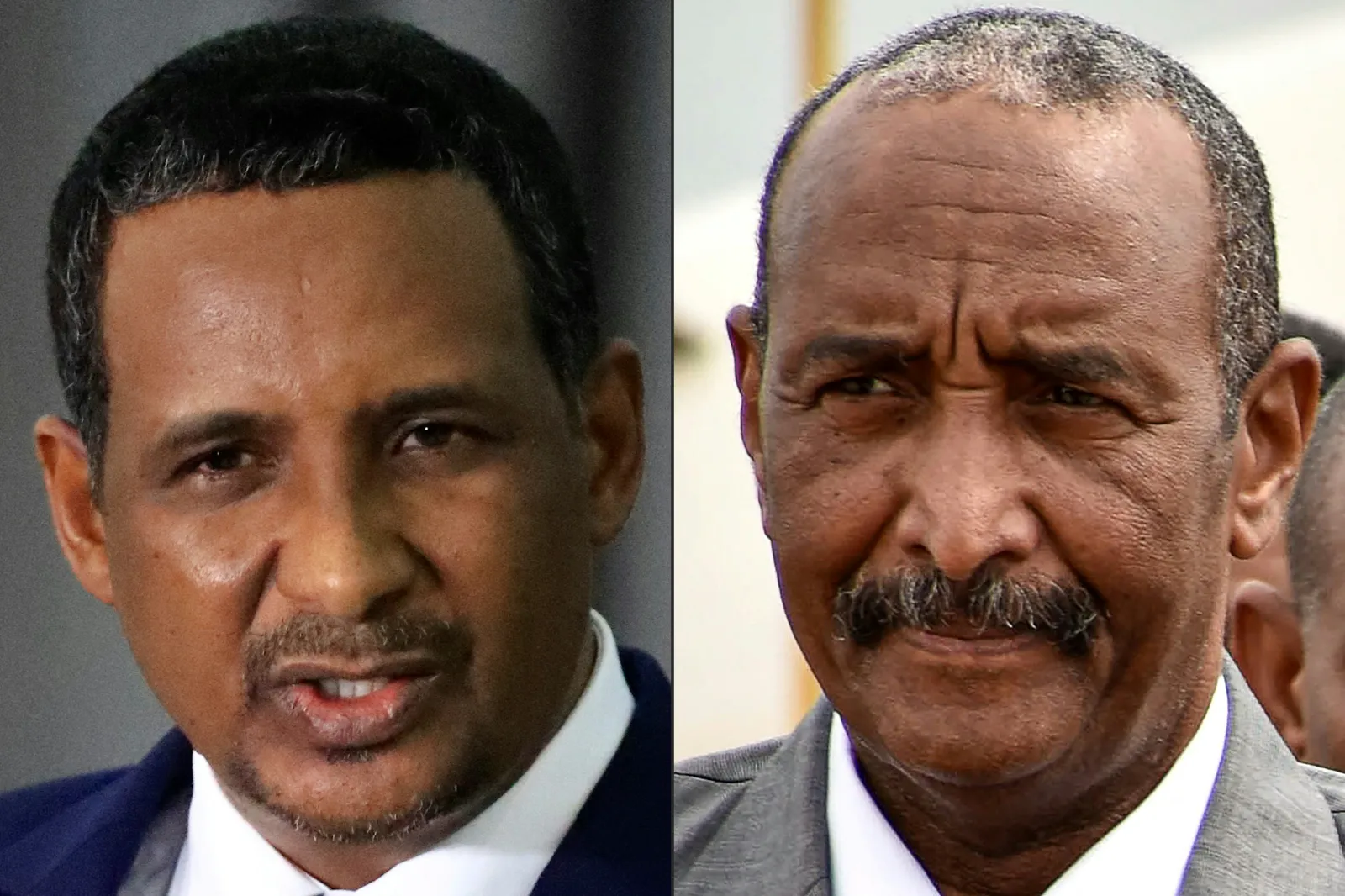
Thus far, the initiative has yet to gain ground as Sudanese military chief and de facto head of state General Abdel-Fattah Burhan rejected the U.S.-led proposal Sunday as "the worst document yet," alleging that the offer was too favorable to the rival paramilitary Rapid Support Forces, led by his former ally-turned-nemesis General Mohammed Hamdan Dagalo, widely known as Hemedti.
Dagalo, on the other hand, swiftly backed the deal and unilaterally announced a three-month truce. The move has raised the stakes for the Sudanese Armed Forces already grappling with growing pressure since the Rapid Support Forces last month seized the Darfur regional capital of El-Fasher, leaving the nation effectively divided between east and west.
While the consolidation of lines of control may present some new diplomatic opportunities, former U.S. State Department and Agency for International Development adviser Joseph Tucker warned that "this split of the country does not suggest that the conflict will calm down and security and governance situations will improve."
Such a scenario, he argued, would not only represent an "existential crisis" for Sudan, but also carry severe consequences across the continent.
"If the war does not stop and the partition of Sudan solidifies, it will represent a turning point for the region and the African continent," Tucker, now senior adviser for the Horn of Africa at the International Crisis Group think tank, told Newsweek. "It will be seen as the culmination of over 60 years of conflict and human suffering in one of Africa’s most important states that has failed to manage diversity and political decay."
"Arms will continue to flow across increasingly porous borders, populations will remain displaced and vulnerable, and regional actors will continue to intervene to protect their self-interests," Tucker said. "There is a window of opportunity for international diplomatic action at the highest levels to restrain external involvement and press both sides to come to the table for what will be arduous negotiations, but this is urgently needed before the further collapse of Sudan."
Divided Once More
Since gaining independence in 1956 from joint rule of Egypt and the United Kingdom, Sudan has been in a near-constant state of turmoil brought on by coups, conflicts and other bouts of unrest. Two predominantly north-south civil wars fought between 1955 and 1972 and from 1983 to 2005 culminated in the eventual secession of South Sudan as the world's newest internationally recognized state in 2011, while the 2003-2020 conflict between government forces, allied militias and separatists in Darfur made the western region synonymous with the brutalities of sectarian war in the eyes of the international community.
The fall of longtime President Omar al-Bashir amid popular protests in 2019 marked a turning point for the country, which was placed under a joint civilian-military rule of the Transitional Sovereignty Council led by Burhan and Prime Minister Abdalla Hamdok. Promises of democratic transition faded, however, when Burhan dissolved the council in 2021, establishing a de facto military government also backed by Dagalo, whose Rapid Support Forces are primarily composed of Arab nomadic janjaweed militias that fought on the behalf of the government against rebels in Darfur.
This arrangement would prove short-lived as well, as tensions festered between Burhan and Dagalo, who accused the military chief of consolidating undue power and promoting allied factions, including Islamist forces. In April 2023, Dagalo mobilized the Rapid Support Forces to launch nationwide operations against the Sudanese Armed Forces, thus beginning a new dark chapter in the nation's history.
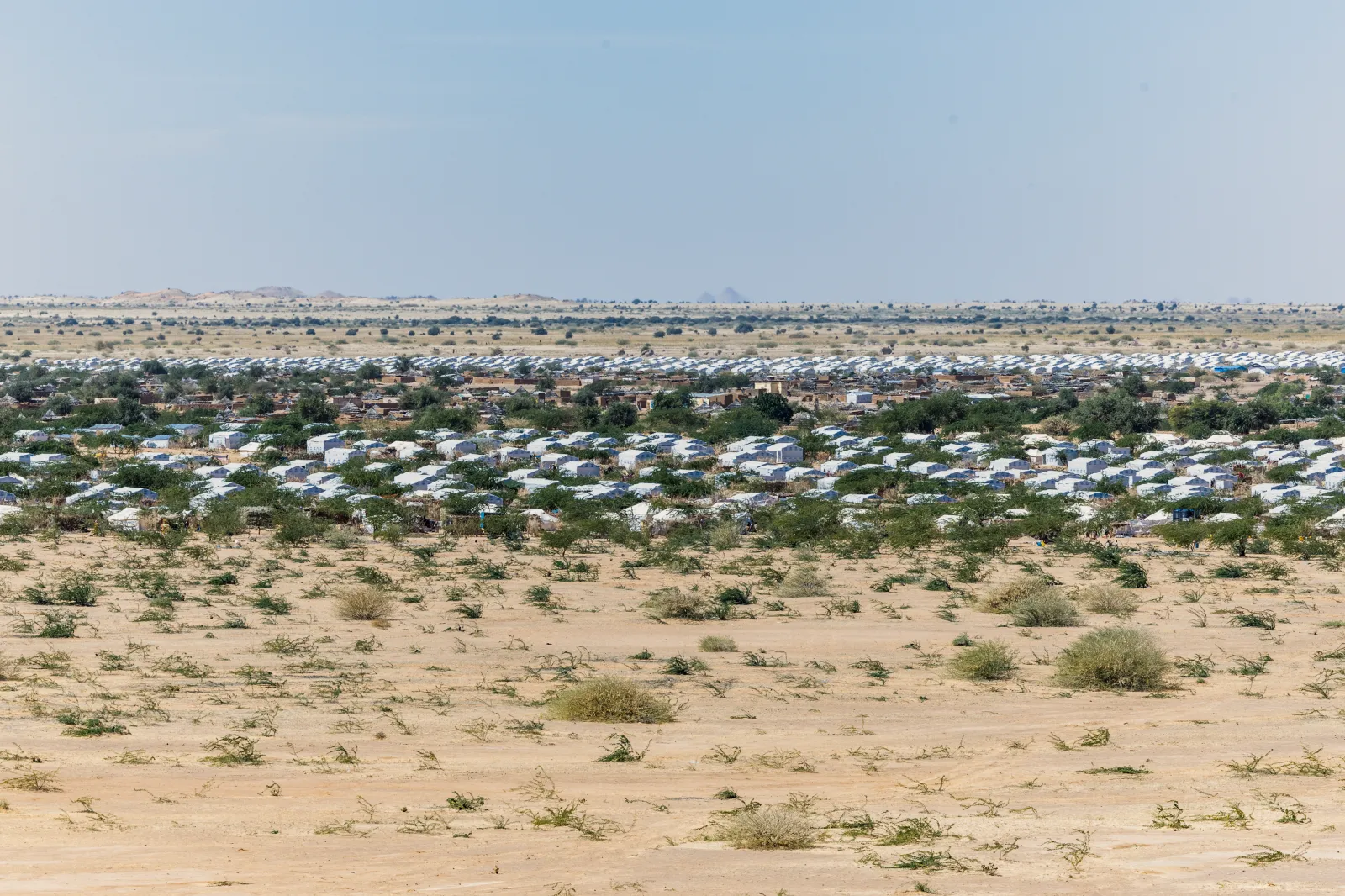
Two and a half years later, at least tens of thousands have died due to fighting, disease and harsh conditions, while millions more have fled their homes internally or abroad as the two sides battled for territory across the massive North African nation. Today, neither side has a clear path for victory as the Sudanese Armed Forces' successful reclamation of the capital Khartoum earlier this year was followed last month by the Rapid Support Forces establishing its dominance in Darfur and pushing toward the Kordofan region.
"The Sudanese Armed Forces (SAF) and their allies have consolidated control across central Sudan, while the Rapid Support Forces (RSF) have secured key gains in Darfur—a shift that is deepening Sudan’s east–west divide into two de facto blocs," Ladd Serwat, senior Africa analyst at the Armed Conflict Location and Event Data (ACLED) monitor, told Newsweek. "Earlier in the conflict, areas of RSF and SAF influence formed a patchwork. But this year, that landscape solidified following SAF advances that recaptured Khartoum and the RSF’s gained control over El Fasher."
"As each side entrenched itself, the conflict has increasingly centered on the Kordofan region, where both forces are pushing to expand their territorial position," he added. "RSF dominance in Darfur has granted the group control of lucrative gold mines and a crucial supply corridor to Libya and Chad, freeing up fighters and equipment for operations elsewhere. The SAF however, has critical areas of infrastructure in Khartoum, Red Sea access, and agricultural production in central Sudan."
 ...
...Fanning the Flames
The consolidation of control across two geographical regions has afforded an added degree of predictability to the devastating conflict, but even these lines have proven fluid as the Rapid Support Forces has adopted upgraded drone capabilities to penetrate further into territory held by the Sudanese Armed Forces.
This arsenal includes the domestically produced Safrouq unmanned aerial vehicle, also used by the Sudanese Armed Forces, but counts imported assets as well, such as the Chinese FH-95 kamikaze drone. Meanwhile, the Sudanese Armed Forces has also leveraged foreign UAV platforms such as Iranian Mohajer and Ababil variants and Turkish Bayraktars in a bid to establish battlefield dominance.
The flow of weapons into Sudan despite a United Nations-imposed arms embargo has emerged as a central factor fueling the conflict. The trend has also further exacerbated fears of the war spilling over into neighboring regions already dealing with internal conflicts and crises.
For the RSF, control over the west has provided linkages to another powerful entity in neighboring Libya, where Libyan National Army Field Marshall Khalifa Haftar presides over a Tobruk-based administration that rivals the internationally recognized government in Tripoli. While the intensity of Libya's own civil war has quieted since 2020, both the Tripoli-based Government of National Unity and the Sudanese Armed Forces accused Haftar's forces of funneling aid to the Rapid Support Forces.
Authorities in Tripoli and Khartoum also view this connection as part of a broader power play by an even greater regional force: the United Arab Emirates.
The UAE's alleged role in Sudan has been vehemently rejected by Emirati officials, who have repeatedly asserted that they adhered to weapons embargoes and pledges to pursue peace. Nonetheless, the reports have drawn calls for deeper inquiries from U.S. lawmakers.
Fragile and sometimes shifting alliances among various other armed groups active across Sudan have further complicated the fight.
As such, even if a ceasefire were to be reached, the prospect of a sustained east-west division of Sudan may only exacerbate rather than alleviate the nation's many woes.
"Technically there is a scenario where a rump Sudan exists from Khartoum to Port Sudan on the Red Sea," Tucker said. "But parts of it will be nominally controlled by various local movements and susceptible to tensions and political cleavages, potentially limiting the reach of the state. This state will have to overcome fragmentation and competing loyalties that have plagued Sudan for decades and concentrated power and wealth among a small elite."
And while, "the RSF may see a model in the areas of south and east Libya controlled by the Libyan National Army that allows for revenue gathering, resource extraction, and illicit corridors for arms that will allow it to exert territorial control," he also argued that "the development of a functioning state in Darfur run by the RSF and its civilian political allies is unlikely, especially on economic, political, and security terms."
For example, some factions of the Sudan Liberation Movement/Army that long clashed with both the Sudanese Armed Forces and Rapid Support Forces throughout the war in Darfur have aligned with the former in an effort to resist Rapid Support Forces control over the western region, while some factions of Sudan People's Liberation Movement involved in the past two north-south civil wars have allied with the Rapid Support Forces.
And in addition to reports of the conflict crossing borders in Libya and South Sudan, both currently at risk of devolving once again into civil war, substantial waves of refugees, allegations of weapons trafficking and armed incursions have also been documented in the Central African Republic, Chad, Egypt and Ethiopia.
The chaos has caught the attention of the Islamic State militant group (ISIS) as well, which issued a call for jihadis to join the fight from abroad in a recent issue of its Al-Naba newsletter. ISIS, whose affiliates are already increasingly active in West and Central Africa, the Sahel and in the East African nation of Somalia, has displayed a tenacious capacity for capitalizing on insecurity to secure new footholds.
But it's not just militants who may stand to gain from the mayhem.
Ahmed Yagoub, who serves as political adviser to the African Union Intergovernmental Authority on Development's special envoy for Sudan, argued that the situation in Sudan would serve the interests of larger powers seeking to exploit a weakened nation and region.
"The war in Sudan is not solely rooted in internal factors. Even its internal contradictions are, in one way or another, influenced by external forces," Yagoub told Newsweek. "In another context and interpretation, the Sudanese war is a conflict unfolding within the framework of a larger project being orchestrated in the Horn of Africa, the Nile Basin countries, and East Africa."
"Sudan is but one piece in this struggle, which is set to sweep across the entire eastern part of the continent," he added. "This grand scheme aims, among other things, to disrupt any process of stabilization in the region, incite instability, control resources and waters, and dominate global trade routes. Achieving this requires the weakness and destabilization of these nations, paving the way for the completion of this project of absolute hegemony."
 ...
...The Uncertain Road Ahead
With the fate of Sudan and potentially its neighbors hanging in the balance, the White House has continued to press forward with efforts to address the conflict by coordinating with both the Sudanese Armed Forces and Rapid Support Forces, as well as Arab partners of the Quad.
But navigating the complexities of the two factions' interests and those of foreign powers has proven no simpler than simultaneous U.S.-led peace efforts taking place over the Russia-Ukraine war and the Israel-Hamas war that have more readily grabbed international headlines.
Trump himself acknowledged the scale of the challenge following his meeting last week with Saudi Crown Prince Mohammed bin Salman, who the U.S. leader said had offered an extensive explanation of the country, its conflict and why resolving it "would be the greatest thing you can do."
"His Majesty would like me to do something very powerful having to do with Sudan. It was not on my charts to be involved in that. I thought it was just something that was crazy and out of control," Trump said at the time. "But I just see how important that is to you and to a lot of your friends in the room, Sudan. And we're going to start working on Sudan. I didn't think that that was one that was going to be so easy to do, but we're going to start working."
Burhan's dismissal of the U.S.-led offer marks an early blow to the project, one at least partially rooted in the proposal's calls for politically ostracizing Islamist factions that the Sudanese Armed Forces relies on.
"The draft agreement calls for excluding Islamist groups linked to the Muslim Brotherhood from any future civilian government," Serwat said. "These groups, removed during the overthrow of former president Omar al-Bashir, have since become a major source of support for the SAF."
"Armed Islamist formations such as the al-Baraa ibn Malik Brigade are believed to field as many as 20,000 fighters, providing a significant boost to the SAF," he added. "Their role in sustaining the war effort leaves the SAF in a difficult situation: accepting a deal that sidelines these groups would strip the army of a core element of its fighting force, making it highly resistant to the proposed political settlement."
Yagoub, for his part, described Burhan's reaction as stemming from his "adherence to state legitimacy and sovereignty, refusing any settlement that grants legitimacy to the RSF as a parallel armed entity." On the other hand, Yagoub portrayed Dagalo's acceptance as "a political maneuver aimed at gaining international legitimacy and portraying the army as an obstructive party to peace, consolidating administrative control over captured territories," and "reorganizing its forces under the cover of the truce."
Yet with little sign of progress toward peace, he warned of a "normalization of the status quo," in which "front lines gradually transform into de facto borders" and "each side develops its own administrative and fiscal structures."
"As the conflict persists, national bonds weaken in favor of local and regional loyalties," he said. "While a formal partition is not an inevitable outcome, the continuation of the current situation without a comprehensive political solution threatens to cement the de facto division, with serious implications for Sudan's unity and regional stability."
Request Reprint & LicensingSubmit CorrectionView Editorial & AI Guidelines Add Newsweek as a preferred source on Google to see more of our trusted coverage when you search.
Recommended For You
 AnalysisRise of Europe’s Right Is Good News for Jews This Time: Hungary EU Minister10 min read
 PoliticsDOJ Defends Reassignment of Military Lawyers to Serve as Immigration Judges6 min read
 AnalysisAdvancing in Ukraine, Russia Troops Are Losing Ground to Al-Qaeda in Africa16 min read
 PoliticsInspections of Foreign Food At All-Time Low: Report4 min read
 NewsAmy Acton Edges Out Vivek Ramaswamy in New Ohio Governor Race Poll5 min read
 AnalysisA Roundtable on Political Violence Brings Strangers Together to Break Echo Chambers5 min read
Related Podcasts
Top Stories
 WorldTrump Sending Witkoff to Moscow, End of Russia-Ukraine War in Reach—Live2 min read
 NewsDefiant Maduro Rallies Venezuela for US War4 min read
 News6 Reasons Why Zelensky is Under Increasing Pressure to Agree to Peace Deal9 min read
 NewsGOP Senator Defends Mark Kelly, Calls Treason Accusations ‘Reckless’4 min read
 TravelMap Shows America’s Deadliest States for Driving on Thanksgiving3 min read
 U.S.Kristi Noem Among Those Named in Judge’s Criminal Inquiry: Full List2 min read
Trending
 MoneyNew ‘Cash Law’ Could Change Grocery Store Rules3 min read
 SnowfallWinter Storm Warning Issued As 25 Inches of Snow To Strike5 min read
 U.S. Economy‘Mass Blackout’ Starts Today: What to Know3 min read
 Home PricesPrice Correction ‘Worse Than 2008’ Coming To US Housing Market—Analyst5 min read
 National Weather ServiceWinter Storm Alert Issued as 12 Inches of Snow Set To Hit3 min read
Opinion
 OpinionGOP Rep.: The U.S. Must Close Critical AI Chip Export Loophole Exploited by China | Opinion5 min read
 OpinionAgriculture Secretary: Giving Thanks to the American Farmer This Thanksgiving | Opinion4 min read
 OpinionFormer White House Middle East Envoy: What We Keep Getting Wrong About the UAE and Sudan | Opinion5 min read
 OpinionGovernment-Mandated Affordability—Music to Consumer Ears | Opinion6 min read
 OpinionConventional Wisdom: Ukraine Peace Plan Edition2 min read