 By Aliss HighamShareNewsweek is a Trust Project member
Democrat Zohran Mamdani rode to winning New York's mayoral election on a wave of enthusiasm, propelled by a platform that promised sweeping changes to affordability in one of the world's most expensive cities.
Among the mayor-elect's boldest ideas—free buses, expanded low-cost housing, and a reimagined social safety net—one pledge has attracted particular attention: creating a universal, no-cost child care system for every family, regardless of income, neighborhood, or work status.
It's a promise that, if fulfilled, could reshape family life in a city that has become far from affordable for many Americans—and help stem the drain of people leaving New York for cheaper pastures.
Newsweek has contacted Mamdani's team via email for comment.
Childcare in New York City
New York has taken steps in recent years to ease the child care cost burden on families. The city’s long-standing voucher program supports low-income households with children between 6 weeks and 13 years old—an effort to offset care costs that have climbed to staggering levels. In 2025, the state and city injected $570 million into the program, including a pilot initiative providing free care in select high-need neighborhoods.
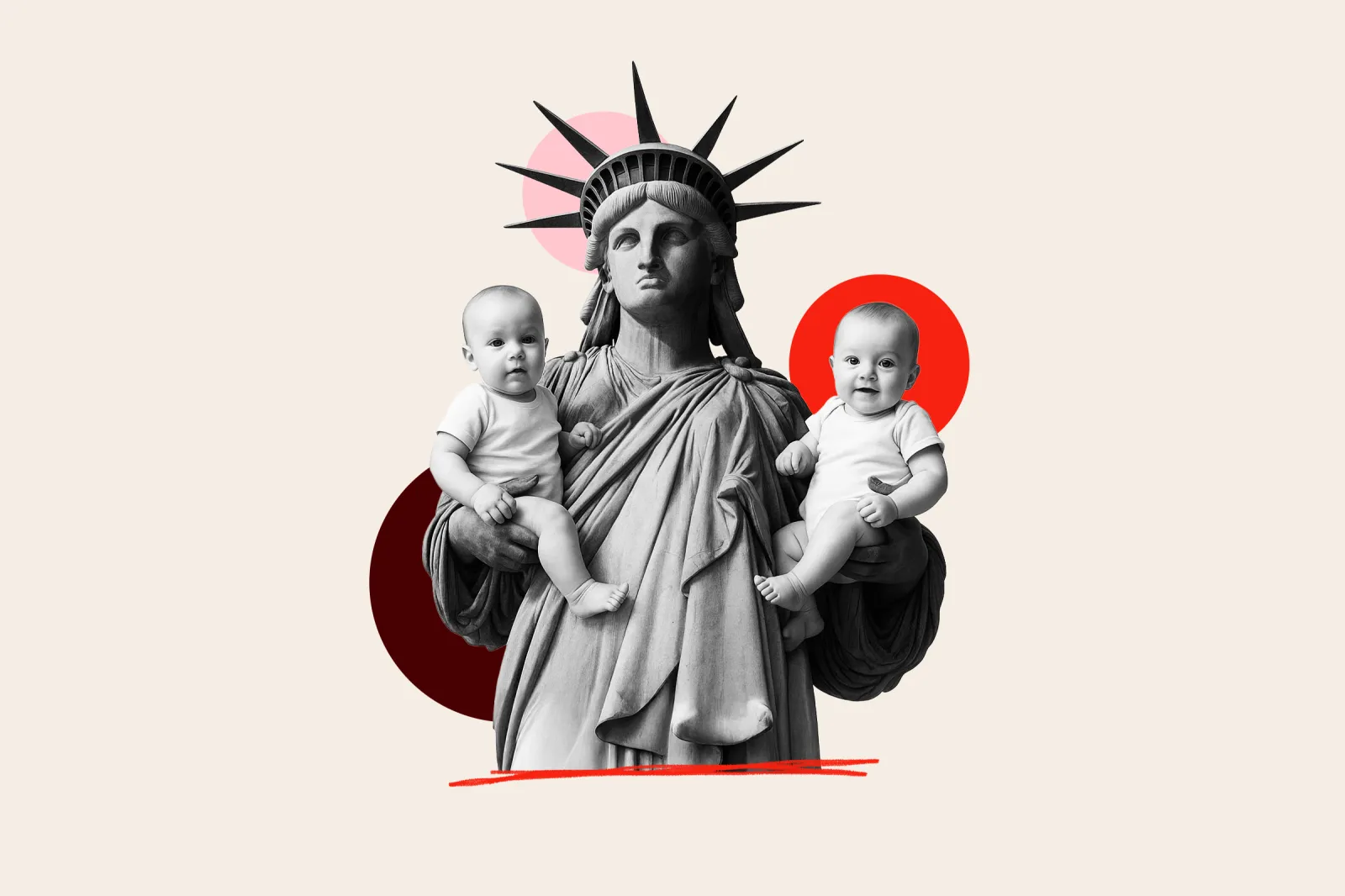
Those investments came as costs continued their steep rise. According to the city’s comptroller, by 2024 the average annual price for family-based care for infants and toddlers reached $18,200—a nearly 80 percent jump since 2019—while center-based programs averaged around $26,000, up 43 percent over the same period. A report released last year by the nonpartisan Fiscal Policy Institute found that families with young children were leaving the city at twice the rate of households without them.
“After rent, the biggest cost for New York’s working families is child care. It’s literally driving them out of the city: New Yorkers with children under 6 are leaving at double the rate of all others,” Mamdani's campaign website reads. He argued that the weight of this crisis “falls heaviest on mothers, who are giving up paying jobs to do unpaid child care.”
His plan would guarantee care for children from 6 weeks to age 5 and raise wages for child-care workers—“a quarter of whom currently live in poverty”—with pay parity for public-school educators. These promises, he said, would help families stay rooted in the city while giving children strong early learning opportunities.
 ...
...$6-Billion Price Tag
Despite support from Democratic Governor Kathy Hochul, the path forward is complicated. New York faces federal funding cuts under the President Donald Trump's administration—although Mamdani and Trump seemed to hit it off at a recent White House meeting—and multi-billion-dollar budget gaps of its own. Mamdani has offered broad ideas but not yet a detailed list of how the city will pay for universal care. Business Insider has reported the cost as $6 billion, citing Mamdani's campaign.
Experts say that the price tag, though substantial, isn’t unprecedented. Several states have experimented with broader subsidies, and New Mexico became the first this year to guarantee universal, no-cost child care. Governor Michelle Lujan Grisham, also a Democrat, said the change would save families roughly $12,000 per child annually, while the state will also work to expand supply and increase provider pay.
Yvette Sanchez Fuentes, senior vice president of National Policy at Start Early, a nonprofit focused on early childhood development, said the scale of the proposal demands “stable, recurring funding, something more durable than year-to-year budget decisions.”
"A $6-billion annual investment is significant, but it’s in line with what we know it takes to build a high-quality, family-centered early childhood system," she told Newsweek.
She says the city would “need a mix of revenue sources, including targeted taxes on the city’s highest earners (as already proposed), closing longstanding tax loopholes, and exploring fees or revenue reforms that don’t burden low-income families.” Drawing from the New Mexico model, she notes that a voter-approved constitutional amendment provided sustainable early-childhood funding there—a blend of local and state support that she believes New York may need to replicate.
While $6 billion is a significant commitment, Sanchez Fuentes points out that the figure “is comparable to what the city already spends on other large systems like public safety.” Still, she warns that without permanent revenue streams, lawmakers might have to slow or reduce spending in other areas.
And could the city avoid raising taxes? Sanchez Fuentes is skeptical. A program this large is “unlikely to be sustainable without new, predictable revenue.” Temporary funds might help launch pieces of the system, but long-term wages, facilities, and staffing would require ongoing investment: “Some form of new revenue would almost certainly be required unless the state steps in as a full partner.”
How Long Would It Take?
Even if funding is secured, the creation of a universal system would be a multi-year endeavor. Sanchez Fuentes says a realistic timeline would span several years as the city builds new facilities, increases wages, expands its workforce, and designs administrative systems. A phased rollout would likely begin in underserved neighborhoods to ensure stability and quality as the program scales.
But not everyone believes the timeline needs to be overly long. Elizabeth Palley, a professor of social work at Adelphi University, Long Island, argues that New York’s infrastructure is more robust than many realize. She estimates the new spending needed as closer to $4 billion above current investments, given that the city already devotes billions to child care and pre-K.
“Six billion dollars for child care is only about 5 percent of the city budget which seems eminently reasonable,” she told Newsweek, adding that it is “comparable to what the city already spends for the police department.”
Palley outlines several potential revenue options—from payroll taxes, to capital-gains taxes, to “sin taxes” on alcohol, cigarettes, or marijuana. She points to Vermont and Washington as examples of states that have earmarked specific tax streams for child care.
Palley says the city already has the backbone of a system to get Mamdani's promises up and running: “We already have systems of care in place—they just need to be expanded and the workers need to be paid much better.”
With adequate funding and a streamlined licensing process, she believes the city could move quickly. “I think that…it could be up and running in a matter of months,” she said, especially if new providers could train as assistants while earning credentials.
Members of Mamdani's recently assembled team are confident the policy can become reality. Speaking to Politico, his deputy mayor pick Dean Fuleihan, who worked with former Mayor Bill de Blasio’s signature universal pre-kindergarten initiative as budget director, said: “It’s an imperative. We have to figure out how we’re gonna do it, but I’m very confident. We’re going to have a positive relationship with the governor and the governor’s staff and definitely both leaders of the legislature, both conferences, and we’re going to be able to put something together.”
According to the New York City comptroller, providing free, universal child care would also deliver significant economic gains. Higher labor force participation and increased work hours among mothers could raise labor income by nearly $900 million, while families’ disposable income could grow by up to $1.9 billion as they avoid child care costs. Employers would also benefit, potentially saving about $900 million each year through reduced turnover and absenteeism.
Sanchez Fuentes said that "decades of research that early childhood investments strengthen the workforce, reduce long-term costs to schools and social systems, and support the economic stability of the entire city. The question is not simply what the program costs today, but what the city gains over time when families can work, children thrive, and communities have the care infrastructure they need."
Request Reprint & LicensingSubmit CorrectionView Editorial & AI Guidelines Add Newsweek as a preferred source on Google to see more of our trusted coverage when you search.
Recommended For You
 NewsTrump May Defeat Maduro Without Battle and Lose War in Venezuela14 min read
 NewsUncommon Knowledge: Trans Book Bans Often Backfire—On Their Creators5 min read
 NewsUrgent Tornado Warning Issued, Severe Storms Threaten Mississippi, Louisiana: Live Updates1 min read
 NewsWoman Faces Deportation After Allegedly Throwing Coffee on Baby3 min read
 NewsPrice Correction ‘Worse Than 2008’ Coming To US Housing Market—Analyst5 min read
 WorldTrump Caught in China’s Flashpoint Dispute With Key US Ally4 min read
Related Podcasts
Top Stories
 WorldTrump Sending Witkoff to Moscow, End of Russia-Ukraine War in Reach—Live2 min read
 NewsDefiant Maduro Rallies Venezuela for US War4 min read
 News6 Reasons Why Zelensky is Under Increasing Pressure to Agree to Peace Deal9 min read
 NewsGOP Senator Defends Mark Kelly, Calls Treason Accusations ‘Reckless’4 min read
 TravelMap Shows America’s Deadliest States for Driving on Thanksgiving3 min read
 U.S.Kristi Noem Among Those Named in Judge’s Criminal Inquiry: Full List2 min read
Trending
 MoneyNew ‘Cash Law’ Could Change Grocery Store Rules3 min read
 SnowfallWinter Storm Warning Issued As 25 Inches of Snow To Strike5 min read
 U.S. Economy‘Mass Blackout’ Starts Today: What to Know3 min readHome PricesPrice Correction ‘Worse Than 2008’ Coming To US Housing Market—Analyst5 min read
 National Weather ServiceWinter Storm Alert Issued as 12 Inches of Snow Set To Hit3 min read
Opinion
 OpinionGOP Rep.: The U.S. Must Close Critical AI Chip Export Loophole Exploited by China | Opinion5 min read
 OpinionAgriculture Secretary: Giving Thanks to the American Farmer This Thanksgiving | Opinion4 min read
 OpinionFormer White House Middle East Envoy: What We Keep Getting Wrong About the UAE and Sudan | Opinion5 min read
 OpinionGovernment-Mandated Affordability—Music to Consumer Ears | Opinion6 min read
 OpinionConventional Wisdom: Ukraine Peace Plan Edition2 min read