 By Newsweek ContributorsShareNewsweek is a Trust Project member
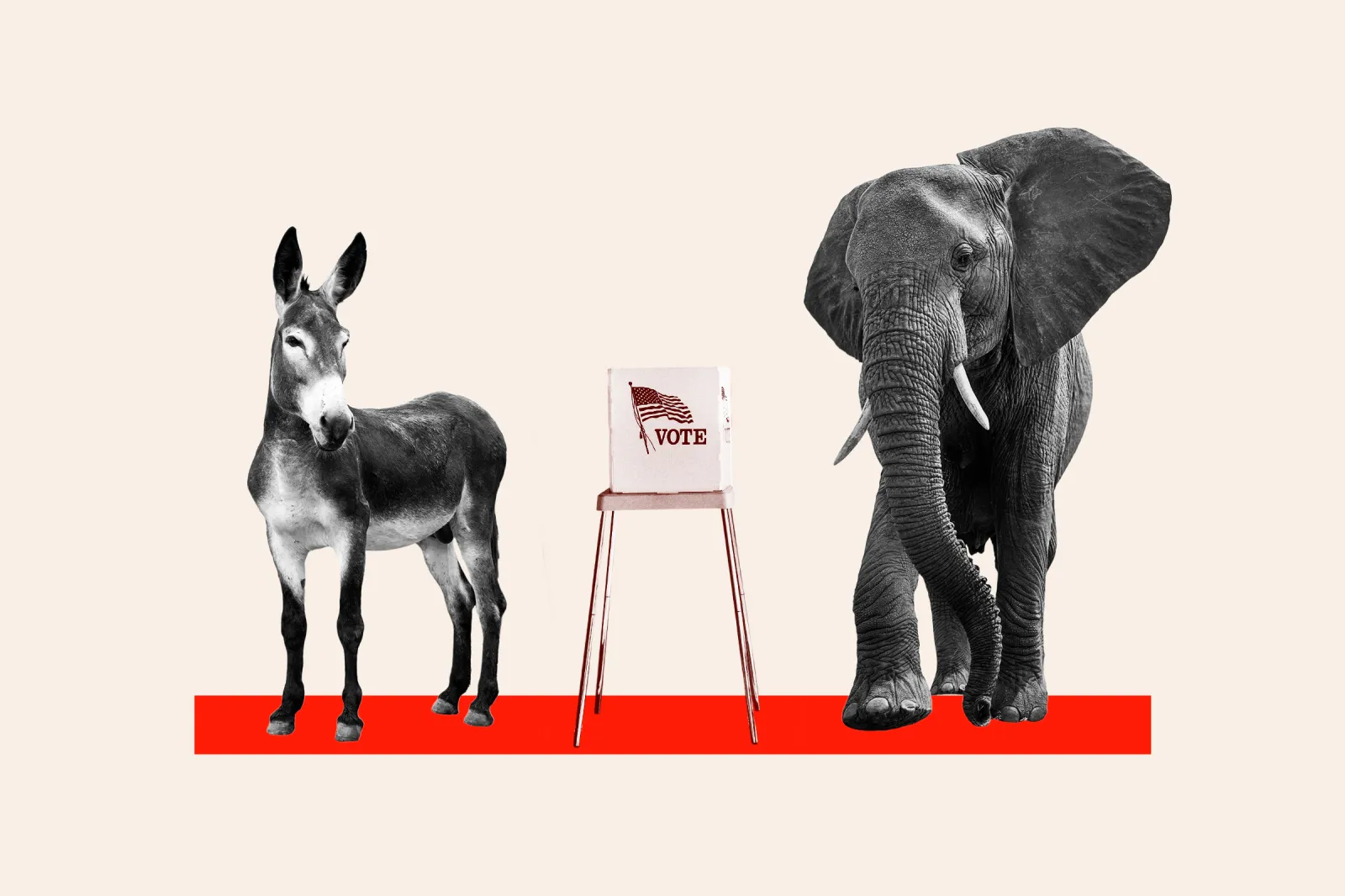
The United States recently ended its longest government shutdown, totaling 43 days. Most Americans blame the Republican Party for the temporary closure. What does this say about the state of our political process? Does the United States need a third political party? Are the American people ready to introduce serious contenders to the nation's two-party political system? Newsweek contributors Paul du Quenoy and Dan Perry debate:
Paul du Quenoy: No, the U.S. does not need and cannot support a new political party. The two-party system we have evolved into is far from perfect, but it has stood since the Civil War as a duopoly of tents broad enough to cover broadly the political beliefs of almost all Americans to the right and left. The need for intraparty consensus bolsters national stability, for that need for consensus tends to moderate dangerous extremes and encourage bipartisan compromises for the good of the republic. A testament to the system’s durability is the persistent failure of any third party to take root, be it Theodore Roosevelt’s Bull Moose Party, the socialist and communist parties of the early half of the 20th century, George Wallace’s racial segregation movement, Ross Perot’s spoiler campaign in 1992, the perpetually fringe libertarians and the pathetic “no labels” movement of 2024, among others. The two-party system may not always have the answers, but it is strong and better than any alternative anyone has put forward for over 150 years.
Dan Perry: Yes, we most certainly do [need a third party]. The two-party system works only when the country actually has two dominant ideological streams, and then splits are badly punished by the system. But we now have three: a broad centrist majority that straddles the soft left and soft right, a radical progressive left and a MAGA-captured right which is a reckless personality cult as well. That reality breaks the core logic of the system. Instead of two big tents balancing each other, we have one tent stretched over incompatible factions. We get paralysis, distortion and a pro-democracy center with no real political home. A third party isn’t a novelty—it’s an adjustment to a landscape the two parties no longer serve. The center is the largest stream. For this to actually work, it would need to be created by a large number of defectors from both parties who are currently in Congress, with a massive PAC behind them.
 ...
...Paul du Quenoy: Our radical fringes at most make up 20-30 percent of Americans. The other 70-80 percent face toward the center. The fringes can be loud at times, but the business of the country is getting done, our wealth and population are on the rise and the problems we face have found, are finding, or will find solutions. The third parties that have been tried have long gone nowhere, largely because they fail to address that spirit of compromise or offer the effective solutions the broad center demands.
Dan Perry: Actually, what I’d call radical on the right is a slight majority of that side, while on the left it’s a slight minority. Roughly half of the public are in the center. Someone like me on the center-left shares more with John McCain than with the far left. The center isn’t truly represented by Republicans and soon won’t be by Democrats either. Past third parties failed by splitting one side or the other—I’m calling representing the majority.
Paul du Quenoy: This is of course a matter of perspective, and the definition and values of the “center” do change over time. Positions that leftists may consider “extreme” are in some cases now broadly shared among the body politic. Look at the so-called 80-20 issues where large majorities of Americans agree with Donald Trump on illegal immigration, transgenderism and other issues. The slide does not, however, mean that most Americans can no longer reasonably find a home in the two major parties.
Dan Perry: I tend to agree that on many issues, indeed, the soft right and the soft left can agree. And I do believe that applies to abortion, and to health care, and to gun control, and to reasonable taxation, and the degree to which there should be reforms in the system and to climate policy. It's just that the two-party system is getting in the way because it pulls to the extremes. And that is precisely my point.
Paul du Quenoy: Third parties have been a fantasy of the marginal and disgruntled for most of our country’s history. Our vital center has long been served well by two camps which, while not perfect, encompass the views of most Americans, restrain extremes, solve problems in a practical way and reach compromise solutions. With them in place, stability is assured and our future is guaranteed. Third parties, which are usually based on fringe views or a sense of grievance, are vehicles for ideologues, provocateurs and contrarians whose appeal is as limited as their problem-solving skills. As elections have shown for well over a century, Americans neither want nor need them.
Paul du Quenoy is president of the Palm Beach Freedom Institute.
Dan Perry is the former Cairo-based Middle East editor and London-based Europe/Africa editor of The Associated Press, the former chairman of the Foreign Press Association in Jerusalem and the author of two books. Follow him at danperry.substack.com.
The views expressed in this article are the writers' own.
Request Reprint & LicensingSubmit CorrectionView Editorial & AI Guidelines Add Newsweek as a preferred source on Google to see more of our trusted coverage when you search.
Recommended For You
 OpinionFormer White House Middle East Envoy: What We Keep Getting Wrong About the UAE and Sudan | Opinion5 min read
 OpinionGovernment-Mandated Affordability—Music to Consumer Ears | Opinion6 min read
 OpinionConventional Wisdom: Ukraine Peace Plan Edition2 min read
 OpinionFour Ways to Fight Trump’s Golden Age of Corruption | Opinion5 min read
 OpinionThe Post-Shutdown Mandate—It’s Time for California to Lead | Opinion5 min read
 OpinionDon’t Let Monopoly Utilities Kill Clean Consumer Choices | Opinion4 min read
Related Podcasts
Top Stories
 WorldTrump Sending Witkoff to Moscow, End of Russia-Ukraine War in Reach—Live2 min read
 NewsDefiant Maduro Rallies Venezuela for US War4 min read
 News6 Reasons Why Zelensky is Under Increasing Pressure to Agree to Peace Deal9 min read
 NewsGOP Senator Defends Mark Kelly, Calls Treason Accusations ‘Reckless’4 min read
 TravelMap Shows America’s Deadliest States for Driving on Thanksgiving3 min read
 U.S.Kristi Noem Among Those Named in Judge’s Criminal Inquiry: Full List2 min read
Trending
 MoneyNew ‘Cash Law’ Could Change Grocery Store Rules3 min read
 SnowfallWinter Storm Warning Issued As 25 Inches of Snow To Strike5 min read
 U.S. Economy‘Mass Blackout’ Starts Today: What to Know3 min read
 Home PricesPrice Correction ‘Worse Than 2008’ Coming To US Housing Market—Analyst5 min read
 National Weather ServiceWinter Storm Alert Issued as 12 Inches of Snow Set To Hit3 min read
Opinion
 OpinionGOP Rep.: The U.S. Must Close Critical AI Chip Export Loophole Exploited by China | Opinion5 min read
 OpinionAgriculture Secretary: Giving Thanks to the American Farmer This Thanksgiving | Opinion4 min readOpinionFormer White House Middle East Envoy: What We Keep Getting Wrong About the UAE and Sudan | Opinion5 min readOpinionGovernment-Mandated Affordability—Music to Consumer Ears | Opinion6 min readOpinionConventional Wisdom: Ukraine Peace Plan Edition2 min read