 lucky_pics/Shutterstock
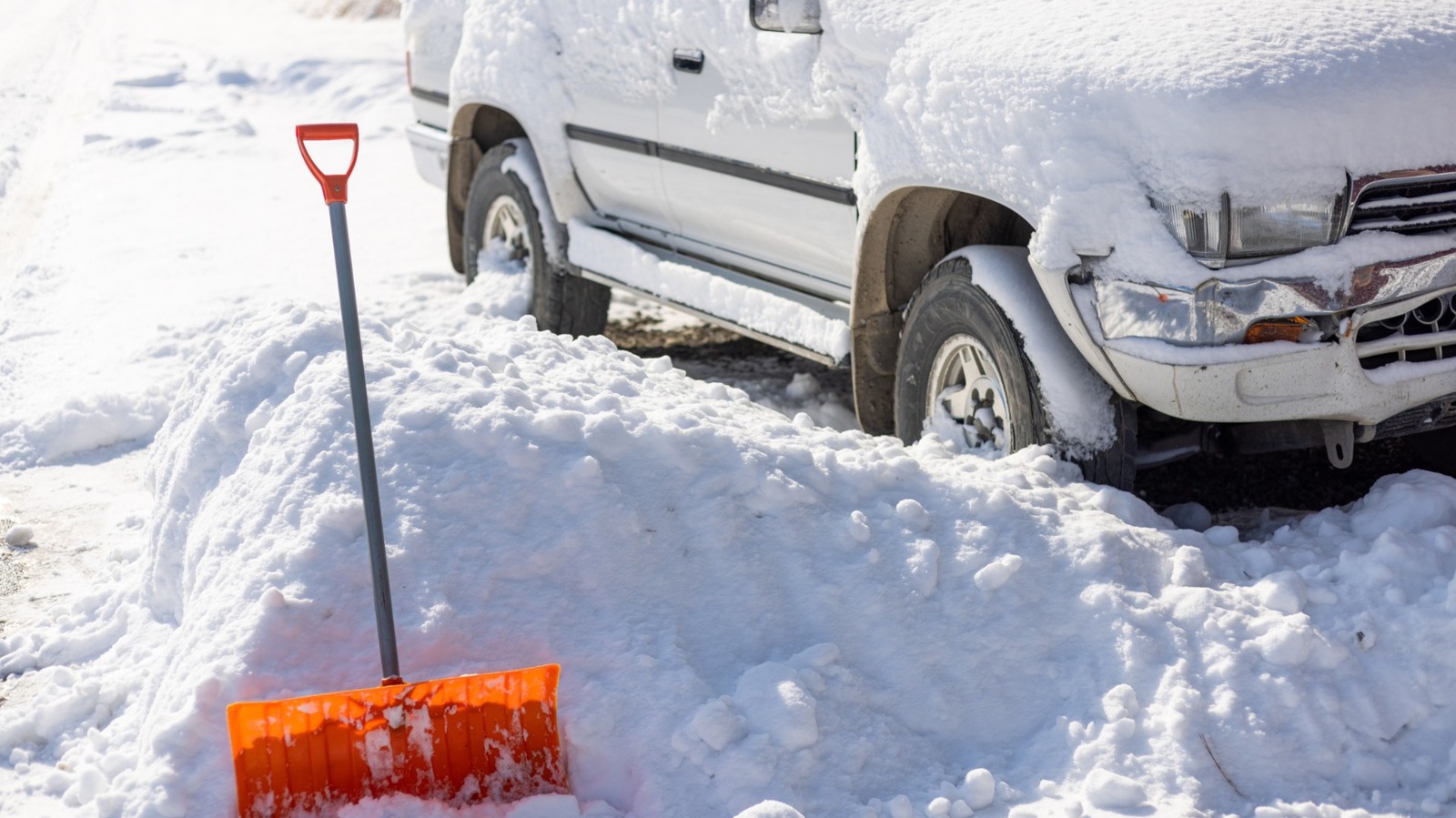
People dread winter for many reasons, and high on that list is the constant need to shovel snow away from their surroundings. It's a cold, time-consuming, and energy-depleting job. Before you start looking up tips to make snow shoveling easier and more efficient, what if we told you there was a better way to keep the snow away and ditch the shovels altogether? And no, it doesn't involve using a ton of salt. Instead, the alternative we propose is laying down a tarp.
A tarp is very useful for giving shelter to anything that needs protection from the elements. That's why people have them stashed away for when the need to cover vehicles and equipment arises. Snow prevention is not part of the conventional uses of a tarp. And so, for this reason, laying them on your driveway, walkway, roof, and other surfaces you don't want snow to cover might seem like a crazy idea to your neighbours. But if you do it right, it becomes a smart idea that even they might adopt in the future.
Hold your horses, though. Before you go and grab a tarp from your garage and lay it on your driveway, you need to make sure it ticks the right boxes in terms of size, material, and thickness. Size-wise, the tarp you use should be bigger than the area you're looking to cover with it. It must also be thick enough to handle the dense, heavy snow, which is why materials like vinyl or polyethylene are best. You must then ensure the tarp's edges are strong enough to handle all the pulling and heavy lifting you're going to do with it.
Choosing the right tarp matters
 Miriam-doerr/Getty
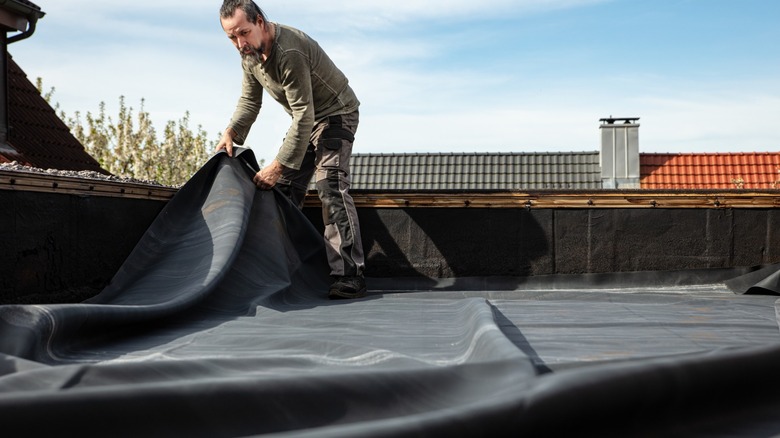
Not every tarp will perform the function of clearing snow effectively. The thickness, durability, and coating matter, especially when you're dragging snow across pavement. If you end up picking the wrong one, then you'll struggle with folds, tearing, and unnecessary weight. You want something solid enough to hold the snow but light enough to move around. As such, picking a good snow-removal tarp means choosing one that resists tears, repels moisture, and slides easily.
There are notable differences between standard, medium-duty, and heavy-duty tarp options. Standard tarps cost less but wear out quickly. On the other hand, heavy-duty tarps are tougher but also heavier, and so the extra weight can make pulling a large load of snow much more difficult. Thankfully, there are medium-duty models that offer a balance of strength and flexibility, making them the ideal tarp option for snow removal.
When it comes to material, synthetic outperforms natural fiber. Polyethylene tarps, for instance, are standard and affordable. They resist UV damage reasonably well when treated properly. Then there are canvas tarps that are far from ideal since they absorb moisture and mold.
Finally, you'd want a tarp with edges that should be reinforced with rope or binding. This is because flimsy edges fray and tear when you're dragging heavy snow. A good tarp should come with grommets (the metal rings at corners) that let you secure it tightly.
Using a tarp to remove snow
 Andy Pavuls/Shutterstock
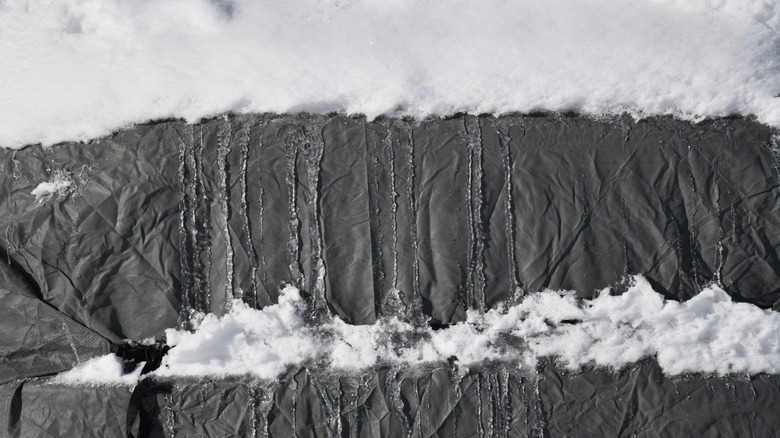
The trick to using a tarp to remove snow is to lay it over the area of choice before it snows. That way, you can simply grab the corners of the tarp and move it so that the snow slides off it in one motion, exposing the untouched surface beneath it.
Start by placing as many tarps as you'll need over the surface you want to cover. Make sure you secure them by weighing them down so the wind doesn't scatter them. You can use sandbags, weights, or edge clips. Some people even use duct tape, but that may be overkill for most situations (not to mention being difficult to remove). Others use firewood to weigh it down and twine to tie off its edges so that moving it would be easier. Use what you feel works best as long as it holds the tarp down securely.
Once the tarp gathers the snow, just go and pull it out, dumping the snow in your preferred location. Do this the moment the snowstorm ends or reaches a manageable depth. If the tarp gets too heavy or the snow outside is too deep, it will make moving it dangerous and really difficult. Remember, the entire process should take a few minutes instead of the hours a shovel can demand.
Also note that this method struggles in extreme wet snow or when the snow has created an after-freeze crust. This is because wet snow weighs more, and the ice may freeze the tarp to the driveway or other surface. In those conditions, you will still need to use a snow shovel to break initial contact. But for dry snow, the tarp method beats shoveling.