- Space
National parks offer similar testing conditions to the Red Planet
Julia Mustoin New YorkTuesday 02 December 2025 23:27 GMTComments
 CloseBlue Origin launches Mars mission for NASA
Sign up to our free weekly IndyTech newsletter delivered straight to your inbox
Sign up to our free IndyTech newsletter
Sign up to our free IndyTech newsletter
Email*SIGN UPI would like to be emailed about offers, events and updates from The Independent. Read our Privacy notice
NASA is testing next-generation Mars drone tech in a place a lot like the Red Planet - California’s Mojave Desert in Death Valley National Park.
They flew three research drones over the barren, featureless dunes in April and September, hoping to make improvements to their navigation software.
Similar dunes on Mars had confused the navigation of the Ingenuity Mars Helicopter during several of its last flights, the agency noted.
The helicopter, which launched with the Perseverance Mars rover in 2021, completed 72 flights — greatly exceeding its planned lifespan before becoming damaged during landing in January 2024.
“Ingenuity was designed to fly over well-textured terrain, estimating its motion by looking at visual features on the ground. But eventually it had to cross over blander areas where this became hard,” Roland Brockers, a researcher and drone pilot at NASA’s Southern California Jet Propulsion Laboratory, said in a statement.
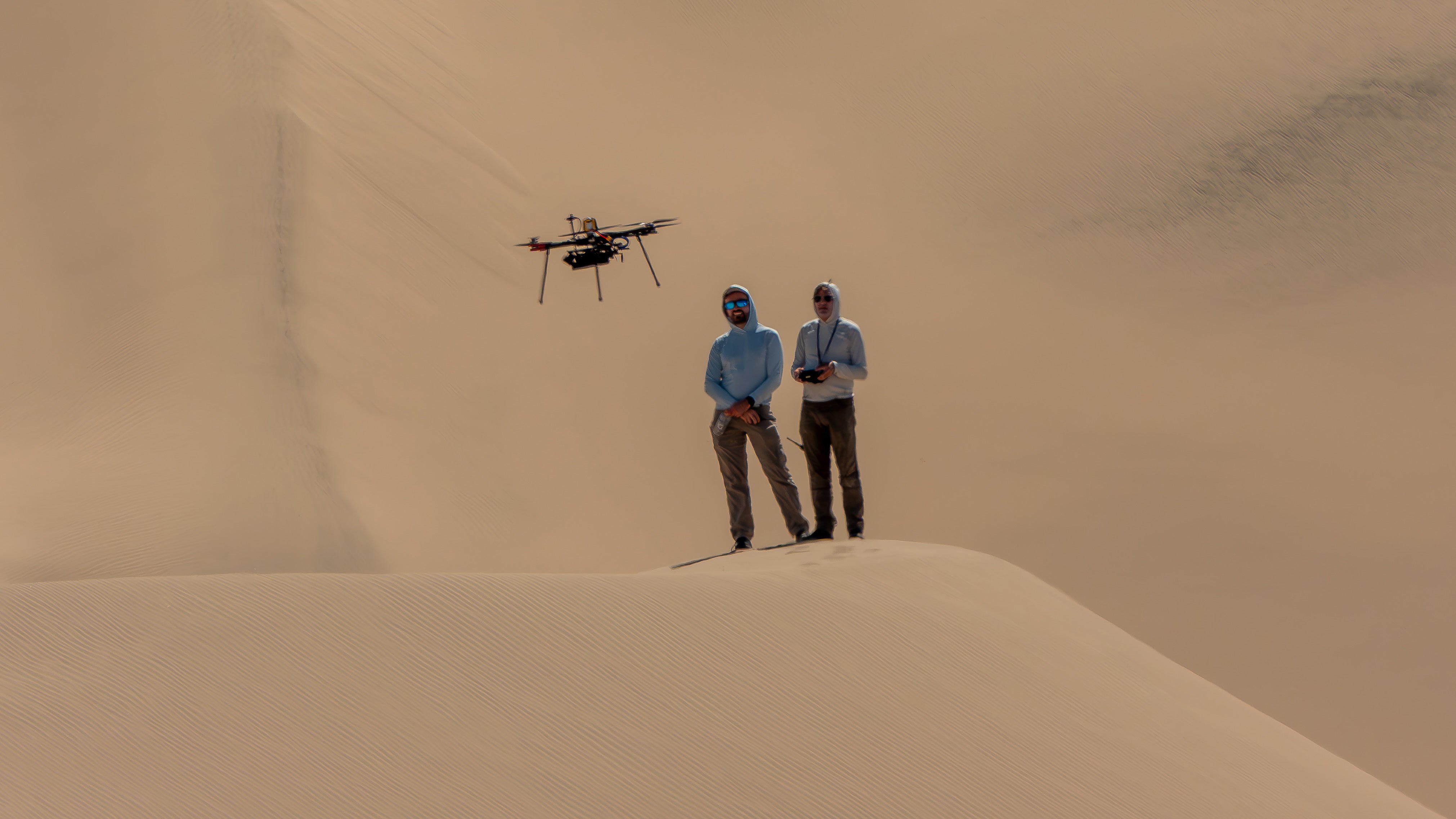 open image in galleryNASA scientists test a research drone in the Dumont Dunes area of California’s Mojave Desert last September (NASA/JPL-Caltech)
“We want future vehicles to be more versatile and not have to worry about flying over challenging areas like these sand dunes,” he added.
NASA has been testing desert drones in Death Valley, known widely as the hottest place on Earth, since the 1970s, when they were preparing to land the twin Viking spacecraft.
The present-day engineers also traveled to the park’s Mars Hill, an otherworldly remnant of a past lava flow, as well as the Mesquite Flats Sand Dunes — in scorching temperatures reaching as high as 113 degrees Fahrenheit.
The researchers found that using different camera filters can help the drones track the ground, with new algorithms to take them down safely.
And the rippling Dumont Dunes offered variation, further delineating the importance of protecting the national park, Death Valley National Park Superintendent Mike Reynolds noted.
“It’s a powerful reminder that the park is protected not just for its scenic beauty or recreational opportunities, but as a living laboratory that actively helps us understand desert environments and worlds beyond our own,” he said.
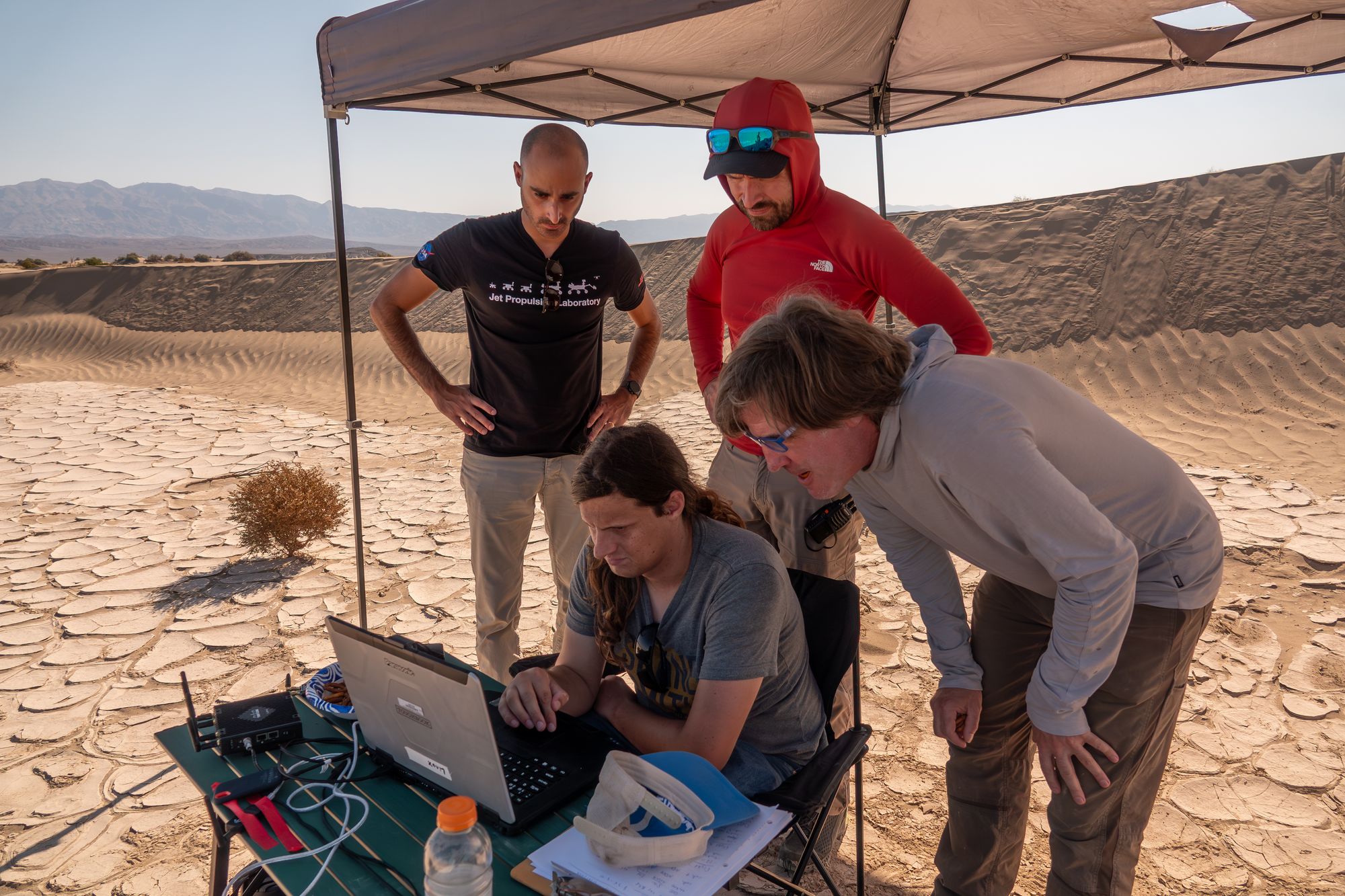 open image in galleryResearchers gather under a tent in Death Valley National Park while monitoring a research drone (NASA/JPL-Caltech)
But Death Valley isn’t the only national park NASA uses for Mars-related testing.
Researchers at NASA’s Texas-based Johnson Space Center tested a dog-like robot called LASSIE-M – or “Legged Autonomous Surface Science In Analogue Environments for Mars” – at White Sands National Park in New Mexico.
Researchers hope the robot can serve as a scout on Mars, scaling rocky or sandy terrains that can be dangerous for rovers.
Others at NASA’s Langley Research Center in Hampton, Virginia, are testing the Mars Electric Reusable Flyer: a drone with a propeller that’s about the size of a small school bus.
More about
MarsNasaDeath Valley National ParkDeath ValleyspaceflightJoin our commenting forum
Join thought-provoking conversations, follow other Independent readers and see their replies
Comments