- Culture
- TV & Radio
- Reviews
The broadcaster drills down into the royal family’s power and finances – and how far they will go to maintain public support
Sean O'GradyTuesday 02 December 2025 23:26 GMTComments
 CloseBBC ‘can’t be held to ransom’, says David Dimbleby after Tim Davie resigns
Get the latest entertainment news, reviews and star-studded interviews with our Independent Culture email
Get the latest entertainment news with our free Culture newsletter
Get the latest entertainment news with our free Culture newsletter
Email*SIGN UPI would like to be emailed about offers, events and updates from The Independent. Read our Privacy notice
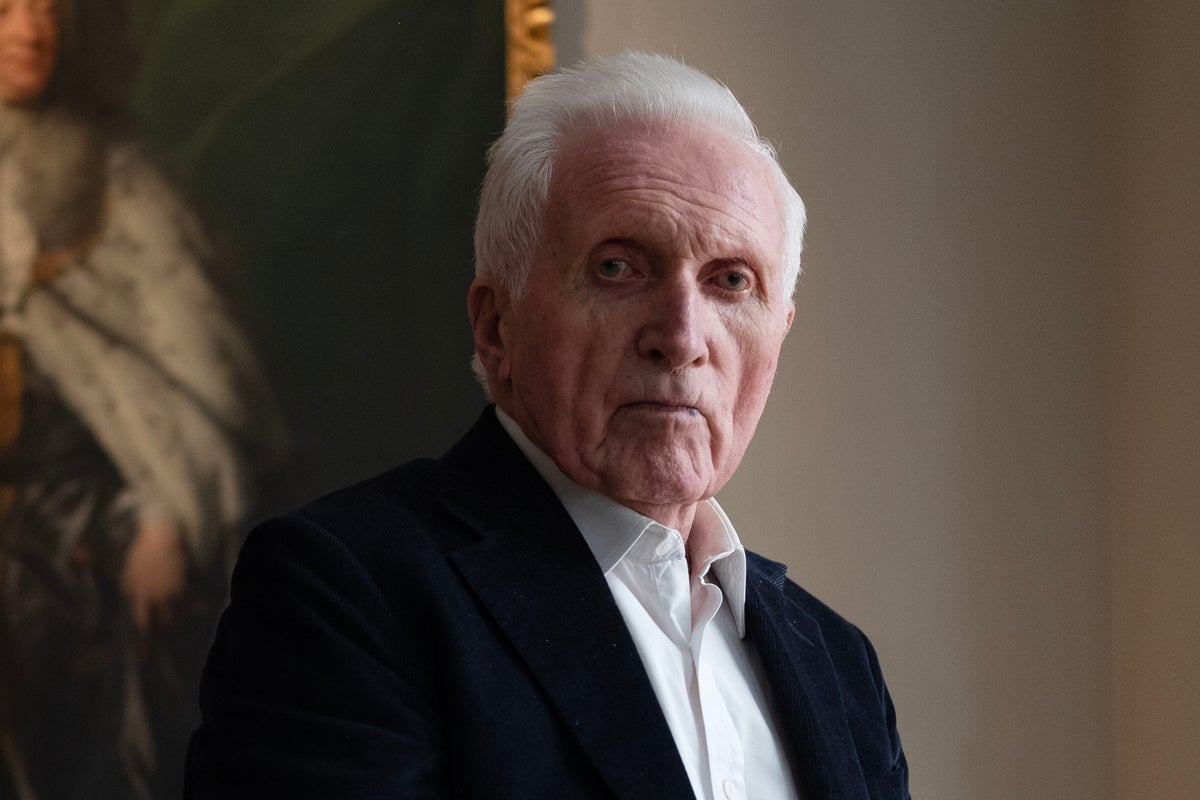
David Dimbleby is wandering around Windsor, filming some bit of royal ceremonial for his excellent BBC One miniseries What’s the Monarchy For?, when a man recognises him, turns to his wife, and says: “This guy is a famous liberal lefty.” Anyone who’s ever made the slightest acquaintance of him will know that this is abject nonsense, but not something that Dimbleby himself is much bothered by. He takes it in good heart – he’s a big chap in all respects – and reassures his interlocutor that he will of course be unbiased in his assessment of the state and the future of the British royal family. Which he is, though one is never quite sure who Dimbleby is addressing off-screen. Is it his producer? One of his kids? A vase? It would have worked better with conventional pieces to camera.
At any rate, Dimbleby’s own view, for what it’s worth after many decades covering some now dimly forgotten royal and state events, is that he is neither an instinctive, sentimental, ardent royalist (as his father Richard, who commentated on the late Queen’s coronation in 1953 famously was); but nor is he any kind of “lefty” iconoclastic republican. We see archive footage of him in 1973, for example, up in the gallery at Westminster Abbey, narrating Princess Anne’s ill-fated marriage to Mark Phillips. He takes a pragmatic view – in favour of monarchy insofar as it’s useful and carries the support of the people. From the sounds of the former courtiers, politicians, historians and journalists he speaks to in his investigation, and fortunately enough for the House of Windsor itself, this seems to be the approach taken by the royals too.
Himself something of a venerable national asset – he’s a lively 87 and should have celebrated his personal diamond jubilee in broadcasting last year – it’s refreshing to see him still going, still reporting, still doing vox pops rather as he did for the BBC’s 1964 general election coverage, and still exercising that curious instinct that made him such an effective interviewer. He pushes former chancellor, George Osborne, for example, on why the income that the Windsors receive from the Crown Estate (on top of the money coming in from the huge duchies of Lancaster and Cornwall) enjoys a ratchet – it can go up, but never down. Similarly, Dimbleby wonders what Greg Dyke, former BBC director general, makes of the Orwellian “perpetuity edits” demanded by the palace regarding “excisions of reality” from Elizabeth’s funeral where, for example, Edward and Sophie become “visibly upset”.
Like Dimbleby himself, Dyke can’t understand how and why such decisions are made, or even by whom. It’s all a bit mysterious. So is the comparatively recent practice of “monarch’s consent”, whereby the royal places and personnel can be exempted from inconvenient legislation on employment or equal rights. We know it dates back to the 1970s, and was freely given by the prime minister of the day, Ted Heath, but not so much exactly why this is the only entity in the land that may choose to be above certain laws. That, of course, also includes the lack of much meaningful scrutiny of their finances and the fact there is no official public inventory of the paintings and other assets they own, either in their own right or on behalf of the nation – at least £1.2bn worth of gear.
There are lots of nice little stories in the programme to entrance collectors of royal gossip. The late Queen, for example, hiding in the bushes at Buckingham Palace so she didn’t have to bump into the monstrous Romanian dictator Nicolae Ceaușescu as he took a stroll in the gardens. But the big scandals and challenges are all explored with skill and an even-handed touch – and the major televisual milestones all properly revisited. These include rarely glimpsed footage of the 1969 documentary The Royal Family (firmly locked in a metaphorical vault by the palace), the then Prince Charles’s confession of adultery to Jonathan Dimbleby in 1994, the now Andrew Mountbatten-Windsor’s disastrous Newsnight interview in 2019 and Harry and Meghan spilling the beans to Oprah Winfrey.
We also see Dimbleby dissecting how apparently innocent exchanges between Prince William and a visiting Canadian comedian, Eugene Levy, are subtly manipulative in their image-building – the future king arrived to meet Levy on an electric scooter, and made several references to his late grandmother. Dimbleby rightly picks up on William’s apparently casual (but surely calculated) remark that “change is definitely on my agenda”, asking what he means by such “dangerous” words – “What’s the King going to say? It’s not that easy to change.”
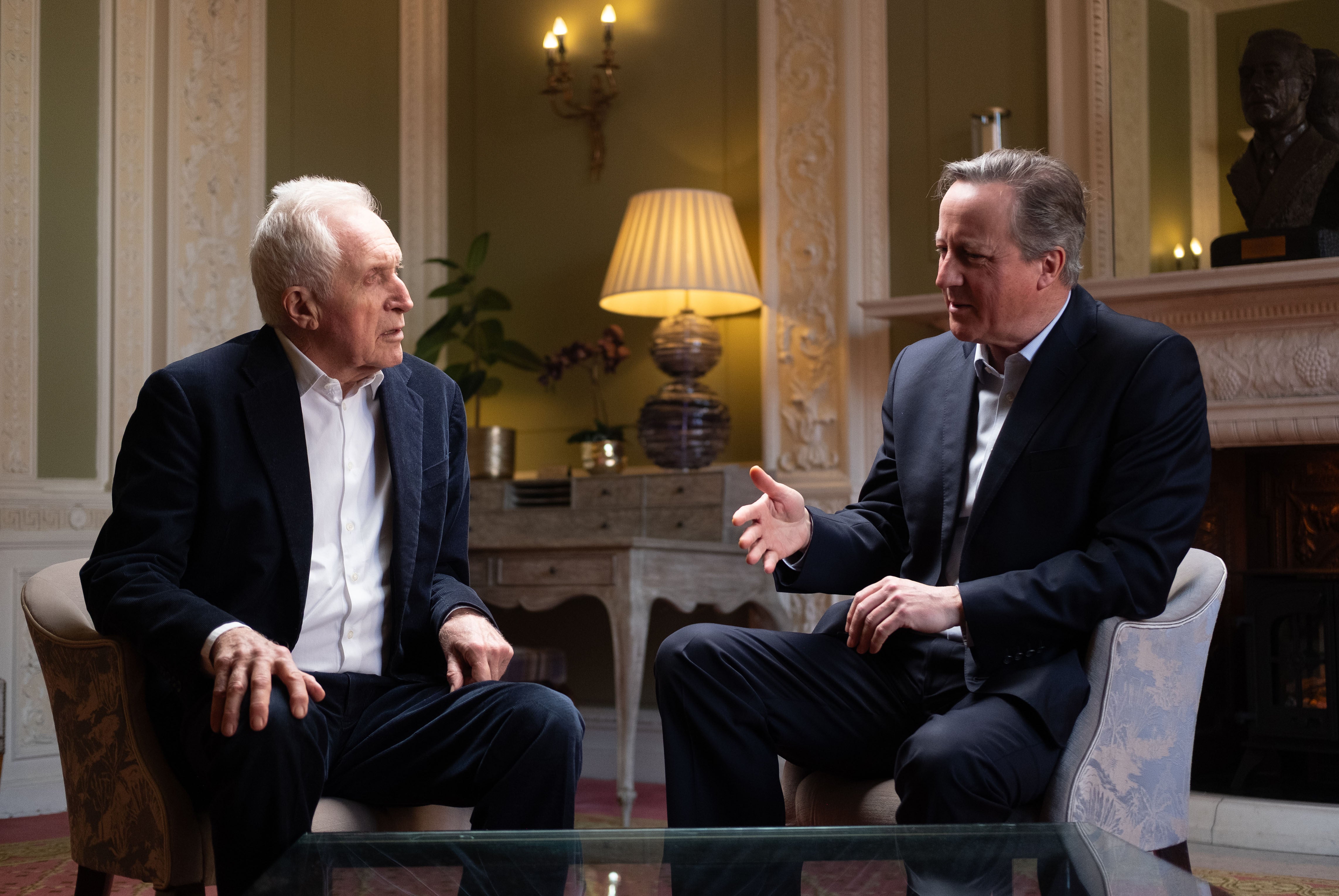 Dimbleby interviewing David Cameron in 'What's the Monarchy For?' (BBC/The Garden TV)
The one glaring omission in this otherwise majestic survey of the past, present and future is the interview that Diana, Princess of Wales, gave to Martin Bashir on the BBC 30 years ago. At the time, it was a sensation and devastating about Camilla – “there were three of us in that marriage” – but its problematic origins have airbrushed it from the scene, never to be acknowledged. Yet it too happened, 200 million saw it worldwide, and it’s part of our history – and somehow not even David Dimbleby can be allowed to use a clip of it. Further evidence, were it needed, of how the Windsors’ influence (probably William in this case) melds into actual, if invisible, power, no doubt also exercised, as Dimbleby suggests, by the secret dealings of the King with his ministers. It seems that sway also applies within the BBC, with which the palace has been intertwined for a century.
More about
David DimblebyPrince WilliamRoyal familyJoin our commenting forum
Join thought-provoking conversations, follow other Independent readers and see their replies
Comments