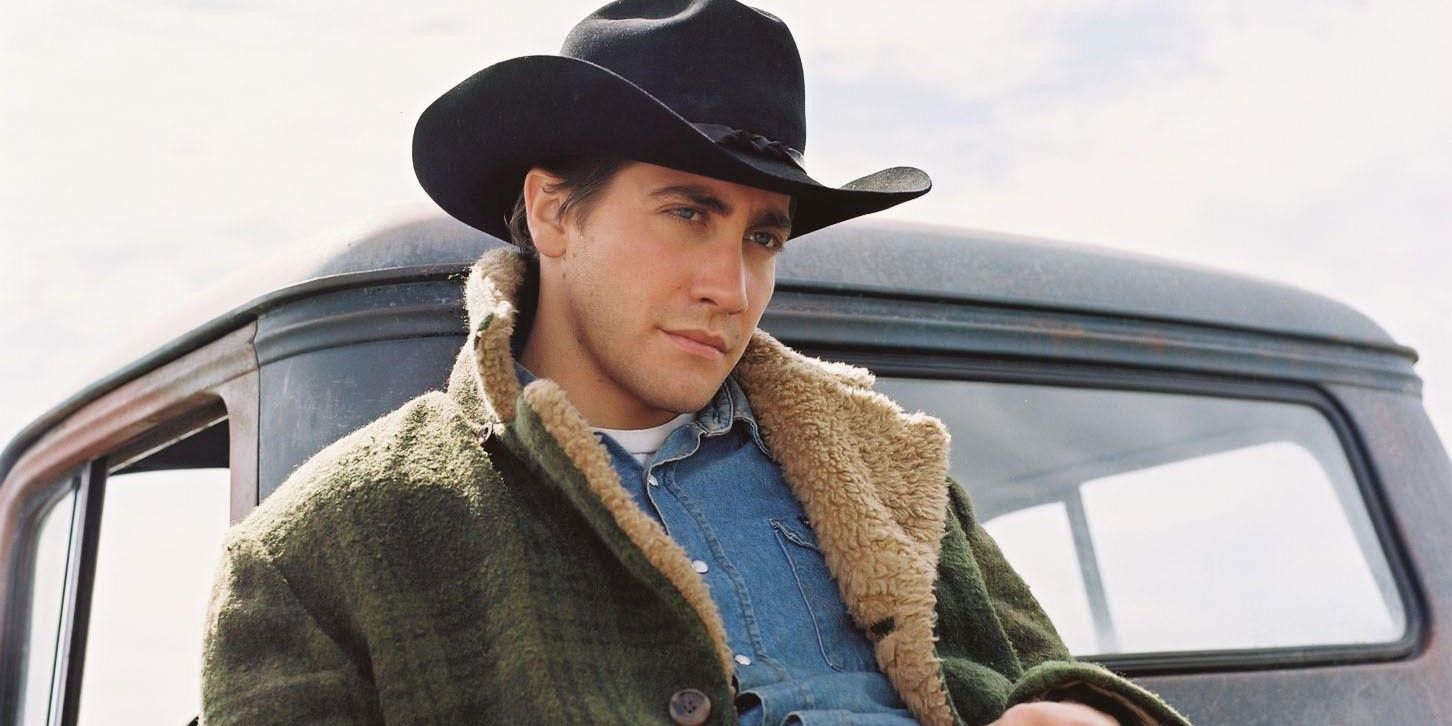
 Jack in truck bed in 'Brokeback Mountain'Image via Focus Features
 By
Michael Block
Published Mar 1, 2026, 6:29 PM EST
Michael Block is a 14 time GLAM Award nominated writer, producer, and host of the podcast Block Talk. Throughout his time in the entertainment industry, he has worked on and off Broadway as a stage manager, written several produced plays, critiqued hundreds of theatrical performances, drag and cabaret shows, and has produced events randing from drag competitoons to variety concerts!
On Block Talk, he interviews nightlife personalities, covers the wide world of entertainment through features, ranking episodes, and recaps ALL of Drag Race, as well as Dragula and Survivor. He has interviewed hundreds of RuGirls that span the globe at DragCon NYC, DragCon LA, and DragCon UK.
In his free time, he makes one-of-a-kind jewelry and gift baskets with his mom. He is a proud member of the LGBTQ+ community.
Sign in to your Collider account
Add Us On
Summary
Generate a summary of this story
follow
Follow
followed
Followed
Like
Like
Thread
Log in
Here is a fact-based summary of the story contents:
Try something different:
Show me the facts
Explain it like I’m 5
Give me a lighthearted recap
By
Michael Block
Published Mar 1, 2026, 6:29 PM EST
Michael Block is a 14 time GLAM Award nominated writer, producer, and host of the podcast Block Talk. Throughout his time in the entertainment industry, he has worked on and off Broadway as a stage manager, written several produced plays, critiqued hundreds of theatrical performances, drag and cabaret shows, and has produced events randing from drag competitoons to variety concerts!
On Block Talk, he interviews nightlife personalities, covers the wide world of entertainment through features, ranking episodes, and recaps ALL of Drag Race, as well as Dragula and Survivor. He has interviewed hundreds of RuGirls that span the globe at DragCon NYC, DragCon LA, and DragCon UK.
In his free time, he makes one-of-a-kind jewelry and gift baskets with his mom. He is a proud member of the LGBTQ+ community.
Sign in to your Collider account
Add Us On
Summary
Generate a summary of this story
follow
Follow
followed
Followed
Like
Like
Thread
Log in
Here is a fact-based summary of the story contents:
Try something different:
Show me the facts
Explain it like I’m 5
Give me a lighthearted recap
Nothing gets people chatting like a good controversy. Throughout movie history, we’ve seen some extraordinary films get bogged down by it. Maybe they were too graphic for moviegoers to keep their lunch down, or die-hard fans were aghast by the casting of an iconic character. Whatever it may be, it stirred up drama that nearly sank the film. And yet, the films on this list not only survived — they thrived.
No matter how audiences or critics tried to bring them down, these films didn’t let the noise hurt them. We’re here to celebrate 10 controversial films that have aged like fine wine. Sometimes, drama does a movie good! The 10 films on this list have proven they have always been brilliant.
10 'Casino Royale' (2006)
 Daniel Craig in 'Casino Royale' (2006)Image via Sony Pictures Releasing
There are many iconic characters that have found several actors donning their legendary costumes. One of which is the ultimate spy, James Bond. Inspired by Ian Fleming’s novels, 007 is one of the most sought-after roles, often filled by a specific archetype: tall, dark, and handsome. After Pierce Brosnan concluded his tenure as 007, a new Bond for the 21st Century was required. And, well, a new Bond is what fans got. The casting of Daniel Craig sparked widespread controversy, as lifelong fans couldn't see the blonde-haired, blue-eyed Brit in the role. Standing at 5-foot-10, James Blonde, as he was called, had an uphill battle. Would the naysayers be satisfied with his debut in Casino Royale? Shockingly, yes!
A genuine reflection of the Fleming story, unlike the 1967 parody version, Casino Royale follows Bond on his first mission: bankrupting terrorist financier Le Chiffre (Mads Mikkelsen) in a high-stakes Montenegro poker game to force his surrender. Proving the skeptics wrong, Craig’s performance was widely praised, so much so that he returned for four more Bond films and ultimately considered the closest portrayal of the creator’s original vision of the spy. We are currently in the midst of a new Bond casting, and if it’s anything like Craig’s, the next actor will be hotly scrutinized.
9 'The Exorcist' (1973)
 Image via Warner Bros.
Looking back at it today, The Exorcist is one of the greatest and most influential horror films of all time. But William Friedkin’s 1973 masterpiece was not entirely well-received by initial audiences. Why? Well, if you’ve watched, then you know. It was graphic! The Exorcist tells the story of 12-year-old Regan MacNeil (Linda Blair) as she is terrifyingly possessed by a demon. Her mother, Chris (Ellen Burstyn), seeks help from two Catholic priests to perform a dangerous exorcism to save her. Exploring the rich themes of faith and doubt, the battle between good and evil, and the struggles between science and religion, The Exorcist was a film that audiences couldn’t stomach.
Seeing The Exorcist in theaters would've been memorable for several reasons. On one hand, you were watching a masterpiece premiere in real time. On the other hand, you might have witnessed people fainting, puking, or experiencing extraordinary hysteria. There had even been reports that some moviegoers had heart attacks and even a miscarriage. We always hope films will make you feel something, so, in a sense, Friedkin achieved his goal! It just might have been a bit of a departure from what he expected. For movies to welcome audiences with a barf bag to promote the film, you know it’s a mark of something special. All these years removed, horror creators seek to replicate the same aura as The Exorcist. There’s a reason why we use that film as a blueprint for the genre.
8 'Brokeback Mountain' (2005)
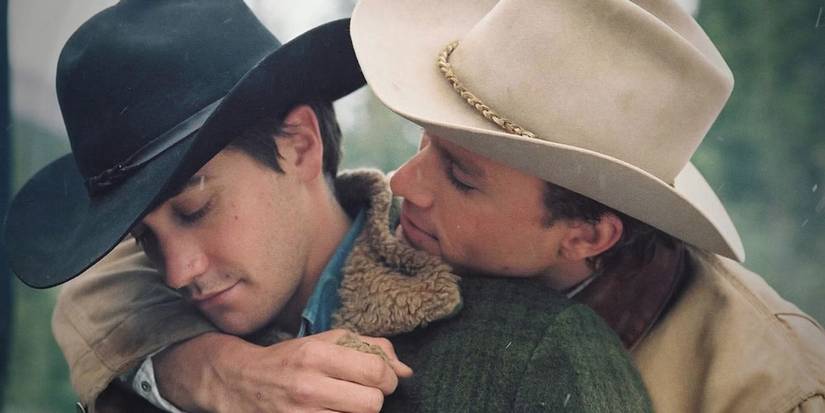 Heath Ledger embracing Jake Gyllenhaal from behind in 'Brokeback Mountain'.Image via Focus Features
As queer media continues to rise in the mainstream, we have to thank Brokeback Mountain for shattering the glass ceiling. But even though it’s a triumphant and groundbreaking film, Brokeback Mountain didn’t face an easy journey to becoming a masterpiece. Directed by Ang Lee, the film follows the complex romantic relationship between two American cowboys, Ennis Del Mar (Heath Ledger) and Jack Twist (Jake Gyllenhaal), in the American West from 1963 to 1983. A gay Western, the film was arguably one of the best films of the year, beloved by critics. But when it came to the Academy Awards, the voters may have shown their true colors when it came to honoring the Best Picture of the year.
As an important film for LGBTQ+ visibility and representation in storytelling, it seemed poised to win top honors. But it ended up losing to Crash, an arguably lesser film. Many critics admonished the Academy’s decision to make a non-groundbreaking choice, with some even expressing concerns of homophobia. With a modern mindset, it might seem unfathomable that this accusation could be made, given the Academy's moves over the years, but in perspective, it was a very different world — one in which queer characters were still punchlines or secondary stories. Brokeback Mountain’s loss may have forced the awards to reconcile their decision in the future. While we can’t go back and give them the top prize, it’s safe to say that today, we just can’t quit Brokeback Mountain.
7 'A Clockwork Orange' (1971)
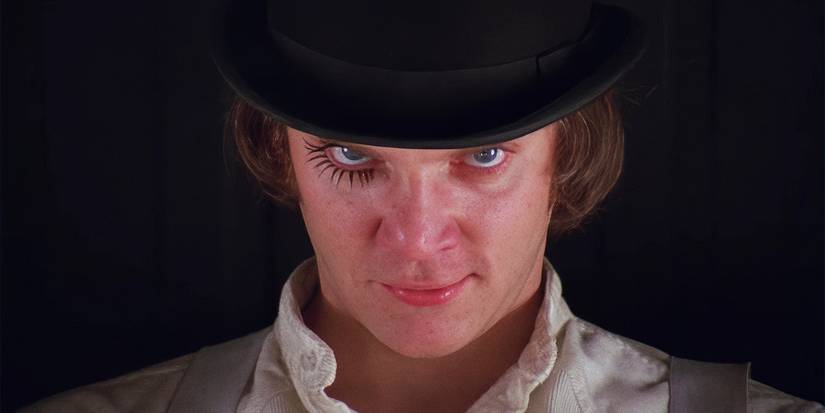 Malcolm McDowell staring straight into the camera in 'A Clockwork Orange'Image via Warner Bros.
The book-to-film adaptation pipeline is almost inevitable whenever a novel takes off. Anthony Burgess’ 1962 novel, A Clockwork Orange, was always going to get the film treatment, but that meant it would be quite a visceral experience — especially when you have Stanley Kubrick in the director’s seat. Set in a dystopian world, Alex DeLarge (Malcolm McDowell) is a charismatic delinquent in a near-future Britain who leads a gang in "ultraviolent" acts, including theft, assault, and rape. After his capture, he undergoes the experimental "Ludovico Technique," a state-imposed brainwashing that forces him to feel physically ill at the thought of violence. An utterly fascinating story, A Clockwork Orange required a graphic telling to be properly realized. And that did not sit well. So, the original release saw the film earn an X rating.
With Kubrick’s stylized, graphic depictions of "ultra-violence" and sexual assault, paired with classical music, some audiences found it glorifying violence, rather than commenting on it. To prove their case, the film was accused of inspiring copycat crimes. Kubrick, who faced threats against himself and his family, pulled the film from British circulation. While the story should not have come as a surprise, as the book spelled it out clearly, many felt there were ethical questions regarding a protagonist who is an unrepentant criminal, making viewers complicit in his, and later, the state's, violent acts. There should always be a distinction between art and reality, but at the time, something about this film hindered that separation. Yet, we regard A Clockwork Orange as a masterpiece today.
6 'Rosemary's Baby' (1968)
 Mia Farrow as Rosemary talking on a payphone in Rosemary's Baby Image via Paramount Pictures
In 1968, Roman Polanski pushed the bounds of faith and belief with the psychological horror thriller Rosemary’s Baby. Based on Ira Levin’s novel, regardless of its intent, Rosemary’s Baby was accused of softening and empathizing with Satanism. Let’s discuss. The film is about Rosemary Woodhouse (Mia Farrow), who becomes pregnant after a terrifying nightmare, only to suspect her eccentric neighbors and ambitious husband have groomed her to bear the child of Satan. A story of paranoia, gaslighting, and the occult, Rosemary’s Baby took viewers by storm. If you take the film at its core and understand the metaphors of religion and its control on an individual, you see Rosemary's experience through manipulation, isolation, and physical abuse as something despicable. But when you force audiences to take the parallel through Satan, they lose the plot.
The film was accused of blasphemy by religious groups for its sympathetic portrayal of a satanic coven and its depiction of the birth of the Antichrist. Instead, it was meant to be a reflection of the societal paranoia of cults. Many questioned the dark connection between the film and Sharon Tate, Polanski’s wife, at the hands of the Manson Family. It was a reach, of course. Deep analysis of the film can see Rosemary’s Baby as a feminist work — a dark take on women losing bodily autonomy to patriarchal, controlling figures. Perhaps that’s why the film has been remade and received a prequel film, Apartment 7A. What’s clear is that Rosemary’s Baby is a significant film that has influenced the horror genre here today, with many filmmakers using Satanic influences to center their stories.
5 'South Park: Bigger, Longer & Uncut' (1999)
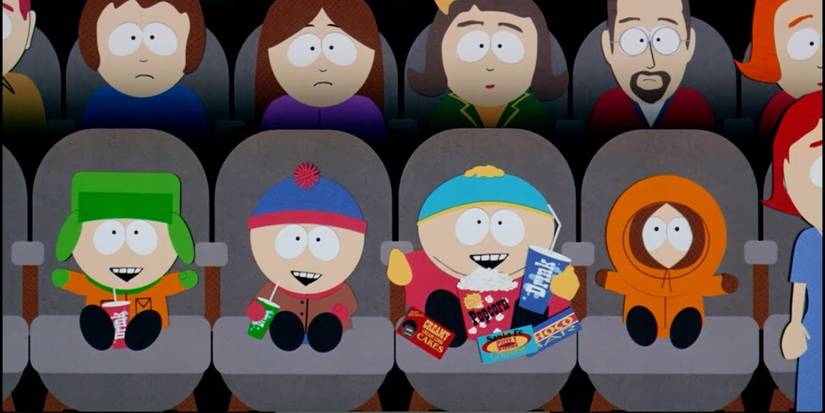 The South Park boys having a good time at the movies in South Park: Bigger, Longer, & Uncut.Image via Paramount Pictures
In 1999, one of the biggest adult animated series on television was South Park. On the air for two years, the series reshaped pop culture, becoming the most prominent comedy to be banned at home by parents for their kids. Yes, I’m talking about you, mother. Even if parents prevented their children from watching the show, it didn’t stop Trey Parker and Matt Stone from capitalizing on its success and making a feature film. South Park: Bigger, Longer & Uncut took the animated sitcom and made it raunchier with humor that wouldn’t fly on Comedy Central. Pushing the bounds to the brink, its deliberate, extreme parody of censorship, rampant profanity, and explicit sexual and violent content was meant to defy the Motion Picture Association of America.
In the film, the town's children, led by Cartman, Stan, Kyle, and Kenny, see an R-rated Terrance and Phillip movie. Their parents blame Canada, triggering a war, a pact between Satan and Saddam Hussein, and the boys' mission to stop it. The meta-commentary allowed the film to focus on the hypocrisy of blaming the media for children's behavior rather than parenting. Even with the moral of the story being the parents understanding the errors of their ways, South Park: Bigger, Longer, & Uncut still faced backlash. But the Academy Awards didn’t care, as it was nominated for Best Song. We’ll always have Robin Williams performing “Blame Canada” and the creators attending in drag!
4 'Drop Dead Gorgeous' (1999)
 denise richards in drop dead gorgeousImage via Warner Brothers
Sometimes, all it takes to be controversial is to simply hold a mirror up to society and the things we hold near and dear. In the mockumentary black comedy Drop Dead Gorgeous, a small-town beauty pageant is put on full display as contestants, mothers, and more go to great lengths to secure the crown and all the pageant glory. A fierce and deadly farce, Drop Dead Gorgeous was unafraid to mock sensitive subjects for the sake of a laugh. With an exceptional cast of past and future stars, including Kirstie Alley, Ellen Barkin, Kirsten Dunst, Denise Richards, Brittany Murphy, Allison Janney, and Amy Adams in her film debut, Drop Dead Gorgeous poked fun at anyone and everyone.
Though some believed the film to be Y2K camp, it became a beloved cult classic that's still quoted and memed today. By pushing criticism of image, religion, race, and identity through the pageantry of a sacred event, the satire allowed audiences to laugh and discover just how ridiculous the extremes can be. Perhaps a film that was far ahead of its time, audiences expected a lighthearted comedy in the vein of Clueless, only to get a cynical comedy like Christopher Guest's films. Offensive and insensitive on many levels, Drop Dead Gorgeous needed time to truly resonate. Making a spectacle of America may not have been every audience member’s cup of tea, but in hindsight, it was necessary.
3 'Bonnie and Clyde' (1967)
 Faye Dunaway and Warren Beatty in Bonnie And Clyde (1967).Image via Warner Bros.
Let’s get it out of the way now: Bonnie and Clyde took incredible liberties for the sake of entertainment. But that doesn’t mean the 1967 film isn’t a masterpiece. Directed by Arthur Penn, the film took the story everyone knew and turned it on its head. The film depicts the true story of Depression-era lovers and outlaws, Bonnie Parker (Faye Dunaway) and Clyde Barrow (Warren Beatty), who led a violent two-year crime spree across the central US. Their partnership began as a desperate search for excitement and fame, resulting in a saga of love, violence, and destruction. Blending dark humor with groundbreaking graphic violence to tell a romanticized, tragic, and stylish tale of rebellion that ends in a famous, bloody ambush, audiences were triggered to debate mixing unprecedented violent, graphic shootings with a sympathetic examination of the duo.
Subscribe to the newsletter for film controversy deep dives
Curious for more behind-the-scenes perspective? Subscribe to the newsletter for in-depth context on controversial films, scene-by-scene analysis, historical perspective, and broader film and pop-culture coverage. Subscribe By subscribing, you agree to receive newsletter and marketing emails, and accept our Terms of Use and Privacy Policy. You can unsubscribe anytime.The romance was certainly a major part of the Bonnie and Clyde story, but the film certainly glamorized it. But to remind audiences that Bonnie and Clyde were killers, the film was groundbreaking for its graphic portrayal of blood-soaked death scenes. The reality is, Bonnie and Clyde was released during a time of social unrest where the young demographic appreciated the anti-establishment sentiment. That said, it’s important to note that the omission of fact makes the film a work of entertainment first and foremost.
2 'Monty Python's Life of Brian' (1979)
 Graham Chapman as Brian in Monty Python's Life of BrianImage via Cinema International Corporation
One of the most prominent comedy troupes on the planet during the '70s was Monty Python. Comprised of Graham Chapman, John Cleese, Terry Gilliam, Eric Idle, Terry Jones, and Michael Palin, the comedians have provided the world with some of film and television’s funniest moments. After the massive success with Monty Python and the Holy Grail, they returned with another uproarious comedic romp, Monty Python’s Life of Brian. The satire follows Brian Cohen (Chapman), an average Jewish man born next door to Jesus in Bethlehem, who spends his life being mistaken for the Messiah. Brian contends with his unwitting rise to religious leadership and his misadventures with political resistance groups against the Romans. Funny in premise, the film was accused of being blasphemous.
Criticized for mocking religion, the film was banned in several countries, including Norway and Ireland. But the point of satire is to push the bounds and question legitimacy through humor. It shouldn’t have come as a shock, though, as Monty Python’s subversive humor is how they became so popular. Over time, audiences began to appreciate the film for what it was, seeing it as one of the greatest comedies of the decade. Some might even call it a British masterpiece.
1 'Cruising' (1980)
 Al Pacino in William Friedkin's 'Cruising'Image via United Artists
Sometimes, in attempts to tell unique stories about underserved communities, they don’t come across as well-intentioned; rather, they become a representation of their time. William Friedkin’s 1980 classic Cruising, which was loosely based on Gerald Walker’s novel, told the story of Detective Steve Burns (Al Pacino), who goes undercover in New York City's underground gay leather/S&M scene to catch a serial killer targeting gay men. Seeped in stereotypes, Cruising was a gritty portrayal of the queer subculture with a psychological focus on the blurred identity of the officer. The issue of the film didn’t come with the topic, but how gay men were being portrayed, garnering pushback and protest from the community.
Though we might call it a bit of a stretch today, Cruising was accused of being homophobic by playing the gay characters as one-dimensional, sex-crazed, and violent, rather than representing the reality of gay life. Many activists feared that the film’s misrepresentation could justify or encourage hate crimes against the LGBTQ+ community. (Remember, this was just shy of the rise of the AIDS/HIV crisis, which brought its own discrimination.) For those in the leather community, Cruising pushed narratives of the subculture that became damaging. Pacino always had an inkling of the film's problematic nature. In his memoir, Sonny Boy, Pacino wrote, “I never accepted the paycheck for Cruising. I took the money, and it was a lot, and I put it in an irrevocable trust fund, meaning once I gave it, there was no taking it back. I don’t know if it eased my conscience, but at least the money did some good.” The film, which was one of Friedkin’s finest, did have some redemption in the end.
 Like
Cruising
R
Crime
Drama
Mystery
Release Date
February 15, 1980
Runtime
102 Minutes
Director
William Friedkin
Writers
William Friedkin
Like
Cruising
R
Crime
Drama
Mystery
Release Date
February 15, 1980
Runtime
102 Minutes
Director
William Friedkin
Writers
William Friedkin
Cast
See All-
 Al Pacino
-
 Paul Sorvino
-
 Karen Allen
 Expand
Collapse
Expand
Collapse
-
 Movie
Movie
-
 Casino Royale
-
 The Exorcist
Subscribe to the newsletter for film controversy deep dives
Curious for more behind-the-scenes perspective? Subscribe to the newsletter for in-depth context on controversial films, scene-by-scene analysis, historical perspective, and broader film and pop-culture coverage. Subscribe By subscribing, you agree to receive newsletter and marketing emails, and accept our Terms of Use and Privacy Policy. You can unsubscribe anytime.What To Watch
 July 20, 2025
The 72 Best Movies on Netflix Right Now
Trending Now
July 20, 2025
The 72 Best Movies on Netflix Right Now
Trending Now
 Top 20 Movie Masterpieces of the Last 100 Years, Ranked
 The 20 Greatest Action Movie Masterpieces of All Time, Ranked
 Decades Later, Bob Dylan's Greatest Songs About Love Still Feel Uncomfortably Honest