Image via Warner Bros.
 By
William Smith
Published 42 minutes ago
William Smith is a freelance writer currently living in the Midwest with his wife and daughter, where he spends too much time watching movies and then writing about them. He doesn't read your hurtful comments and doesn't have any social media, so any criticisms must be sent by carrier pigeon.
Sign in to your Collider account
follow
Follow
followed
Followed
Like
Like
Thread
Log in
Here is a fact-based summary of the story contents:
Try something different:
Show me the facts
Explain it like I’m 5
Give me a lighthearted recap
By
William Smith
Published 42 minutes ago
William Smith is a freelance writer currently living in the Midwest with his wife and daughter, where he spends too much time watching movies and then writing about them. He doesn't read your hurtful comments and doesn't have any social media, so any criticisms must be sent by carrier pigeon.
Sign in to your Collider account
follow
Follow
followed
Followed
Like
Like
Thread
Log in
Here is a fact-based summary of the story contents:
Try something different:
Show me the facts
Explain it like I’m 5
Give me a lighthearted recap
A hundred different elements go into making a successful movie, but if there's one aspect that films are most immediately judged on, it's their visuals. While the 21st century has seen remarkable innovations in digital technology that have given directors and cinematographers unparalleled control over the visuals of their respective films, some of the most visually stunning movies ever made still belong to the 20th century. From black and white classics to lavish color productions as well as pioneering efforts in visual effects technology, the preceding century was host to some of the most influential and jaw-dropping visuals in film history.
These are movies that fall across a multitude of genres, aesthetics and eras of filmmaking, which makes ranking them objectively a comparison of apples to oranges to electric sheep. Even when it comes to their visuals, there are no absolutes for what makes one film objectively more stunning than the next. Beauty is in the eye of the beholder, but anyone who beholds these ten cinematic beauties from the 20th century would have to admit they are some of the most visually stunning movies ever made.
10 'The Prince of Egypt' (1998)
 Image via DreamWorks
Animation as a medium is paradoxically linked entirely to its visuals while also often being overlooked in conversations of the most visually stunning films. Any list could, accordingly, be filled entirely with animated movies or lack a single entry, but there has to be some recognition of the medium. When choosing a representative from the 20th century, it's hard to argue with the incredible visuals of The Prince of Egypt.
This Dreamworks Animation film adaptation of the life of Moses was made using a vivid blend of both traditional animation and computer-generated imagery, bringing incredible scope and scale to its Egyptian setting as well as vibrant life to the characters. Most astounding is the depiction of the Plagues, which have never been more evocatively detailed in a film. The Prince of Egypt is one of the best animated films of the 20th century, unfortunately overshadowed at the time due to the waning of traditionally animated films in favor of more crowd-pleasing CGI efforts like Shrek. Still, its incredible visuals have let it age more perfectly than any of those movies.
9 'The Night of the Hunter' (1955)
 Image via United Artists
Of the classic films shot in black and white, hundreds would qualify as the most visually stunning, but some undeniably stand out. The Passion of Joan of Arc, The Third Man, Soy Cuba, and especially Citizen Kane all deserve the praise they've had heaped upon them. If there's a slight edge to be given, though, it's to the overwhelming atmosphere captured in the Southern Gothic horror noir The Night of the Hunter.
Shot almost entirely on soundstages and heavily influenced by the visuals of German expressionism, The Night of the Hunter was the first and only film ever directed by actor Charles Laughton. He leaned heavily on cinematographer Stanley Cortez to create the stark visuals of this dark thriller that follows a serial killer who poses as a preacher pursuing two young children to obtain a hidden stash of money. The studio and most theaters, surely, originally argued to have the film shot in color, but the filmmakers prevailed in maintaining the black and white visuals, which are paramount to its effectiveness.
8 'Manhattan' (1979)
 Image via United Artists
After color became the prevailing format for shooting films, black and white cinematography dwindled but has never fully disappeared. Films like Schindler's List, Raging Bull and Roma have all used the format to evoke historical eras and elicit profound emotions, but if there's one that evokes a rich sense of setting from its black and white visuals, it's Manhattan. It may have a plot that may invoke a fair amount of disgust, particularly in the wake of the allegations against its disgraced director, but no film has made a city feel as alive as cinematographer Gordon Willis did here with New York City.
The film follows a writer who is in a relationship with a 17-year-old student (see: disgust), but who becomes infatuated with the mistress of one of his friends. Those are the principal characters, but the city itself is the star. Manhattan has never been quite so romanticized on film, as it is purposeful to mirror the attitude of the director and the character he plays, and Willis combines a widescreen aspect ratio with the black and white to let the city speak for itself. So important are the visuals to this film that all home media releases have maintained the original aspect ratio, a standard practice now, but which wasn't at the time.
7 'Days of Heaven' (1978)
 Richard Gere looking at the Golden Hour sunset in 'Days of Heaven'Image via Paramount Pictures
Terrence Malick is known for films where the visuals often overshadow what are often loosely constructed narratives. That certainly holds true for his three films from the 20th century: Badlands, The Thin Red Line and, particularly, Days of Heaven. Set in 1916 in Texas, this period drama follows a pair of lovers who harvest crops while trying to con a wealthy farmer. The initial critical reception was mixed, with critics divided over its lack of narrative drive, but the visuals are the one aspect that has been consistently praised, and with good reason.
Shot by both Néstor Almendros and Haskell Wexler, who took over from Almendros after production ran over schedule, Days of Heaven made extensive use of natural lighting and was often filmed during the lowlight time of "magic hour," which gave it a soft, painterly aesthetic. The cinematography won an Academy Award for Almendros, with Wexler ineligible due to their rules, but their combined work made Days of Heaven a singularly beautiful piece of art.
6 'The Conformist' (1970)
 Vittorio Storaro's cinematography in Bernardo Bertolluci's The ConformistImage via Paramount Pictures
A political drama set in 1930s Italy, Bernardo Bertolucci's The Conformist chronicles one man's desire to conform and lead a normal life by ingratiating himself with the ruling Fascist regime. The conflict of his inner turmoil and outward desire for conformity is starkly realized in the film's visuals in the marriage between Bertolucci's compositions, Ferdinando Scarfiotti's production design, and Vittorio Storaro's striking cinematography.
From the use of negative space within the frame, the heavy contrast of light and shadows and striking color, every frame of The Conformist tells a distinct story. It's a visual masterpiece, simultaneously brutal and beautiful. As a cinematographer, Storaro has a career filled with visually stunning films, including The Last Emperor, also with Bertolucci, and Apocalypse Now with Francis Ford Coppola, but The Conformist may be his greatest achievement.
5 'Blade Runner' (1982)
 Image via Warner Bros. Pictures
So many genres seem to naturally lend themselves to stunning visuals, and science fiction above all. Offering opportunities for technical wizardry in bringing to life worlds existing far into the future or in galaxies beyond, many of the best sci-fi movies from the 20th century offer some of the most timeless visuals. From Metropolis to The Matrix, these masterworks have all contributed to the larger pop culture tapestry of visually striking sci-fi worlds, none more so than Ridley Scott's iconic Blade Runner.
Envisioning a then-future Los Angeles, rain-soaked and bathed in neon, where Harrison Ford plays a jaded ex-cop who specializes in tracking down rogue androids, the film practically defined the aesthetic for tech noir films for decades to come. From the designs by legendary artist Syd Mead, the tremendous sets by Lawrence G. Paull and David Snyder, the groundbreaking visual effects supervised by Douglas Trumbull, and Jordan Cronenweth's dynamic cinematography, Blade Runner is a sci-fi classic that has inspired countless imitations, but none that have ever quite recaptured its cyberpunk essence.
4 '2001: A Space Odyssey' (1968)
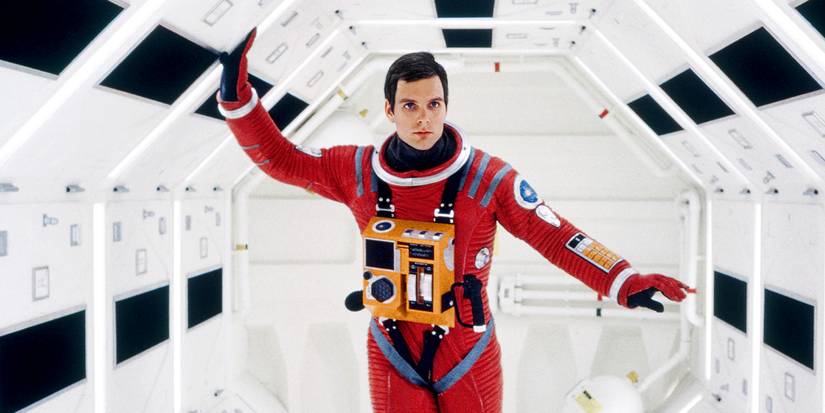 Keir Dullea in a red spacesuit walking through well-lit space pod in 2001: A Space Odyssey.Image via Metro-Goldwyn-Mayer
When it comes to sci-fi, there can be no discussion of the most visually stunning films of the 20th century without mention of Stanley Kubrick's 2001: A Space Odyssey. With its pioneering of visual effects that still look incredible today, the film transported audiences into the dark reaches of outer space a full year before astronauts landed on the moon. The ever-meticulous Kubrick oversaw every aspect of production, including the intricate visual effects, again under the supervision of Douglas Trumbull, that were accomplished in-camera to avoid visual degradation.
Decades later, Kubrick's film is still one of the greatest achievements in science fiction filmmaking. From its iconic opening moments set at the dawn of man to its surreal and psychedelic finale, 2001: A Space Odyssey's visuals are virtually unparalleled. By the nature of the advancement of digital effects technology and the studio system breaking overworked visual effects houses by the day, there simply will never be another film like this one.
3 'Barry Lyndon' (1975)
If there is one film in Kubrick's filmography that could possibly top the astounding visuals of 2001, it's the living painting that is Barry Lyndon. As with all the director's work, the film pioneered new technological advances in its production, this time with its specially modified camera lenses designed to capture the interior scenes shot with extreme low-lighting meant to mimic natural sources such as candlelight.
Kubrick and cinematographer John Alcott sought to use or mimic as much natural lighting as possible throughout the film, in an effort to deliberately emulate 18th-century paintings. Just as 2001 brought audiences into space, Barry Lyndon transported them back in time, or at least into the most painterly representation of the time. As with many of Kubrick's films, and others on this list, reactions to the film were more muted upon its original release, with many critics feeling that it was beautiful but emotionally distant. In that way, Barry Lyndon is a film that can be appreciated as a true work of art.
2 'Baraka' (1992)
 Image via The Samuel Goldwyn Company
Not all the most stunning films have visuals that are strictly in service of a linear narrative. Nowhere is that more beautifully illustrated than in the documentary Baraka. Shot in twenty-four separate countries on 70 mm film stock, the film captures a wide variety of cultures, populations and environments both natural and human-made, provoking an emotional response through its imagery.
Following in the same style as the previous non-narrative documentaries Koyaanisqatsi and director Ron Fricke's Chronos, the movie is a pure cinematic experience, the filmic equivalent of a tone poem that explores its themes through grand wordless imagery and music. It may not appeal to viewers who prefer to have strict narrative guidelines within their films, but Baraka is unimpeachable in its stunning visuals.
1 'Lawrence of Arabia' (1962)
 A man riding a camel in Lawrence of Arabia.Image via Columbia Pictures
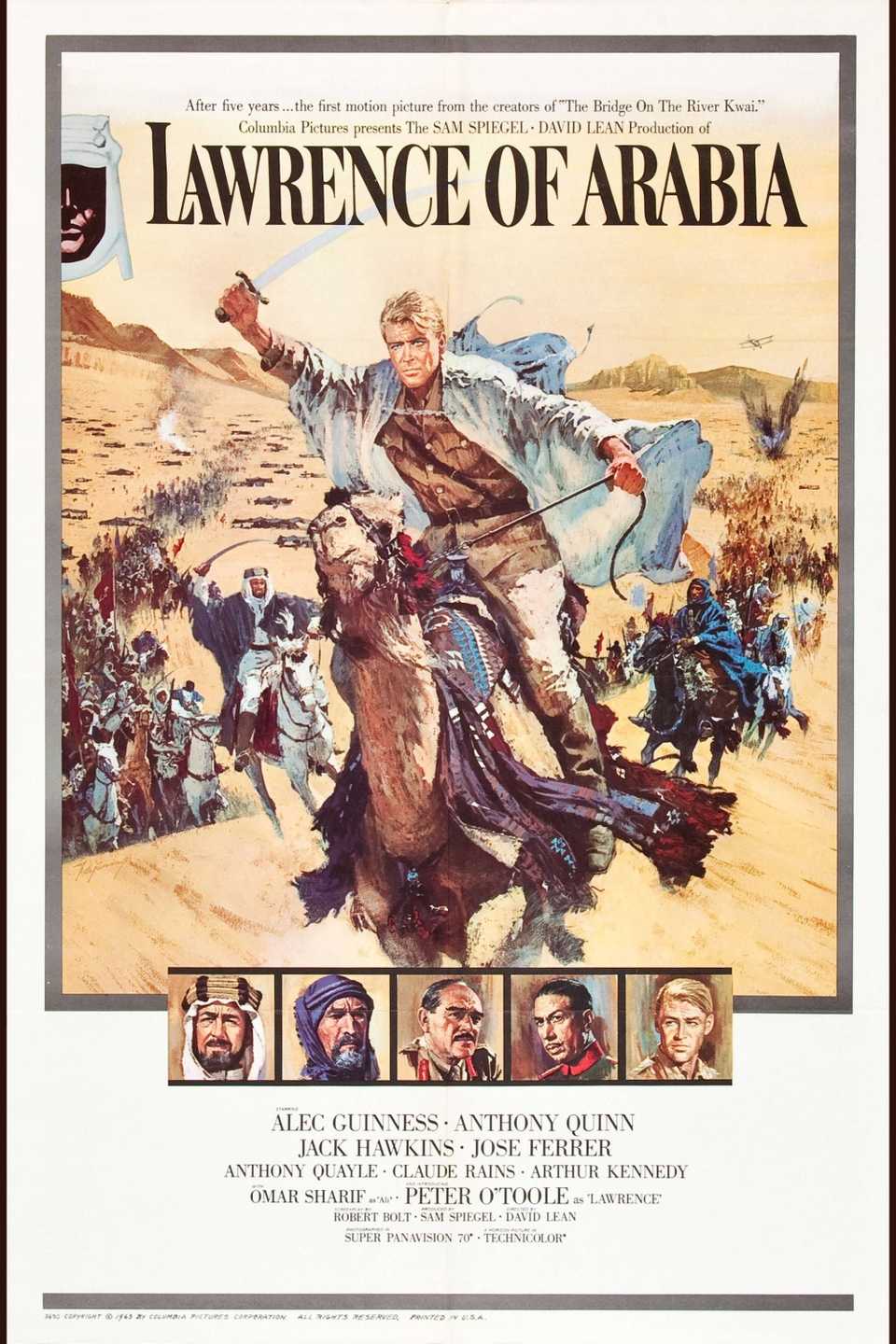
Pure visuals are one thing, but when those grand images are in perfect harmony with a narrative, they accomplish something that only the best films can, and few films have as grand of image as those in David Lean's magnificent epic Lawrence of Arabia. Featuring lush Super Panavision 70 cinematography by legendary director of photography Freddie Young, the film has an epic scope and scale befitting its titular subject. Based on the life of T.E. Lawrence and his experiences during World War I, the film captures the majesty inherent in its desert locations, which takes full advantage of the widescreen format.
The landscapes are expansive, with many of the extreme long shots of the film that are grandly disquieting, with the characters appearing like figurines amid the endless dunes. Lawrence of Arabia is a spectacle of the highest order, all captured in camera without the benefit of any digital extension. Every shot is a tremendous canvas where Young and Lean paint their grand compositions, whether it be the dawning sun coming over the desert horizon or a match burning down to the fingers. Lawrence of Arabia is a visually stunning masterpiece that has only grown more powerful compared to the modern era of epics.
 Lawrence of Arabia
PG
War
Biography
Adventure
History
Drama
Release Date
December 11, 1962
Cast
Alec Guinness, Omar Sharif, Peter O'Toole, Jack Hawkins, Anthony Quinn
Runtime
228 minutes
Director
David Lean
Writers
Robert Bolt, Michael Wilson
Genres
War, Biography, Adventure, History, Drama
Powered by
Lawrence of Arabia
PG
War
Biography
Adventure
History
Drama
Release Date
December 11, 1962
Cast
Alec Guinness, Omar Sharif, Peter O'Toole, Jack Hawkins, Anthony Quinn
Runtime
228 minutes
Director
David Lean
Writers
Robert Bolt, Michael Wilson
Genres
War, Biography, Adventure, History, Drama
Powered by
 Expand
Collapse
Expand
Collapse
-
 Movie
Movie
-
 Blade Runner
-
 The Prince of Egypt
We want to hear from you! Share your opinions in the thread below and remember to keep it respectful.
Be the first to post Images Attachment(s) Please respect our community guidelines. No links, inappropriate language, or spam.Your comment has not been saved
Send confirmation emailThis thread is open for discussion.
Be the first to post your thoughts.
- Terms
- Privacy
- Feedback
 Nov 1, 2025
The 10 Most Visually Stunning Movies of the Last 50 Years, Ranked
 2 days ago
The 20 Greatest Movies of the Last 50 Years, Ranked
 4 days ago
The 10 Best Movie Soundtracks of All Time, Ranked
 3 days ago
The 10 Greatest Dystopian Action Movies, Ranked
More from our brands

50 Best New Movies on Streaming to Watch Right Now
The Best Movies in Theaters Right Now

Movies To Watch If You Like 365 Days

Best New Movies To Watch On Streaming Right Now


The 60 Best Movies Of All Time

The 55 Best Movies of All Time, Ranked

30 Best 4K Movies, Ranked
What To Watch
 July 20, 2025
The 72 Best Movies on Netflix Right Now
Trending Now
July 20, 2025
The 72 Best Movies on Netflix Right Now
Trending Now
 Scarlett Johansson’s Controversial Sci-Fi Anime Movie Gets Overtaken by New Predator Hit at the Box Office
 Michael Bay's First 4 Transformers Movies Roll Out on a New Free Streaming Home
 New Look at Western Thriller ‘Frontier Crucible’ Sees William H. Macy Give Myles Clohessy a Dangerous Mission [Exclusive]